I Can See You - by Paddy Summerfield c. 1986
Showing posts with label zerogsounds. Show all posts

Saturday, August 30, 2025

Need A Shot - The Essential Recordings Of Urban Blues | ZeroGSounds

VA - Need A Shot - The Essential Recordings Of Urban Blues


Zero hat gesacht: Featuring two-dozen tracks drawn from commercially released 78s of the 1920s, 1930s, and 1940s, "Need a Shot" is primarily a piano-based selection, although there is a fair amount of guitar and harmonica tossed in, and on occasion even drums, saxes, and clarinets. 

Labeled urban blues, these sides are only a little removed from their country blues roots, and pieces like Peetie Wheatstraw's "Working Man (Doing the Best I Can)" (the melody line, a common one in the early blues, was used by Bob Dylan for his "Pledging My Time"), Roosevelt Sykes´ "Night Time Is the Right Time," and Washboard Sam's funky and ragged "Back Door" played just as well in the rural jukes of the Deep South as they did in the bars up north. 

In spite of the subtitle, these 24 selections don't exactly add up to an essential survey of the early urban blues, but there's plenty of foot-stomping fun going on here and it's hard to have a serious problem with that.  

Tracklist:


01. Bumble Bee Slim - Sail On, Little Girl, Sail On
02. Kokomo Arnold - Policy Wheel Blues
03. Georgia White - Trouble In Mind [1936 05 12-Chicago]
04. Harlem Hamfats - Bad Luck Man [1936 10 22-Chicago]
05. Johnnie Temple - Louise Louise Blues [1936 11 12-Chicago]
06. Peetie Wheatstraw - Working Man (Doing The Best I Can)
07. Walter Davis - Think You Need A Shot [1936 04 03-Chicago]
08. Bill Gaither - New Little Pretty Mama
09. Roosevelt Sykes - Night Time Is The Right Time [1937 04 29-Chicago]
10. Curtis Jones - Lonesome Bedroom Blues [1937 09 28-Chicago]
11. Washboard Sam - Back Door [1938 12 16-Aurora IL]
12. Casey Bill Weldon - Way Down In Louisiana [1939 12 07-Chicago]
13. Merline Johnson - Want To Woogie Some More [1938 10 04-Chicago]
14. Big Bill Broonzy - What Is That She Got?
15. Memphis Minnie - Lonesome Shack Blues [1940 06 27-Chicago]
16. Tampa Red - Baby, Take A Chance With Me [1940 05 10-Chicago]
17. Bill "Jazz" Gillum - Key To The Highway
18. Memphis Slim - Beer Drinking Woman [1940 10 30-Chicago]
19. Big Maceo - County Jail Blues [1941 06 24-Chicago]
20. St. Louis Jimmy - Goin' Down Slow [1941 11 11-Chicago]
21. Lonnie Johnson - He's A Jelly-Roll Baker
22. Doctor Clayton - Ain't No Business We Can Do [1942 03 27-Chicago]
23. Champion Jack Dupree - Big Time Mama
24. Sonny Boy Williamson - New Early In The Mor
ning
if you play one track today make it this! We LOVE some Washboard Sam!
Washboard Sam - Back Door

 
 Jazz Gillum - Key To The Highway

 
Sonny Boy Williamson - New Early Morning Blues

Wednesday, July 23, 2025

Woody Guthrie - The Dust Bowl Ballads | ZeroGSounds

 Well Zero G turned up trumps ( it’s a card playing reference . .nothing to do with bad smells! Sic!)

He provided me with an alternative source to Kraken Files (now no longer available to us in the UK) Zero G kindly recommended a VPN but that didn’t work either - go figure! He has duel links from both Kraken and ImageNetz so have at it - it’s well worth it! Source of many a song about the Dust Bowl debacle from I Ain’t Got a Home (first heard by Dylan) and Do Re Mi (first heard by Ry Cooder) to Tom Joad 1&2 (first heard by Bruce Springsteen) . . . . . 


Woody Guthrie - Dust Bowl Ballads (1940)


Zero hat gesacht: Sixty years after the recordings were first released, Woody Guthrie's odes to the Dust Bowl are presented in their third different configuration. 

RCA Victor Records, the only major label for which Guthrie ever recorded, issued two three-disc 78 rpm albums, "Dust Bowl Ballads, Vol. 1" and "Dust Bowl Ballads, Vol. 2", in July 1940, containing a total of 11 songs. ("Tom Joad" was spread across two sides of a 78 due to its length.).
Twenty-four years later, with the folk revival at its height, RCA reissued the material on a single 12" LP in a new sequence and with two previously unreleased tracks, "Pretty Boy Floyd" and "Dust Bowl Blues," added. 
Thirty-six years on, the Buddha reissue division of BMG, which owns RCA, shuffles the running order again and adds another track, this one an alternate take of "Talking Dust Bowl Blues." 

But whether available on 78s, LP, or CD, "Dust Bowl Ballads" constitutes a consistent concept album that roughly follows the outlines of John Steinbeck's 1939 novel "The Grapes of Wrath". (Indeed, "Tom Joad" is nothing less than the plot of the book set to music.) The story begins, as "The Great Dust Storm (Dust Storm Disaster)" has it, "On the fourteenth day of April of 1935," when a giant dust storm hits the Great Plains, transforming the landscape. Shortly after, the farmers pack up their families and head west, where they have been promised there is work aplenty picking fruit in the lush valleys of California. The trip is eventful, as "Talking Dust Bowl Blues" humorously shows, but the arrival is disappointing, as the Okies discover California is less than welcoming to those who don't bring along some "do[ough] re mi." 
Guthrie´s songs go back and forth across this tale of woe, sometimes focusing on the horrors of the dust storm, sometimes on human villains, with deputy sheriffs and vigilantes providing particular trouble. In "Pretty Boy Floyd," he treats an ancillary subject, as the famous outlaw is valorized as a misunderstood Robin Hood. Guthrie treats his subject alternately with dry wit and defiance, and listeners in 1940 would have been conscious of the deliberate contrast with Jimmie Rodgers, whose music is evoked even as he is being mocked in "Dust Pneumonia Blues." 

Sixty years later, listeners may hear these songs through the music Guthrie influenced, particularly the folk tunes of Bob Dylan. Either way, this is powerful music, rendered simply and directly. It was devastatingly effective when first released, and it helped define all the folk music that followed it. 

Woody Guthrie was born on July 14th, 1912 in Okemah, Oklahoma, so this year we can celebrate his 100th birthday!

Zero G goes on to say in the comments:

From http://www.pophistorydig.com/topics/tag/the-grapes-of-wrath-woody-guthrie/ :

Among those who first saw the film in 1940 was Depression-era balladeer Woody Guthrie. In fact, Guthrie was so moved by what he saw at a New York screening that he wrote a long song about the film immediately after viewing it. Set to the tune of “John Hardy,” Guthrie’s “The Ballad of Tom Joad” summarizes the The Grapes of Wrath story in a 17-verse song. Folk singer Pete Seeger, who saw Guthrie that night, has described how Guthrie set about writing the song:

…He said, “Pete, do you know where I can get a typewriter?” I said, “I’m staying with someone who has one.”

“Well, I got to write a ballad,” he said. “I don’t usually write ballads to order, but Victor [the record company] wants me to do a whole album of Dust Bowl songs, and they say they want one about Tom Joad in The Grapes of Wrath.”

. . . He went along to the place where I was staying — six flights walking up — on East Fourth Street. The friend I was staying with [Jerry Oberwager] said, “Sure, you can use my typewriter.”

Woody had a half-gallon jug of wine with him, sat down and started typing away. He would stand up every few seconds and test out a verse on his guitar and sit down and type some more. About one o’clock my friend and I got so sleepy we couldn’t stay awake. In the morning we found Woody curled up on the floor under the table; the half gallon of wine was almost empty and the completed ballad was sitting near the typewriter….

Guthrie, in his own plain style, also wrote about seeing the film in one of his columns for the People’s World, praising its directness: “. . . Shows the damn bankers men that broke us and the dust that choked us, and comes right out in plain old English and says what to do about it.” Guthrie urged his readers to go see the film. “. . .You was the star in that picture,” he wrote, meaning his everyman readers. “Go and see your own self and hear your own words . . .” 

Guthrie’s song, meanwhile, “The Ballad of Tom Joad,” was first recorded at RCA Studios, Camden, New Jersey, April 1940 and released on an album titled Dust Bowl Ballads in July 1940.

Monday, May 12, 2025

Richie Havens - Something Else Again | Zero G Sounds

Richie Havens - Something Else Again

Zero hagt gesacht: As a little thank you for all the nice comments related to the earlier Richie Havens postings, here´s one more of his albums: "Something Else Again".

The sound here is more keyboard-heavy than its predecessor "Mixed Bag", but Richie Havens continues in a similar vein with his distinctive smoky voice and thumb-fretted open-tuned guitar.

"No Opportunity Necessary, No Experience Needed" and "Don't Listen to Me" are propelled by Warren Bernhardt's percussive electric piano, while "Inside of Him" and "Sugarplums" are pretty ballads featuring the flute of Jeremy Steig. "The Klan" and "Run Shaker Life" are cut from the same mold as "Handsome Johnny," the Woodstock show-stopper from "Mixed Bag". The melody of "New City" has attractive, expansive intervals, and "From the Prison" is an intense piece of balladry built around a riff on the guitar's bass strings. Finally, the title track is seven-and-a-half minutes of sitar, flute, tamboura, and tabla, very much of its time, when George Harrison's interest in Ravi Shankar led many musicians to experiment with Indian instruments, rhythms, and melodies. This cut could be the soundtrack to a flower-power dance in the park or an incense-laced gathering around a hookah beneath posters and black lights.

Tracklist:

A1 No Opportunity Necessary, No Experience Needed 2:58
A2 Inside Of Him 4:27
A3 The Klan 4:31
A4 Sugarplums 2:54
A5 Don't Listen To Me 4:25
B1 From The Prison 3:40
B2 Maggie's Farm 4:35
B3 Somethin' Else Again 7:26
B4 New City 2:50
B5 Run, Shaker Life 5:45 

Sunday, May 04, 2025

Melanie - Affectionately Melanie | Zero G Sounds

Melanie - Affectionately Melanie

Zero hat gesagt: Affectionately Melanie (aka Melanie) is the second album by Melanie Safka. It contains "Beautiful People", a song that Melanie performed at the Woodstock Festival in 1969.

Melanie's second album was a fairly strong pop-flavored singer/songwriter effort, with more serious-minded material and execution than those familiar with only her best-known songs would expect. Although folk-rock is an element here, it's actually just one, combined as well with well-done pop orchestration, a certain sensibility akin to that heard in theatrical musicals, and even a little bit of white soul (particularly on the one non-original, "Soul Sister Annie"). She would have been well advised to concentrate more on her lower, more sensual register throughout her career, as she does on the generally fine and moving vocals on this LP. The New York theater factor comes into play on the darkly semi-comic "Any Guy" and "Take Me Home," and her more utopian sentiments arise in "Beautiful People." But really, this is far more gutsy than sappy, her earnest delivery containing some real grit. Even if her songs occasionally dovetail with childish sentiment, there's just as much earthy realism, as well as some vulnerable loneliness. Don't overlook this in the bargain bins just because of her half-justified reputation as a singer/songwriting lightweight; you might find yourself surprised at how worthy and affecting this early outing is.                

Tracklist:

  1. "I'm Back in Town"
  2. "Tuning My Guitar"
  3. "Soul Sister Annie"
  4. "Any Guy"
  5. "Uptown Down"
  6. "Again"
  7. "Beautiful People"
  8. "Johnny Boy"
  9. "Baby Guitar"
  10. "Deep Down Low"
  11. "For My Father"
  12. "Take Me Home"

Thursday, April 17, 2025

THE HONEY DRIPPER | Rossevelt Sykes Vol 2 1944-1950 | Zerosounds

Roosevelt Sykes - The Honey Dripper, Vol. 2 - 1944 - 1950

Zero G hat gesagt: Next time someone voices the goofball opinion that blues is simply too depressing to embrace, sit 'em down and expose 'em to a heady dose of Roosevelt Sykes. If he doesn't change their minds, nothing will. There was absolutely nothing downbeat about this roly-poly, effervescent pianist (nicknamed "Honeydripper" for his youthful prowess around the girls), whose lengthy career spanned the pre-war and postwar eras with no interruption whatsoever. Sykes' romping boogies and hilariously risqué lyrics (his double-entendre gems included "Dirty Mother for You," "Ice Cream Freezer," and "Peeping Tom") characterize his monumental contributions to the blues idiom. He was a pioneering piano pounder responsible for the seminal pieces "44 Blues," "Driving Wheel," and "Night Time Is the Right Time."  

Sykes began playing while growing up in Helena. At age 15, he hit the road, developing his rowdy barrelhouse style around the blues-fertile St. Louis area. Sykes began recording in 1929 for OKeh and was signed to four different labels the next year under four different names (he was variously billed as Dobby Bragg, Willie Kelly, and Easy Papa Johnson)! Sykes joined Decca Records in 1935, where his popularity blossomed. After relocating to Chicago, Sykes inked a pact with Bluebird in 1943 and recorded prolifically for the RCA subsidiary with his combo, the Honeydrippers, scoring a pair of R&B hits in 1945 (covers of Cecil Gant's "I Wonder" and Joe Liggins' "The Honeydripper"). The following year, he scored one more national chart item for the parent Victor logo, the lowdown blues "Sunny Road." He also often toured and recorded with singer St. Louis Jimmy Oden, the originator of the classic "Going Down Slow."  

In 1951, Sykes joined Chicago's United Records, cutting more fine sides over the next couple of years. A pair of Dave Bartholomew-produced 1955 dates for Imperial in New Orleans included a rollicking version of "Sweet Home Chicago" that presaged all the covers that would surface later on. A slew of albums for Bluesville, Folkways, Crown, and Delmark kept Sykes on the shelves during the '60s (a time when European tours began to take up quite a bit of the pianist's itinerary). He settled in New Orleans during the late '60s, where he remained a local treasure until his death.  
Precious few pianists could boast the thundering boogie prowess of Roosevelt Sykes, and even fewer could chase away the blues with his blues as the rotund cigar-chomping 88s ace did.    


ZeroSounds

Sunday, January 26, 2025

Trio ‎– Live im Frühjahr ’82 | TRIO: Da Da Da [TOTP 1982] | ZEROSOUND

Trio ‎– Live im Frühjahr ’82


Trio was a German band, formed in the small German town of Großenkneten in 1980. The band is most noted for the song "Da da da, ich lieb dich nicht, du liebst mich nicht, aha aha aha" (usually simply "Da Da Da") which was a hit in 30 countries worldwide.

Trio was part of the Neue Deutsche Welle (or NDW); however, the band preferred the name "Neue Deutsche Fröhlichkeit", which means "New German Cheerfulness", to describe their music. At that time, as now, popular songs were based on extremely simple structures that were ornately produced. 

Trio's main principle was to remove almost all the ornamentation and polish from their songs, and to use the simplest practical structures (most of their songs were three-chord songs). For this reason, many of their songs are restricted to drums, guitar, vocals, and just one or maybe two other instruments, if any at all. Bass was used very infrequently until their later songs, and live shows often saw Remmler playing some simple pre-programmed rhythms and melodies on his small Casio VL-1 keyboard while Behrens played his drums single-handedly while eating an apple.

"Live im Frühjahr 1982" was first released on cassette only in 1982.

Tracklist:

Sabine Sabine Sabine 
Lady-O-Lady 
Sunday You Need Love Monday Be Alone 
Ya Ya 
Halt mich fest ich werd verrückt 
Nur ein Traum 
Kummer 
Ja ja ja 
Energie 
Da Da Da ich lieb dich nicht du liebst mich nicht aha aha aha 
Los Paul 
Broken Hearts For You And Me 
JaJa wo gehts lank Peter Pank schönen Dank 
Trio Bommerlunder

BBC - Top of The Pops - Trio - Da Da Da (8/7/82)

Thursday, January 16, 2025

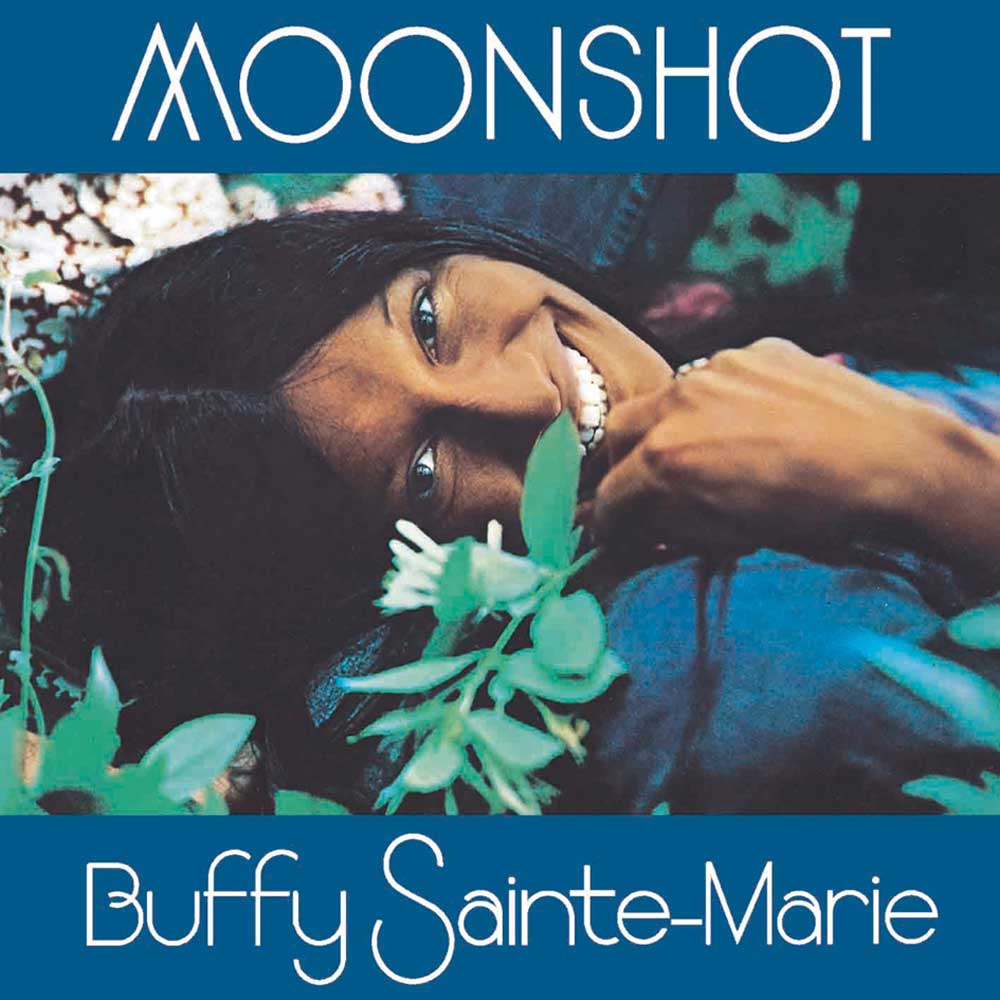
Buffy Sainte-Marie - Moonshot (1972) Seventh album! | Zero G Sounds

Buffy Sainte-Marie - Moonshot (1972)

Zero G het gesagt: For her seventh album, 1971's "She Used to Wanna Be a Ballerina", Buffy Sainte-Marie and her producer, Jack Nitzsche, worked in five recording studios in New York, Los Angeles, and London, and came up with a varied collection ranging from her characteristic folk protest to rock featuring Neil Young and Crazy Horse as a backup band. 

For her eighth album, 1972's "Moon Shot", she stuck to one city, Nashville, working with producer/arranger/bassist Norbert Putnam and some of the same studio musicians who appeared on Young's then-recently released country-rock LP "Harvest". But as the advance single of Mickey Newbury and Townes Van Zandt's "Mister Can't You See" (which was well on its way to becoming Sainte-Marie's first Top 40 hit when the LP appeared) indicated, "Moon Shot" is, for the most part, a collection of pop/rock arrangements. 

Sainte-Marie has not abandoned her primary political concern, the interests of Indians, but when she brings it up on this album, she has softened the message. "He's an Indian Cowboy in the Rodeo" is an upbeat love song that happens to involve Indians. "Native North American Child" is a celebration of Indian culture. And "Moonshot" is a playful reflection on the supposed wonders of Western science and technology that suggests "primitive" peoples actually may be far more advanced. Elsewhere, Sainte-Marie comes up with some appealing pop love songs, such as "You Know How to Turn On Those Lights" and the string-filled ballad "I Wanna Hold Your Hand Forever," worthy additions to the catalog of the songwriter who previously wrote "Until It's Time for You to Go." Sainte-Marie sings them in a gentle voice without the stridency and vibrato she sometimes uses, and Putnam and fellow arrangers Glen Spreen and Bill Pursell create lush settings for them. This is not the Buffy Sainte-Marie of her early political period, but the album demonstrates her versatility, and it works as an appealing pop effort.     

Tracklist:                                                        
A1
Not The Lovin' Kind
A2
You Know How To Turn On Those Lights
A3
I Wanna Hold Your Hand Forever
A4
He's An Indian Cowboy In The Rodeo
A5
Lay It Down
A6
Moonshot
B1
Native North American Child
B2
My Baby Left Me
B3
Sweet Memories
B4
Jeremiah
B5
Mister Can't You See

Tuesday, January 14, 2025

Miriam Makeba (1960) debut album | Zero G

Miriam Makeba - Miriam Makeba (1960)


Zero hat gesagt : Miriam Makeba had just made a splash in New York nightclubs and earned a fistful of press only a few months earlier when RCA Victor Records snapped her up and recorded her first album in May 1960. Clearly, the label was hoping to repeat the success of her mentor, Harry Belafonte, whose Belafonte Folk Singers accompanied her on some tracks and who wrote a blurb for the album's back cover. 

Like Belafonte, she was a black singer with an exotic, folk-based repertoire who could translate her music into a sophisticated club act. In addition to the Belafonte troupe, which appeared on the calypso tune "The Naughty Little Flea," a song that sounded like a Belafonte number, the Chad Mitchell Trio joined her on "Mbube," aka the Weavers' "Wimoweh," and Charles Coleman was her duet partner on the comic Austrian tune "One More Dance." 

She also turned in an early version of "House of the Rising Sun." Such familiar material offset the songs sung in her native South African tongue of Xhosa. Makeba had an expressive voice and was extremely versatile, as the range of material indicates. But despite the critical raves, she may have been a bit too exotic to be commercial on her first album, which was not a big seller. RCA let her go to Kapp Records for her second album, but came calling again three years later. 


Tracks: 

The Retreat Song
Suliram
The Click Song
Umhome
Olilili
Lakutshn, Ilanga
Mbube
The Naughty Little Flea
Where Does It Lead?
Novema
House of the Rising Sun
Saduva
One More Dance
Iya Guduza