I Can See You - by Paddy Summerfield c. 1986

Wednesday, February 21, 2018


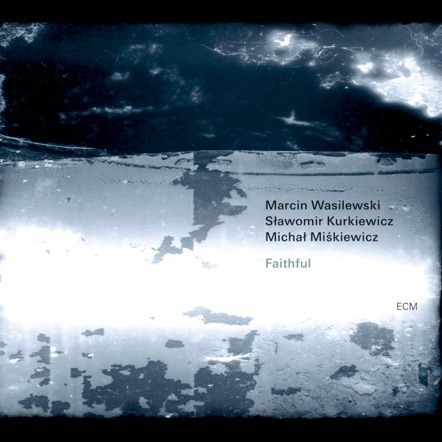
  • Night Train To You
  • Marcin Wasilewski Trio
  • Faithful


dedicated to my son Matthew - - - - - - he's recently gotten into jazz . . . . . . . . . . this is the music that I wish I could play and is running as the soundtrack inside my head

Tuesday, February 20, 2018

A post largely for my dear old friend and ex-colleague Phil, lifelong football fan [Chelsea] and musical encyclopaedia without equal. 

I found the following image and it reminded me of my own experiences of playing football at school. I have a vivid memory of being forced to wear damp left over sports kit from the shower room as was the usual price for not having brought my own kit such as it was (i.e my brother's hand-me-downs) from home and being made to play in goal. My sports master, I assume working on the basis that it was doubtful given the team selection that I would ever see the ball let alone have to touch it in order to stop someone scoring. In this case I recall not being able to actually see the opposite goal it was so foggy. My shorts, a fetching dark navy hung down past my knees and the strip was a vest of perhaps grey or such faded white it had become of indeterminate colour. Football boots with screw in studs and of black hobnailed boot styled leather, over sized socks in the school colours of 'gold' and navy and a pair of gardening gloves to protect my delicate mitts in the unlikely event of my having to actually touch the hand sewn leather football with it's innertube and valve. I quickly realised that no-one was going to trouble me very much at the distant horizon of the pitch by the Thames Valley Police Station end and in fact could happily lean against the goalpost and roll up a cigarette without the wary eye of Mr Onions the sportsmaster being able to resort to yet another 'slippering' of yours truly. I also realised I wasn't entirely sure when the match had finished never mind the important matter of the score


I empathise with Sam Bartram who stood for a full 10 minutes alone on the pitch, not realising that the game had been abandoned due to heavy fog. 
December 25th, 1937

My hero!
Another single bought when it came out and meaningful for this listener as it was cited by Lennon in the 'lover's spat' phase of their friendship when John referred to the single "Since your gone you're just Another Day' which frankly shows John's crassness and hits at what he always took to be Paul's sentiment at the expense of the hard rocking Johnny and only respond this conflict later on  . . . . . me I was on Paulie's side in all this and it is as haunting a song as Macca has ever written . . . . . . as an aside - my favourite quote from the period is when John accused Paul and Linda in the same song 'How Do You Sleep?' of 'living with straights' an accusation of not being hip enough to be cool and smoke heroin like him n Yoko, Paul replied "Of course I live with straights, my children are straight!' Ouch gotta burn! 
Fortunately they made up later  . . . . . . . . 


On this day in music history: February 19, 1971 - “Another Day” by Paul McCartney is released. Written and produced by Paul McCartney, it is the first post-Beatles solo single for McCartney. It is written as a “thematic sequel” to “Eleanor Rigby”, describing a woman as she struggles to make it through the “drudgery and sadness” of her daily life. Recorded at A&R Studios in New York City in December 1970, it is cut during the sessions for his forthcoming second solo album “RAM”. Backed with the mid tempo rocker “Oh Woman, Oh Why”, the two tracks are released as a stand alone single. Picked for release by engineer Dixon Van Winkle, it is quickly mixed with acetates sent to one hundred radio stations who begin airing it immediately. The mono mix sent to AM radio stations features heavy compression with an elevated amount of bass, that is not present on commercially issued copies which are issued in stereo only in the US. “Another Day” peaks at #5 on the Billboard Hot 100 on April 17, 1971. Later in the year, John Lennon makes reference to “Another Day” in his song “How Do You Sleep?” (from the “Imagine” album), with him taking a swipe at his former Beatle band mate, with the lyric “The only thing you done was Yesterday, and since you’ve gone you’re just Another Day”. The song is his response to McCartney after he believes that the songs “Too Many People”, “3 Legs” and “Dear Boy” (on “RAM”) are critical of him. “Another Day” is not issued on an album until 1977 when it is included on the compilation “Wings Greatest”. “Another Day/Oh Woman Oh Why” is reissued in as a limited edition 7" single (packaged with a replica of the original Norwegian picture sleeve) for Record Store Day in April of 2012, and as bonus tracks on the CD reissues of “RAM”.

thanks to the most excellent Jeff Harris' blog 'Behind The Grooves 
I had a phase of really liking Harry and bought his smooth albums and a little Schmilsson always did the trick but then this came out and I bought this in the ex-jukebox bins I have mentioned before and it blew my socks off. This is contemporary pop singing at it's peak . . . . . . . alcoholic or not (he was instrumental in Lennon's lost weekend when John and he tied one on and then some. 'Mama' Cass Elliott and Keith Moon both died in the London flat he owned in Curzon Street and he passed away at 52 of heart failure in 1994) his sense of humour and curmudgeonly steadfast refusal to do as he was told always appealed to me . . . . . . Here the most staggering version of Badfinger's 'Without You'


On this day in music history: February 19, 1972 - “Without You” by Nilsson hits #1 on the Billboard Hot 100 for 4 weeks. Written by Pete Ham and Tom Evans, it is the biggest hit for the Brooklyn, NY born singer, songwriter, and musician. Badfinger guitarist Pete Ham and bassist Tom Evans compose the song in 1970, including it on their album “No Dice”. Harry Nilsson hears the song at a party, initially mistaking it for a Beatles song. He decides to record the song for his album “Nilsson Schmilsson” with producer Richard Perry. Recorded at Trident Studios in London, the track features instrumental support from musicians including Gary Wright, Jim Keltner and Klaus Voorman. On the day of the session, Harry abruptly changes his mind, telling Perry he doesn’t want to record the song after all. Nilsson argues with Perry, who in turn suggests that they discuss the matter over tea at the Dorchester Hotel in near by Mayfair. When Perry finally persuades Nilsson to go through with the session, they hop into a taxi and go straight to the studio, where the singer records his lead vocal in a single take. Entering the Hot 100 at #99 on December 18, 1971, it climbs to the top of the chart nine weeks later. The single wins Nilsson his second Grammy Award for Best Pop Vocal Performance, Male in 1973. “Without You” is certified Gold in the US by the RIAA.

HAPPY BIRTHDAY FOR YESTERDAY
FELLOW AQUARIAN
DAVE WAKELING
of 
THE BEAT


Born on this day: February 19, 1956 - Singer, songwriter and musician Dave Wakeling of The Beat and General Public (born David Wakeling in Birmingham, UK.

Happy 62nd Birthday, Dave!!

Monday, February 19, 2018

Well we haven't had a new John Prime ROIO for a while and today is a peach from over at the wonderful Midnight Cafe


with Philip Donelly


Treat yourselves this is a rare peach of a set


BOOK CHOICE of THE DAY


The first impression of W. Reginald Bray (1879-1939) was one of an ordinary middle-class Englishman quietly living out his time as an accountant in the leafy suburb of Forest Hill, London. A glimpse behind his study door, however, revealed his extraordinary passion for sending unusual items through the mail. In 1898, Bray purchased a copy of the Post Office Guide, and began to study the regulations published quarterly by the British postal authorities. He discovered that the smallest item one could post was a bee, and the largest, an elephant. Intrigued, he decided to experiment with sending ordinary and strange objects through the post unwrapped, including a turnip, a bowler hat, a bicycle pump, shirt cuffs, seaweed, a clothes brush, even a rabbit's skull. He eventually posted his Irish terrier and himself (not together), earning him the name "The Human Letter." He also mailed cards to challenging addresses some in the form of picture puzzles, others sent to ambiguous recipients at hard to reach destinationsall in the name of testing the deductive powers of the beleaguered postman. Over time his passion changed from sending curios to amassing the world's largest collection of autographs, also via the post. Starting with key British military officers involved in the Second Boer War, he acquired thousands of autographs during the first four decades of the twentieth centuryof politicians, military men, performing artists, aviators, sporting stars, and many others. By the time he died in 1939, Bray had sent out more than thirty-two thousand postal curios and autograph requests. The Englishman Who Posted Himself and Other Curious Objects tells W. Reginald Bray's remarkable tale for the first time and includes delightful illustrations of some of his most amazing postal creations. Readers will never look at the objects they post the same way again.

Sunday, February 18, 2018

I have the single of this somewhere and thanks to my old school friend drummer Malcolm Curtis who was a huge Beach Boys fan, I did buy this when it came out and this single above many others was what convinced me that pop music could be as important as the classical music I grew up surrounded by . . . . . . . . 

 . . . . . .something was definitely happening!


On this day in music history: February 17, 1966 - The Beach Boys begin recording “Good Vibrations” at United/Western Recorders in Hollywood, CA. Written by Brian Wilson and Mike Love, it is the twentieth single for the legendary pop band from Hawthorne, CA. The inspiration for “Good Vibrations” has its origins in a conversation that Wilson has with his mother Audree as a child, who tells him that dogs bark at some people and not at others because of the “vibrations” they sense coming from them. the initial recording session has Wilson working with members of The Wrecking Crew cutting twenty six takes of the instrumental track. Seventeen more sessions at three other recording studios take place over the next six months as the song is refined. The end product generates over 90 hours of tape and cost an unprecedented $50,000. At the time of its October 1966 release, “Good Vibrations” is the most expensive single ever recorded. First issued as a stand alone single, it is intended to be the cornerstone of the album “Smile” which is originally scheduled for release in early 1967. However, Brian Wilson’s fragile emotional state, exacerbated by drug use and inner band conflict over the direction of the project, lead to the album being shelved until 2011. “The Smile Sessions” deluxe box set edition devotes an entire disc to “Good Vibrations” as a work in progress, as well as an including an alternate stereo mix of the song on the first disc. Part of the recording sessions for the landmark single are also recreated in the film “Love And Mercy” in 2014. 

TURN IT UP!

Now no I didn't buy this one when it came out thank you BUT I did get turned on to Gene Chandler by seeing 'Sha Na Na' live at the Reading Festival way back when! I loved Sha Na Na and the Reading Festival in particular and their intro as they came on covered in gold lame "We got just one thing to say to you fucking Hippies! and that is that Rock 'n' Roll' is HERE TO STAY!" is one of the funniest live rock moments it has ever been my good fortune to experience! 

On this day in music history: February 17, 1962 - “Duke Of Earl” by Gene Chandler hits #1 on the Billboard Hot 100 for 3 weeks, also topping the R&B singles chart for 5 weeks on the same date. Written by Bernice Williams, Eugene Dixon and Earl Edwards, it is the biggest hit for the R&B vocalist born Eugene Dixon. The song originates as a vocal warm up exercise in the doo wop group The Dukays, in which Chandler and Edwards were both members. Chandler originally cuts “Duke Of Earl” while signed to Nat Records, who are not enthusiastic about the song at all. Instead they another song titled “Night Owl”, recorded at the same session. When Vee Jay Records A&R man Calvin Carter hears “Duke”, he immediately phones his boss label head Ewart Abner to sign Gene Chandler. Abner approves, and the single is released in December of 1961. The record is an instant smash and quickly hits the charts. Entering the Hot 100 at #93 on January 13, 1962, it leaps to the top of the chart five weeks later. “Duke Of Earl” becomes the first million selling single for Chicago-based independent label Vee-Jay Records. When Chandler performs the song live, he often appearing dressed in a black waist coat and tails with topped off with a matching black cape and top hat. “Duke Of Earl” is covered numerous times over the years, and is sampled as the basis of Cypress Hill’s “Hand On The Pump” in 1991.  Gene Chandler’s original recording is inducted into the Grammy Hall Of Fame in 2002. “Duke Of Earl” is certified Gold in the US by the RIAA.


Saturday, February 17, 2018

Just because we have felt the shock from an earth tremor 140 miles away this afternoon of some 4.3 magnitude that shook the house the windows and the chair I was sitting in like a thump upside the walls, this gives me an excuse to post this . . . . . . . . . 


Great song and a great songwriter . . . . . . . .