LOUDON WAINWRIGHT III


Loudon Wainwright Aquarium Drunkard interview
Loudon Wainwright III - Liner Notes etc available here



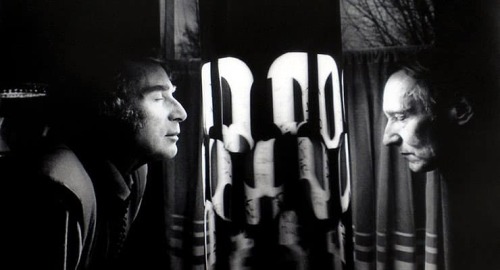
"Hi When my friend and regular collaborator, Patti Gaal-Holmes (artist, art historian, film-maker, writer) reached out to me earlier this year and asked if I'd be interested in working with her colleague, Babak Jani, I jumped at the opportunity.I met with Babak in a coffee shop in London and we talked about films we loved and how their aesthetic and imagery might work well with my song, 'No. 5 Hurricane'. Drawing inspiration from the symbolism in Wim Wenders' 'Wings of Desire’ and the palette and decor of many a Wes Anderson film, we discussed ideas on how to represent memories, passing time, regrets and the difficulty of letting go.We shot the film in two days at various locations around Bournemouth with an enthusiastic and inspired team from Bournemouth Film School at AUB. It was a wonderful experience and I'm really pleased with how it came out. If you haven't seen it yet, you can watch below!"


On this day in music history: October 21, 1970 - “New Morning”, the twelfth studio album by Bob Dylan is released. Produced by Bob Johnston, it is recorded at Columbia Recording Studios, Studio B & Studio E in New York City from June - August 1970. Issued just four months after the controversial and poorly received “Self Portrait”, Dylan emerges with a much more coherent and tightly produced album, attracting raves from both critics and fans. Some speculate that the album is rushed out in response to the negative backlash that Dylan receives following the release of “Self Portrait”. Though most of “New Morning” had been recorded prior to the release of “Portrait”. It produces the classic “If Not For You” which is also covered by George Harrison on his solo debut “All Things Must Pass”, and a version by Olivia Newton-John is her first US hit in 1971. The majority of “Morning is recording during June and July of 1970, with "If Not For You” and “Time Passes Slowly” being re-recorded. “Day Of The Locusts” which was not finished earlier on is completed and recorded during the same session on August 12, 1970. Dylan also records cover versions of “Ballad Of Ira Hayes” and “Mr. Bojangles”, but are not included in the final track listing. Prior to the completion of the album, Dylan parts ways with his long time manager Albert Grossman, gaining full control over management of his career and music publishing. Grossman continues to maintain a financial stake in Dylan’s earlier work until his death in 1986. The album cover artwork features a portrait of a bearded Dylan on the front, without any artist name or title graphics. The back cover features a black and white photo of the musician, with blues singer Victoria Spivey. The photo is taken during a recording session where Bob had played harmonica and sang backing vocals, on an album by Spivey and Big Joe Williams. Spivey had met Dylan in 1961, while he had been playing the coffee house circuit in Greenwich Village. Becoming fast friends, she is one of his earliest supporters prior to him signing with Columbia Records. Originally released on CD in the late 80’s, the album is remastered and reissued in 2009. It is reissued on vinyl by Sony Music in 2001, with a 180 gram LP pressing released by Music On Vinyl in 2009. Mobile Fidelity Sound Lab also remasters and reissues the classic title as a limited edition hybrid SACD and 180 gram vinyl LP in 2014. “New Morning” peaks at number seven on the Billboard Top 200, and is certified Gold in the US by the RIAA.


“There was me - that is Alex - and my three droogs - that is Pete, Georgie and Dim. We sat in the Korova milkbar trying to make up our rassoodocks what to do with the evening."A Clockwork Orange (1971)


American Minimal sculptor and poet. Born in Quincy, Massachusetts. In 1954 worked for Boston Gear Works and travelled to England and France. Served in the US Army 1955-6. In 1957 moved to New York and worked for a publisher. Wrote poetry and made drawings and some abstract sculptures in perspex and wood, with geometric forms. Influenced by Brancusi and by Stella, his close friend. 1960-4 worked as railroad freight brakesman and conductor on the Pennsylvania Railroad; made few sculptures, but these show move away from carving to works constructed out of simple blocks of material. His sculpture first exhibited in a group show in 1964, followed by his first one-man exhibition at the Tibor de Nagy Gallery, New York, 1965; major retrospective exhibition at the Guggenheim Museum, New York, 1970. Made floor sculptures out of standard industrial units such as bricks or metal plates in simple arithmetic combinations; also experimented with scattered blocks and pieces of bent pipe, etc.


 |
| the 'bricks' |

