Calling Card is the sixth studio album and eighth album overall by Irish singer and guitarist Rory Gallagher. Released in 1976, it marked the second of four albums he released on Chrysalis Records during the 1970s. The album was co-produced by Gallagher and Roger Glover, the bassist for Deep Purple and Rainbow. This collaboration was notable as it was Gallagher's first experience working with a high profile producer and remains his only successful partnership of such collaboration.
Calling Card also marked the end of an era for Gallagher's band, as it was the last album to feature Rod de'Ath on (drums) and Lou Martin on (keyboards). Following the Calling Card tour (1976-1977), Gallagher restructured his line up, retaining only his long-time bass guitarist Gerry McAvoy. He hired Ted McKenna as the new drummer, forming a revised power trio that became his core group from early 1978 until 1980
We love these two . . .they make me smile and we all know we need more of those . . . go so them live I say!
Shall we?
I THINK SO!
This Friday, 3rd July, we will be heading to the beautiful setting of the New Forest to play some old time country-boogie and hillbilly-blues on the terrace of The Pig in Brockenhurst. Come and join us from 6pm! Then, on Saturday, we'll be hightailing it back to Devon to play at Plymouth OldTown Square from 1.30-3pm
Big Bill Broonzy (born Lee Conley Bradley; June 26, 1893/1903 – August 14, 1958) was a foundational American blues singer, songwriter, and guitarist whose career spanned five decades and bridged the gap between rural country blues and urban electric blues.
Did I even know that Big Bill’s name was Lee Conley Stanley?I guessI must have as adored him from early on (13!)
. . . .a perennial favourite . . . I was mentioning that I played my entire collection in full and in chronological order some time last year ( I think . . . .) these too are indelibly written in memory
‘all the world is but a play be thou the joyful players'
. . . . .stick with this opener and is it me or does this now seem to be in the universal mind? I have this song somewhere deep inside . . . . does anyone not recognise this number . . . just me then!
Terrifylingly sad and desperate news of the Donnie Darko (and S Darko) film actor who went on to the scary role in modern horror film The Ring and the voice work in Lilo and Stitch (as the delightful Elvis adoring Lilo)
Found homeless and sleeping rough sometimes repeatedly in recent years she has reportedly died of AIDS at 35 with complications reported as "chronic polysubstance use" she had been thought to have contracted sepsis after a recent bout of meningitis
Daveigh struggled with chronic drug addiction after a motorbike accident in 2016 left her addicted to pain killers, although seemingly in a constant battle with her mental health as she had withdrawn from acting the year before, clearly this addiction lead to her downfall. Spare her a thought in kindness and our love goes out to her family and close friends
In the 1940s and ’50s, the leading voices in folk music specialised in what was termed as newspaper songs, which seems a strange concept in 2026 in a post-print age.
These are pretty much exactly what they say on the tin: songs that aren’t expressions of the inner feelings of the singer or a fictional story, but a real thing that happened. More than that, they’re real things that happened in recent memory, rather than centuries back, like with many modern classic folk songs. It’s the reason that the likes of Pete Seeger and Woody Guthrie were termed to be “singing the news”. In a way, they were journalists as much as anything else.
So, it makes sense that a man like Bob Dylan, who was a devotee of both of those singer-songwriters, would have started out making that kind of folk music himself. While his first foray into folk music was built on an array of covers, both of traditional folk standards and songs written by his contemporaries, it soon became apparent that Dylan was a songwriting prodigy. His voice was just as important as anyone else’s, and one of the first songs to really stake that claim was one of the best and most chilling newspaper songs of the early 1960s.
In the early hours of February 9th, 1963, 24-year-old William Devereux ‘Billy’ Zantzinger arrived at the Emerson Hotel to attend a white tie event called the Spinsters’ Ball. Zantzinger was already drunk from a night out and set out continuing the appalling behaviour that he’d shown the entire previous night.
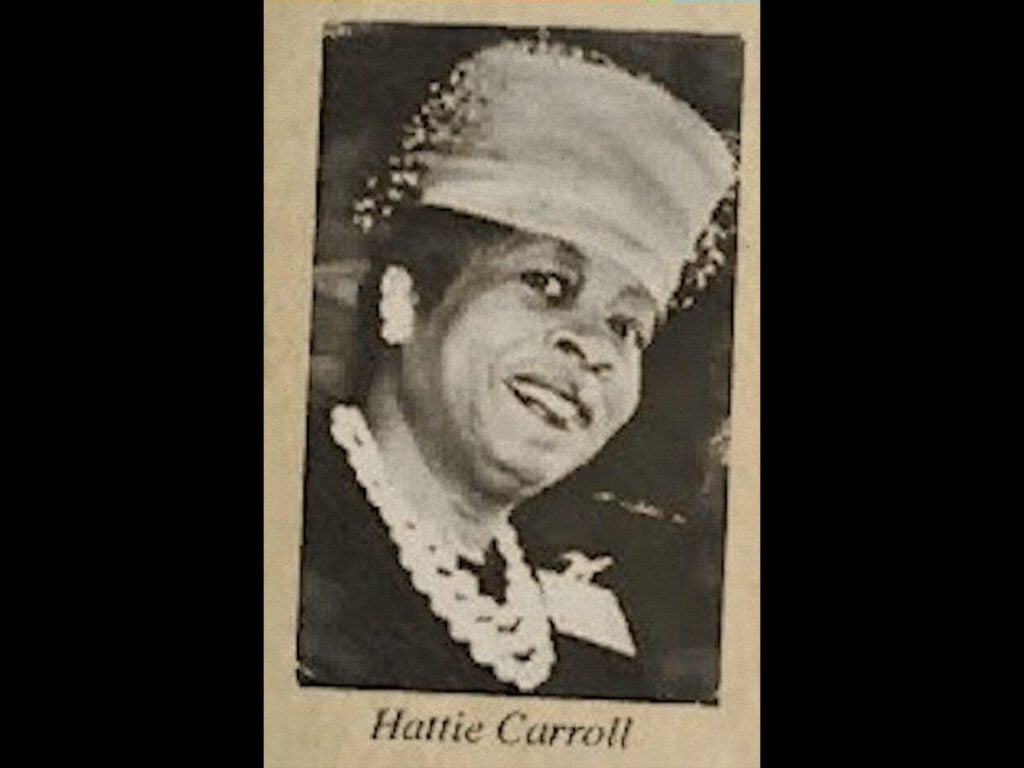
Racially abusing the Black serving staff of the hotel and also physically assaulting them with a toy cane he’d received earlier that night. He ordered a bourbon from Hattie Carroll, a 51-year-old barmaid, and when he didn’t immediately receive it, he berated her with a tirade of racial abuse and struck her on the shoulder with the cane.
Eight hours later, Carroll was dead. Zantzinger’s behaviour had caused a brain hemorrhage and he was arrested for her murder. However, Zantzinger was both rich and white. His lawyers managed to argue that since it wasn’t the blow from the cane but his behaviour that caused the haemorrhage, this was grounds to lower the charge from murder to manslaughter. Despite the fact that his behaviour directly led to her death.
Zantzinger was sentenced to just six months in prison, with the three judges who sentenced him (not a jury) specifically sending him to a county jail rather than a state prison, where the majority Black population would have made him a target. Y’know, considering the racist murder that he’d committed… As if it couldn’t get any worse, Zantzinger’s wife (who he’d also assaulted the night he murdered Carroll) was quoted after the trial saying, “Nobody treats his n****** as well as Billy does around here.”
For those keeping track, this is just over 60 years ago, not the 160 years ago that it might feel like.
This sentence came through the same day that Martin Luther King delivered the ‘I Have a Dream’ speech at the March on Washington for Jobs and Freedom, a march that a 22-year-old Dylan walked as well, and on the journey home, he read about the case and the travesty of justice it represented and decided to write a song about it, finishing it within days and immediately adding it to his live repertoire.
The song followed Zantzinger for the rest of his life, which came to an end on January 3rd, 2009.
Bob Dylan - The Lonesome Death of Hattie Carroll (Official Audio)
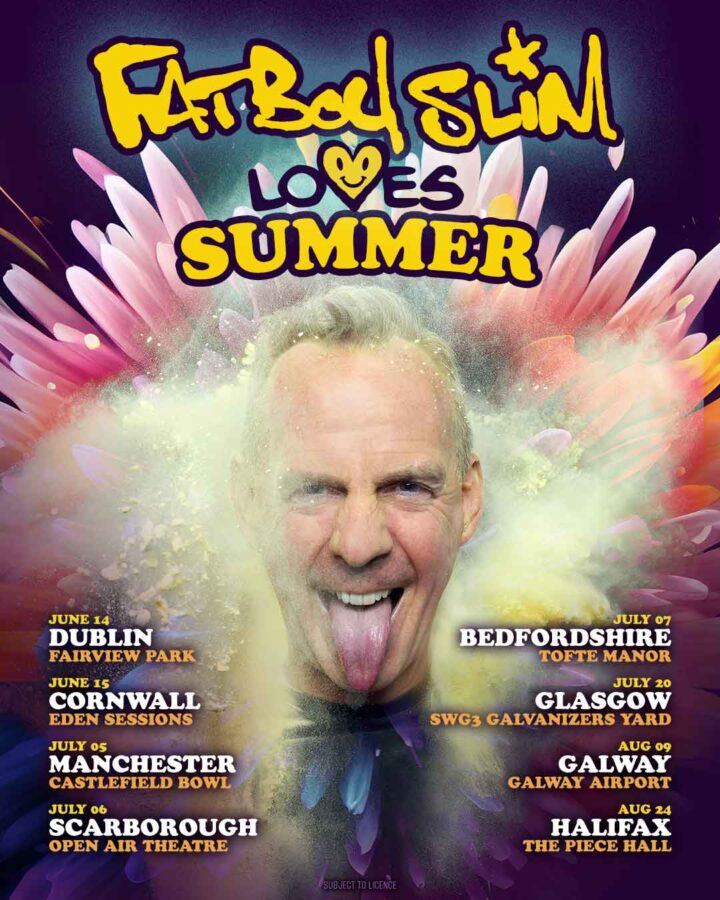
Fatboy Slim - Because I Got It Like That (Ultimate Mix) - On the Floor at The Big Beat Boutique
Barracuda Yacht Charter by Fatboy Slim: If you thought boutique-hotel chic need be restricted to terra firma, you haven’t heard of what Fatboy Slim (aka Norman Cook) and friends have been up to. Having got his paws on a classic wooden yacht, Cook’s boat-loving tour manager, Jim McNulty, enticed his pal to renovate this magnificent sailboat and they’ve converted it it into a modern-minded stylish stay named the Barracuda.
Watch slide guitar maestro Hound Dog Taylor tear up the stage with a blistering performance of Elmore James’ classic anthem, "Shake Your Moneymaker," recorded live for WDR Television in Germany on October 9, 1967. Captured during the legendary American Folk Blues Festival European tour, this rare, high-fidelity broadcast finds a powerhouse lineup of electric blues royalty completely hijacking a polished television soundstage and infusing it with pure South Side Chicago energy.
The performance thrives on a gritty, unpolished edge where there is absolutely nowhere to hide. Driven forward by Odie Payne’s iconic, driving drum shuffle and Dillard Crume's rock-solid bass pocket, the band locks into an infectious, high-speed groove. Hound Dog Taylor lets loose with his signature, raucous slide work—weaponizing a raw, overdriven guitar tone that practically defines the loose-pocket, house-rocking blues style. Right beside him, harmonica pioneer Little Walter weaves brilliant, aggressive horn-like counter-melodies around the rhythm, creating a historic collaboration of absolute masters simply feeding off each other's incredible onstage chemistry.
Certain guitarists possess a wild, infectious energy that turns any stage into an absolute party within the first few bars.
Much like Season of The Witch (which we all heard via Stephen Still's supergroup super session is this one super too! ?
I always thought this song was by the person who I first heard play it way back when, Terry Reid and thought it was named Superlungs after him! It is by Donovan and clearly is about a girl . . . .who just happens to be 14 according to the lyrics Rock and Roll has a hooray of it which when your fifteen seems okay but being a middle aged blues singer/ folkie or whatever singing ‘Good Morning Little School is just plain wrong huh? but what say you?. . . . . . .
Never what you might call a church goer! (confirmed Atheist! - ED) religious songs about the 'circle being unbroken' and 'going home' aways appealed, gospel and blues songs sharing the theme have always fascinated and this is no exception what a glorious song! For a Sunday!
Antoine Payen
Antoine says: "Yes I know, I posted this video a while ago, but whatever. Blind Connie Williams was a street musician in Philadelphia, he played from time to time with Reverend Gary Davis in New York. It's very little known today but I find it extremely moving, I can't get tired of watching and hearing him play and sing. He recorded about twenty tracks in 1961 that can be found on an excellent album just titled "Philadelphia Street Singer". Indispensable.”