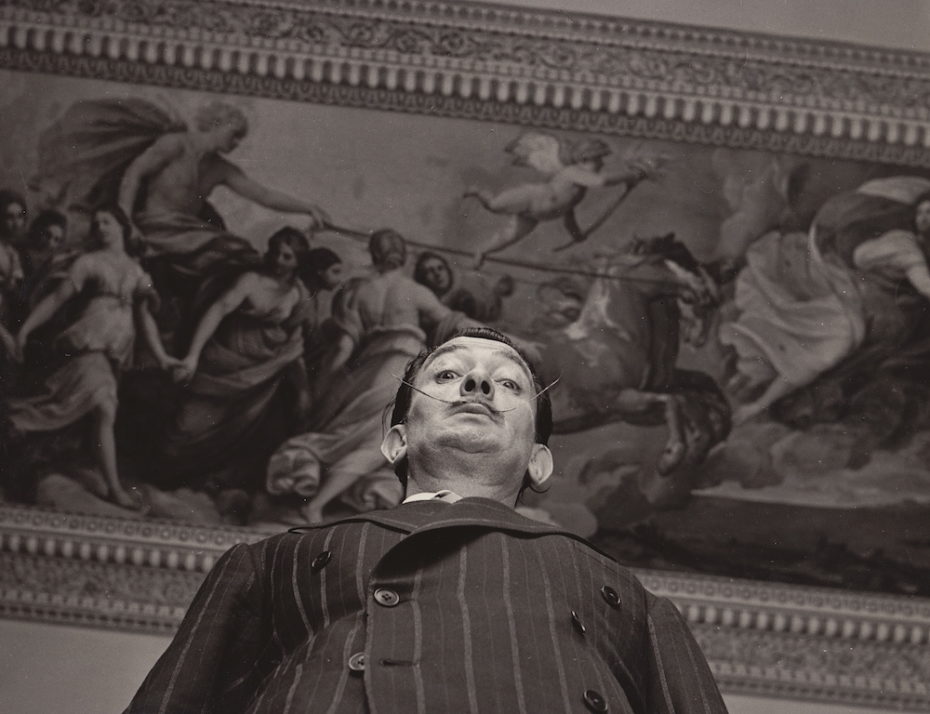
I Can See You - by Paddy Summerfield c. 1986
Showing posts with label Salvador Dali. Show all posts

Tuesday, October 14, 2025

Salvador . . . . .

 Salvador Dalí carried fake moustaches in a cigarette case and would offer them to his friends while saying 

Moustache? Moustache? Moustache?’.

QI - Quite Interesting


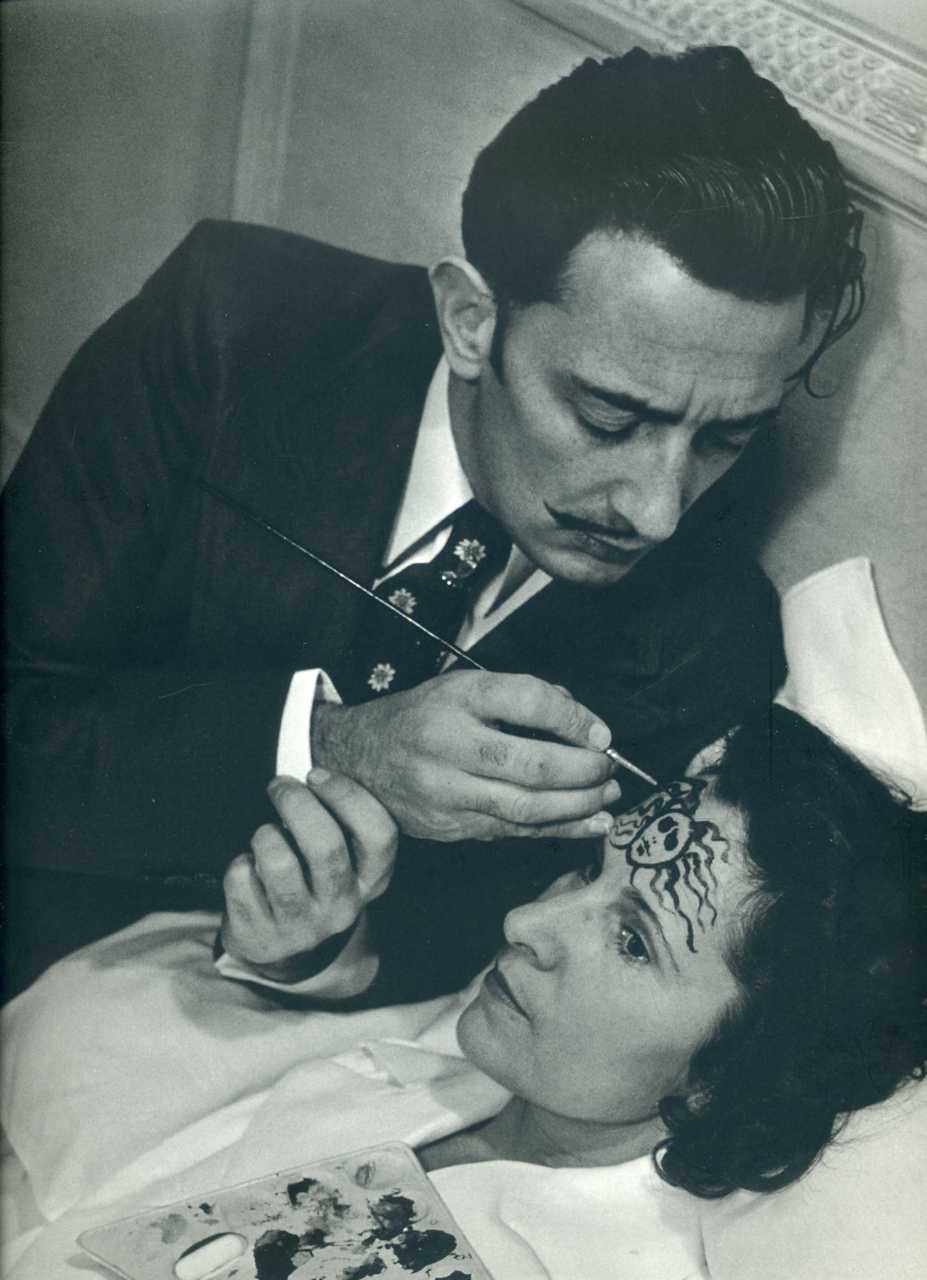
Dali Mona - Philippe Halsman, A Paragon of Beauty, Dalí’s Moustache, 1953-54.
© Philippe Halsman Archive


Tuesday, August 06, 2024

Yoko Ono, Salvador Dalí, and the Moustache That Never Was | Amanda Lear | VSD


“Throughout his life, Dali could never resist it when someone waved a cheque under his nose,” the singer and actress Amanda Lear told French magazine VSD in an article published this week.


In the vibrant and tumultuous art world of the 1970s, a peculiar incident involving Yoko Ono and Salvador Dalí has continued to capture the imagination of many. The avant-garde artist and widow of John Lennon, Yoko Ono, once expressed a desire to own a strand of hair from the iconic moustache of the surrealist painter Salvador Dalí. This unusual request set the stage for a fascinating tale of deception, fear, and eccentricity, as recounted by Amanda Lear, Dalí's friend and muse at the time.


Yoko Ono, known for her eclectic tastes and interest in the mystical, reportedly approached Dalí with a generous offer. She was willing to pay $10,000 for just a single hair from his famous moustache. The request, while unusual, was not entirely out of character for Ono, who had a history of collecting and creating art that pushed boundaries and challenged conventions.


However, Salvador Dalí, renowned for his eccentricity and flamboyant personality, harbored a deep-seated superstition. According to Amanda Lear, Dalí believed that Ono was a witch and feared that she might use the hair to cast a spell on him. This fear led him to concoct a clever ruse to fulfill her request without jeopardizing his own safety.


Lear recalls how Dalí enlisted her help to deceive Ono. He instructed her to find a dried blade of grass, place it in an elegant box, and present it as a genuine hair from his moustache. Lear executed the plan flawlessly, and Ono, none the wiser, paid the substantial sum for what she believed to be an authentic piece of Dalí's famous facial hair.


The incident highlights Dalí's penchant for trickery and his enjoyment of exploiting people's desires and gullibility. Lear noted, "Dalí liked to cheat people," and this particular deception stands out as a prime example of his mischievous nature. The story underscores the surrealist master's blend of genius and caprice, a man who thrived on the bizarre and the unexpected.


This anecdote not only adds to the mystique surrounding Salvador Dalí but also sheds light on the fascinating intersection of art, superstition, and the lengths to which people will go to acquire a piece of their idol. For Yoko Ono, it was a unique addition to her collection, albeit not quite what she had in mind. For Dalí, it was another moment of surrealist delight, a testament to his enduring legacy as one of art's most enigmatic figures. ( I found this on Kirk Carlson ’s Facebook page) so thanks to him

VSD


Personally I think Yoko would have understood perfectly and enjoyed the ‘joke’ and the surreal master’s paranoia (sic?) and it becomes even more ‘art' than before! the $10,000 is funny! if you have that kind of money . . . . which someone who rented an apartment for their fur coats certainly has!


more here . . . . . 


https://youtu.be/2Y4btzjsb0c?si=ubdoLZXQSHc2eMFw

Dali on Dick Cavett Show


https://www.orwell.ru/library/reviews/dali/english/e_dali

George Orwell on Dali

Saturday, May 11, 2024

Salvador Domingo Felipe Jacinto Dalí i Domènech (11 May 1904 – 23 January 1989)


When interviewed by Andy Warhol’s Interview magazine about drugs and hallucinogens Dali is said to have responded

“ Dali does not TAKE LSD! Dali IS LSD!"


Saturday, February 02, 2019

This from the wonderful and always interesting Messy Nessy Chic


MURDER MYSTERY?

well no, not really but it's worth keeping Salvador in mind

Four Grisly Murders, One Salvador Dali

 
APRIL 18, 2018
Note: portions of this article contain graphic text.
You couldn’t have concocted an eerier murder mystery if you tried. Yet, history seems to have bookmarked the case of the Missing Women of Perpignan — “Les disparues de Perpignan”, as the French say — with dwindling media attention; a shocker due not only to the case’s bizarre nature, but the fact that it implicated Salvador Dali as a driving factor behind the four, grisly deaths of four young women in France in the 1990-2000s.
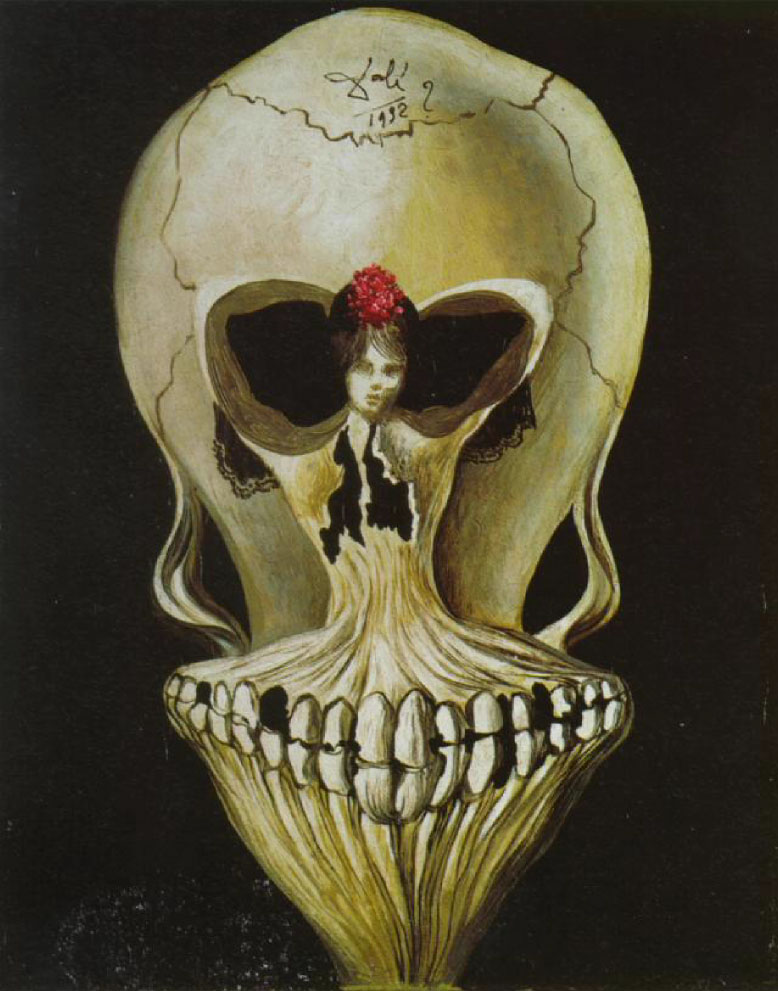
BALLERINA IN A DEATH’S HEAD BY SALVADOR DALI, 1939.
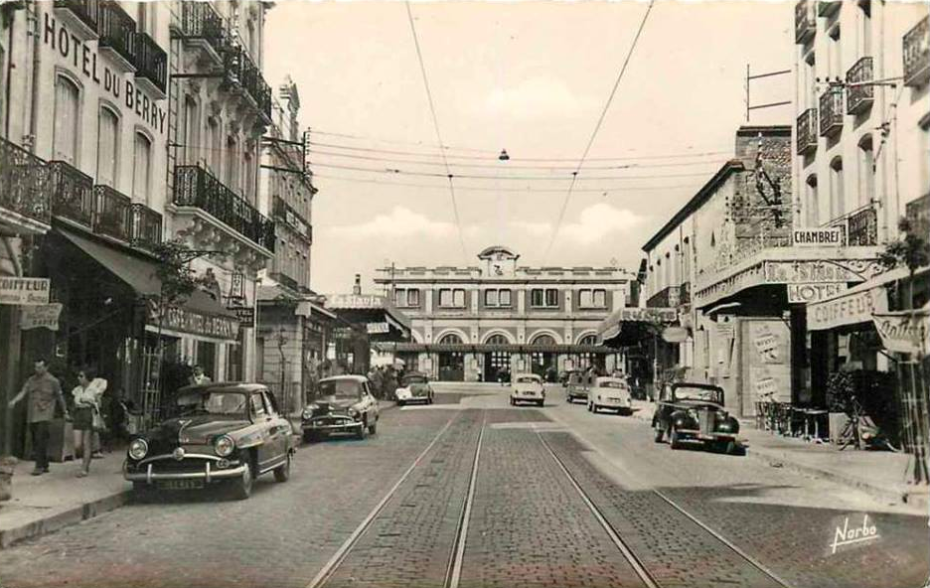
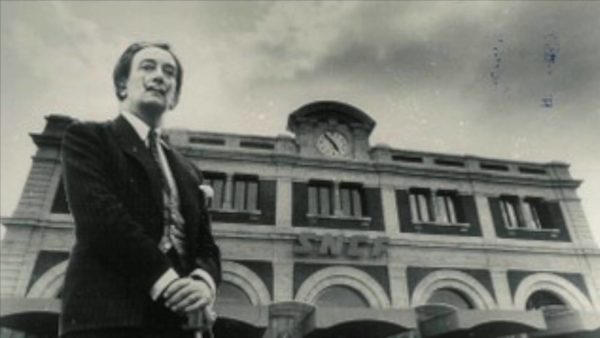
At the heart of the case is Perpignan, a sun-soaked city in the Languedoc-Roussillon region by the French-Spanish bordeer, whose main claim to fame is thanks to the famous Surrealist artist. In August of 1963, Dali stepped off the train, and, in complete ecstasy, declared its station “the centre of the universe”.
THE TRAIN STATION.
Dali’s curiosity for the train station stemmed from his belief in the philosophy of cosmogony,” says a representative of the city’s Tourism Department, “Cosmogony is the theory there is a single universal origin from which all existence and reality emerged…arriving at La Gare de Perpignan is like entering the centre of (his) psyche.” 
DALI AT PERPIGNAN TRAIN STATION
Not everyone is convinced. “It’s open to debate whether the rather drab outpost of France’s SNCF is a mystical edifice in which ‘all parts of the Earth converge,’ contested an LA Times journalist in 2004, “and that, as Dali maintained, the train station predates the pyramids of Egypt and once saved Europe from devastation when the continental plates split apart.” 
Regardless, it became the centre of Dali’s universe (and art): 
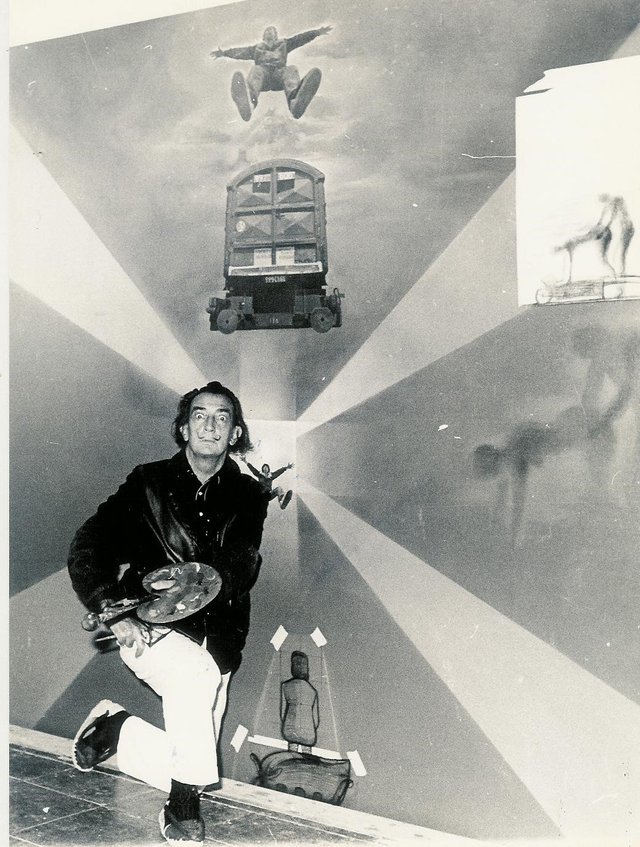
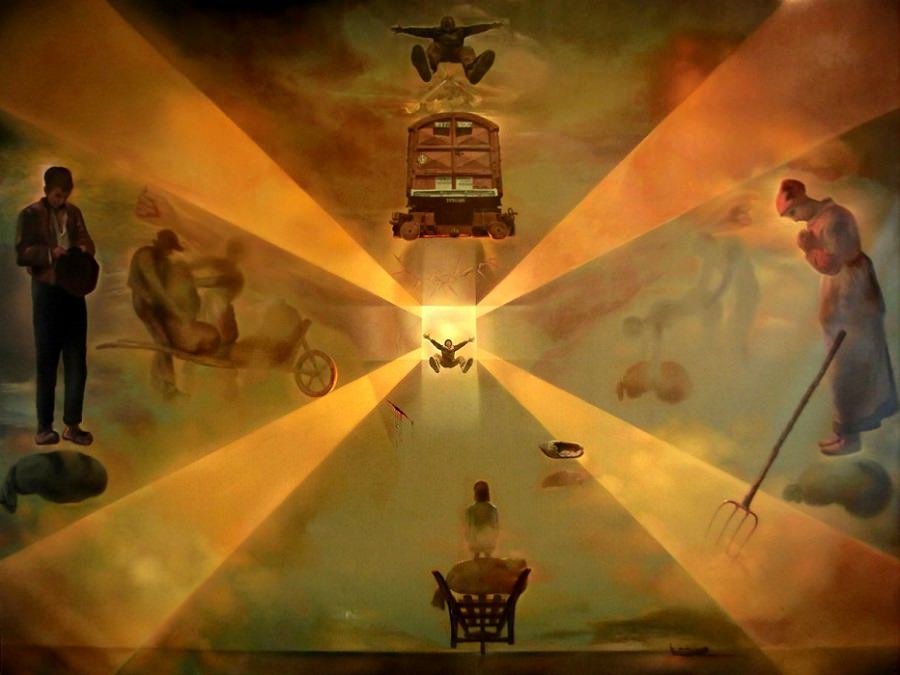
“THE RAILWAY STATION AT PERPIGNAN” INCLUDES A DEPICTION OF A MAN PREPARING TO SODOMISE A YOUNG WOMAN.
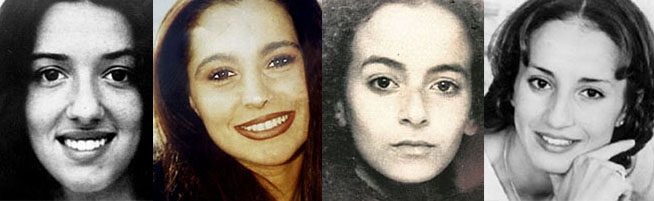
Then, in the 1990s, the train station’s neighbourhood became the centre of the murders of Tatiana Andujar, Marie-Hélène Gonzales, Mokhtaria Chaïb and Fatima Idrahou (pictured below, respectively).
It all started when police got a call in the middle of the night. “They said they saw the body of a young woman from their window, in an overgrown lot.” The unclothed body was that of 19-year-old Moktaria Chaib. “She was turned on her back,” explained Perpignan officer José Bellemonte, “arms crossed, chest and body heavily mutilated”. There wasn’t a trace of blood on the site.
“LA GARE DE PERPIGNAN” BY DALI, 1965.
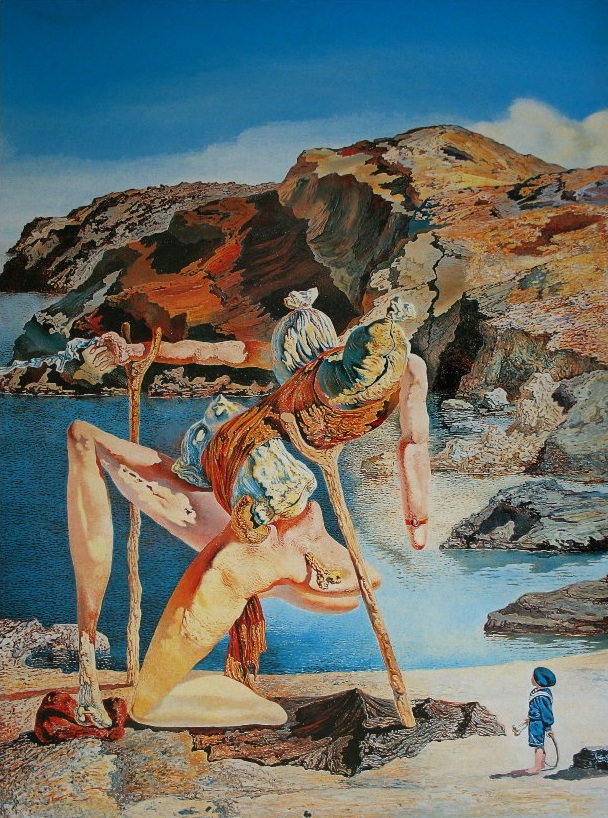
Three more murders occurred in the following years, often revealing a link to the train station quarter and a penchant for ceremonial mutilation done with the precision of a surgeon’s hands.  “The Police were stunned,” said journalist Jean-Marc Aubert,”they thought, ‘this must be a kind of sexual, ritualistic crime.”Hélène Gonzales’ head, hands and vagina were removed entirely, and a selection of her internal organs stored in a small box by her side. Dali’s 1932 painting, The Spectre of Sex Appeal, features a female torso with missing head and hands. 
THE SPECTRE OF SEX APPEAL, 1934
For years, the killer remained elusive. But for two detectives, the crime scenes clearly recalled the surreal paintings of Dali, whose complicated relationship with women, death, and sexuality were frequent themes of his work. His obsession with vaginas, says one biographer, stems from a profound “loathing of the female genitalia”.
Dali was transfixed, even traumatised, by female sexual organs. Freud would’ve had a field day with his paintings, whose wasteland settings were filled with dislocated body parts, chicken eggs, and grotesquely erotic symbolism (i.e. unattached genitalia and naked female bodies missing their breasts and womb). 
DALI AND HIS WIFE, GALA.
Dalì himself admitted on several occasions to having sadomasochistic tendencies. As a child, he claimed he enjoyed throwing himself down the stairs. “The pain was insignificant, the pleasure was immense” he said. He also once pushed his childhood friend off of a 15-foot bridge – as his friend lay injured, his mother tending to his bloody wounds, Dali apparently sat there calmly, smiling and eating cherries. In famed collaboration with Luis Buñuel, Un Chien Andalou, the film shows a woman’s eyeball being cut open. In his own biography, “The Secret Life of Dalì,” he even admits that he became interested in necrophilia, but was later cured of it”. 
“When it came to Gala, his wife, there was an awe and fear of sexual intimacy,” said a University of Paris art professor, Dr. Chiss.
With their dislocated, floating female body parts, detectives thought Dali’s work might have been a twisted source of inspiration, even blueprint, for the killer. “We’ve looked at it,” one detective told The Guardian in 2000, “It’s improbable. When investigations were reaching a boiling point, police were even commissioning “analytical reports from art experts on the significance of Dali paintings” to look “for anything that could tie in…anything.” In total, over 140 persons were held and released during the hunt for the real killer(s). One lawyer also confirmed that in their attempts to construct a psychological profile of the murderer or murderers, police had examined the extraordinary story of Dali’s obsession with Perpignan. 
Then, in 2004, a man named Marc Delpech was finally condemned to 30 years of prison for the death of Idrahou. It wouldn’t be until 2015 that another, Jacques Rançon, admitted to the murder of Gonzalez and Nadjet — and even then, police say the details remain murky. As recent as March 2018, Rançon was in court asking pardon from the victim’s families.
Whether or not Dali’s work can shed some light on the matter isn’t totally out of the question. “I’m not sure what I think,” said the Chaibs’ lawyer at one point, “Maybe it’s madness…But killers are inspired by films, aren’t they? Why not by the painting of the man who made this town famous?”

Friday, January 25, 2019

DALI and MAN RAY


Salvador Dalí and Man Ray in Paris, on June 16, 1934 making “wild eyes” for photographer Carl Van Vechten(…) When Moreau’s liberal teaching methods were later praised by his more radical students, such as Matisse, Breton chastised their inability to see him also as “a great visionary and magician.” The issue of “vision” was taken in a primal sense in Surrealism, since only the “wild eye” of the visionary could see into the abyss. Indeed, one of Breton’s central criteria for painting was that it be a “way of thought directed entirely toward the inner life.” This was a thin paraphrase of Moreau’s own statement about art. Yet interiority had to reveal itself in nonliteral ways. Many artists who apparently painted internal fantasies, such as Swiss painter Arnold Bocklin(1827-1901), were provocative but finally too direct, too literary in their symbols. (…)

Wednesday, June 21, 2017

CHUNGA'S REVENGE . . . . . ?


La Chunga and Salvador Dali, summer of 1957. Salvador Dali invited Micaela Flores Amaya, aka La Chunga to make art while performing for himself and friends. She danced on a blank canvas, while Dali applied paint. During intervals she would stop and he would add more paint.

I always admired flamenco artists and saw Paco Pena at the Oxford Guitar Society with my brother Steve Swapp, and being an intimate concert we sat in the front row and no less than 4 to 5 metres away and we also saw Manitas de Plata at the New Theatre who was an early childhood hero and that caused us to go see Segovia at the Sheldonian Theatre  all of whom I will never forget and if I had to choose it would go to Paco Pena who was sublime and this surprises me as I expected it to be in the reverse order if anything he went on to perform mostly with singers and dancers and quite a large troupe which I often had difficulty with (the singing is difficult to this untrained ear) but the solo guitar performance was simply exquisite and I bought a few albums by him . . . . . . that Salvador Dali was influenced (and vice versa) by Flamenco and all things Catalan was a part of his mystique that I admired the great master for as well.