I Can See You - by Paddy Summerfield c. 1986
Showing posts with label Dangerous Minds. Show all posts

Thursday, July 09, 2026

“Ghosts crowd the young child’s fragile eggshell mind . . . . “

 Strange Days the cursed photo of Jim Morrison’s ghost


‘Strange Days’: the cursed photo of Jim Morrison’s ghost

On first glance, it could be any other rock ‘n’ roll tourist snap in the world. I’m sure that it wasn’t the only photo taken of the grave of Jim Morrison by some starry-eyed fan that minute, let alone that day. 

However, when Brett Meisner looked closer at the photo in 2002, a full five years after it was taken in 1997, something truly bizarre happened. The rock critic looked closer at the photo taken of him by the grave of the Doors’ legendary frontman by his friend on their visit to Père Lachaise in Paris, and saw another person in the picture. Again, not outside the realm of possibility. It’s the grave of Jim Morrison; there’s no shortage of people queueing up to pay respects to the lizard king, except this person was, and there really is no other way of putting it, translucent.


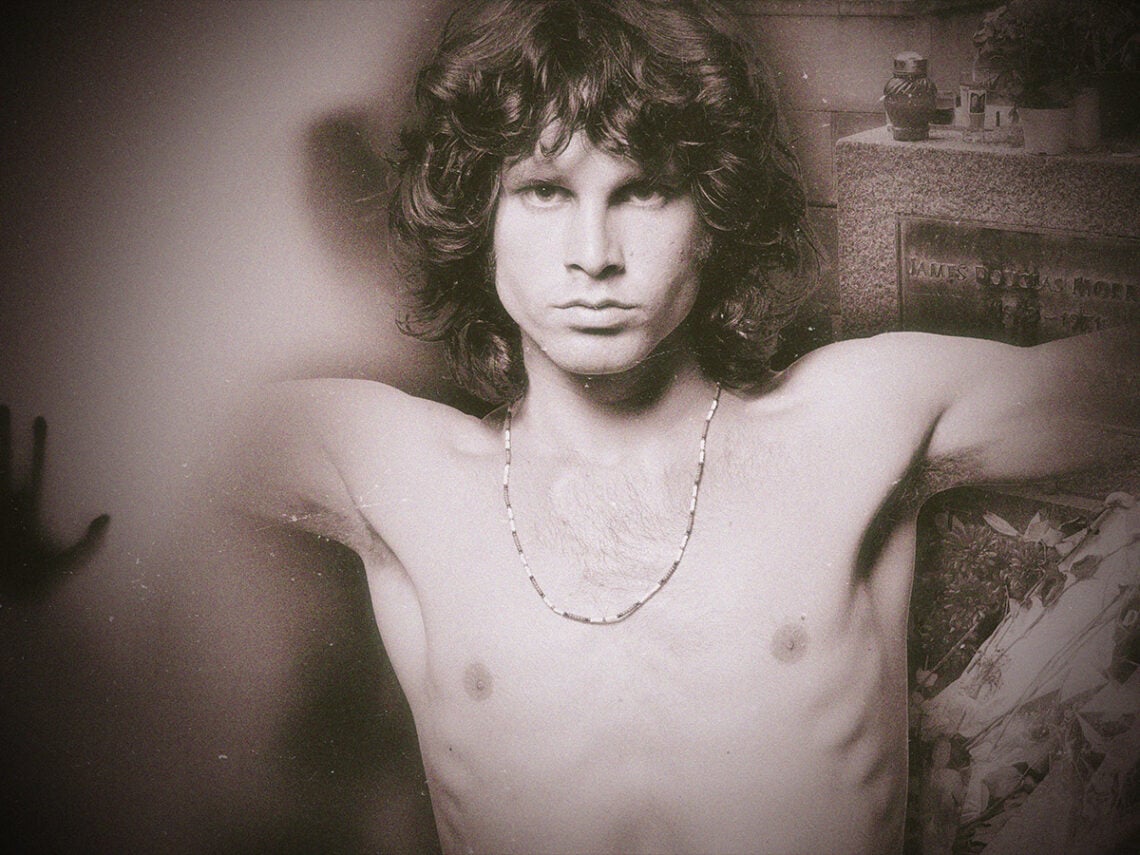
They were more of a shape than a figure, with only their torso and the faintest outline of their legs to go on. Which will be easy for skeptics to dismiss. After all, photos have strange smudges and tricks of the light in them all the time. Except for one key distinction here. The torso is very much in focus and is in the exact same position as arguably the most iconic photo of Jim Morrison of all, chest bare, staring at the camera, arms out to the sides in a Jesus Christ pose.


Ok, cute, you might think. Meisner got in touch with someone who was a dab hand at Photoshop and put a shape that looked like the ghost of Morrison in the background for some attention. Well done, good craic, pull the other one, it’s got bells on, right?


Except that Meisner sent the original photo to the Daily Express of the UK, daring them to find any hint of Photoshop or any other kind of trickery in the photo. They found none of the sort, theorising that if it was a fake, it was the highest quality fake they’d ever seen.


What’s more, if you think that this was done for attention (and, putting aside all my “I want to believe” bullshit, it almost certainly was, even if it’s real), Meisner spent the next couple of years talking about the non-stop bad luck he’d faced ever since he’d gone public with the photo.


The writer, who kept an extensive blog on his website, spoke openly about how, since 2002, his marriage had hit the rocks and led to a divorce, his career as a writer in Hollywood had stalled beyond repair, and one of his best friends had died of a drug overdose in circumstances eerily similar to Morrison’s.


Meisner himself died in 2010, though before you get too caught up in this mystery, it’s worth mentioning that, alongside being a writer and a critic, Meisner was, first and foremost, a humorist. He wrote several rock ‘n’ roll-themed comedy blogs, including the quite marvellously titled CSI: CSNY.


If anyone was going to commit to a bit, he was. However, if anyone was going to appreciate the commitment to a bit of ookum-spookums, it’s Jim Morrison himself, who maintained while he was alive that his life was changed by encountering the ghost of a Native American who he’d seen die in a car crash.


It sounds like Morrison would adore something like this, so why take it away from him? He might be watching us from beyond the grave, after all.

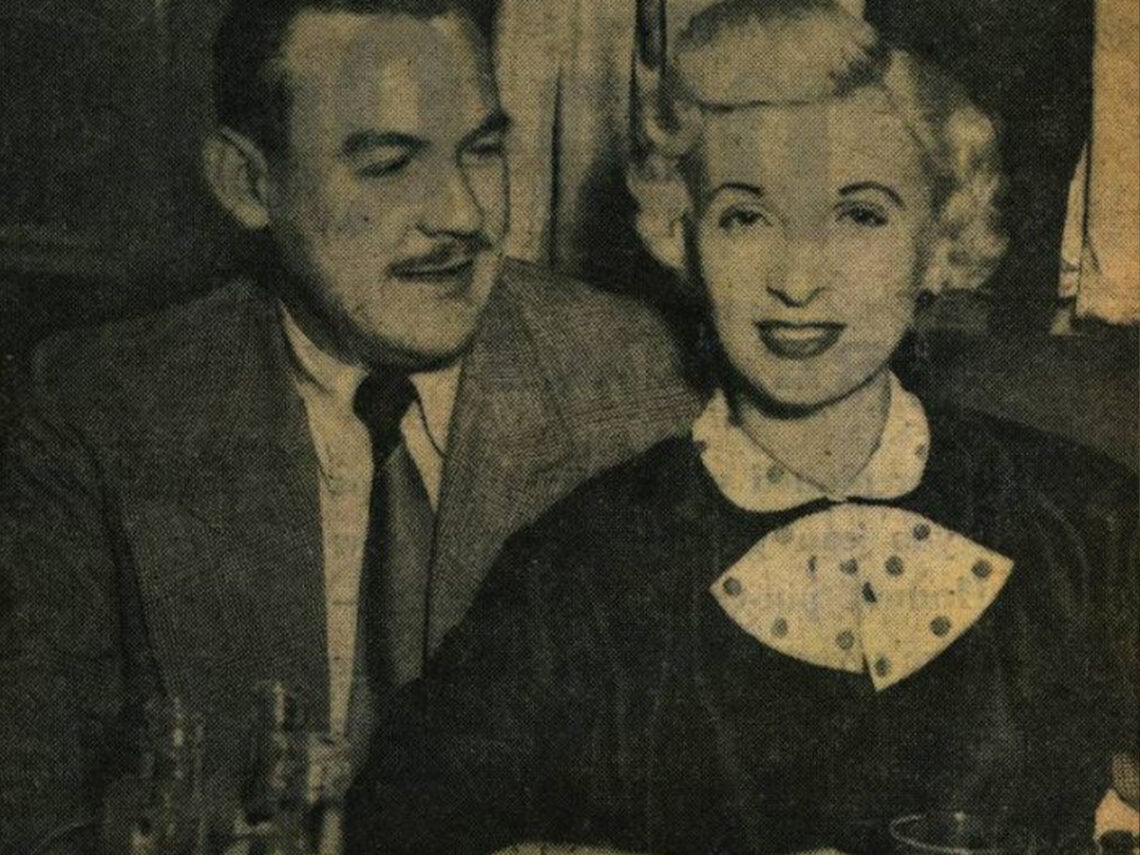
Brett Meisner at Jim Morrison's Grave


The Doors - Strange Days (Official Video)

The last woman to be hanged in the UK; Ruth Ellis receives ‘conditional' posthumous pardon for murder’ | DANGEROUS MINDS [Rachael Pimblett]

Ruth Ellis - 1955


Last woman to be hanged in the UK receives posthumous pardon

Ruth Ellis, who had the unfortunate honour of being the last-ever woman to be hanged to death in the UK, has been granted a conditional posthumous pardon.

King Charles has granted the pardon to Ellis, who was hanged in 1955 after she was convicted of murdering her abusive partner.


England’s deputy Prime Minister, David Lammy, revealed that the sentence will be commuted from execution to life in prison.


Lammy explained, “While the pardon does not claim she was innocent of killing David Blakely,  it replaces the death penalty with a sentence of life imprisonment to recognise a profound injustice in this exceptional case profound injustice in this exceptional case”.


The Ministry of Justice also weighed in on the matter, deeming the conditional pardon “an act of mercy recognising the historic injustice of the death penalty in this exceptional case”.

Ellis, who was from Rhyl, Denbighshire, fired five shots at her lover outside of The Magdala pub in Hampstead, London. Throughout her tumultuous relationship with the man, she had been punched in the stomach by Blakely during an argument, which had led to a miscarriage.

She was arrested immediately by an off-duty policeman, who heard her say, “I am guilty, I’m a little confused.”


However, during her trial, she was asked only a single question; on the stand, she explained that it was “obvious when I shot him that I intended to kill him,” which led to a guilty verdict that took the jury only 20 minutes to reach.


Labour MP Pam Cox explained that the case served as a “haunting reminder of a time when our justice system ignored the realities of domestic abuse and coercive control.”


In light of the new pardon, Ellis’ granddaughter Laura Enston celebrated the news, sharing, “The shadow of Ruth’s execution has fallen across two generations. We have carried shame that was never ours to bear.”

Monday, June 29, 2026

DANGEROUS MINDS - The horrifying real-life murder that Bob Dylan turned into a folk song in 1963 - Will Howard


The horrifying real-life murder that Bob Dylan turned into a folk song in 1963


In the 1940s and ’50s, the leading voices in folk music specialised in what was termed as newspaper songs, which seems a strange concept in 2026 in a post-print age.

These are pretty much exactly what they say on the tin: songs that aren’t expressions of the inner feelings of the singer or a fictional story, but a real thing that happened. More than that, they’re real things that happened in recent memory, rather than centuries back, like with many modern classic folk songs. It’s the reason that the likes of Pete Seeger and Woody Guthrie were termed to be “singing the news”. In a way, they were journalists as much as anything else.


So, it makes sense that a man like Bob Dylan, who was a devotee of both of those singer-songwriters, would have started out making that kind of folk music himself. While his first foray into folk music was built on an array of covers, both of traditional folk standards and songs written by his contemporaries, it soon became apparent that Dylan was a songwriting prodigy. His voice was just as important as anyone else’s, and one of the first songs to really stake that claim was one of the best and most chilling newspaper songs of the early 1960s.


In the early hours of February 9th, 1963, 24-year-old William Devereux ‘Billy’ Zantzinger arrived at the Emerson Hotel to attend a white tie event called the Spinsters’ Ball. Zantzinger was already drunk from a night out and set out continuing the appalling behaviour that he’d shown the entire previous night.


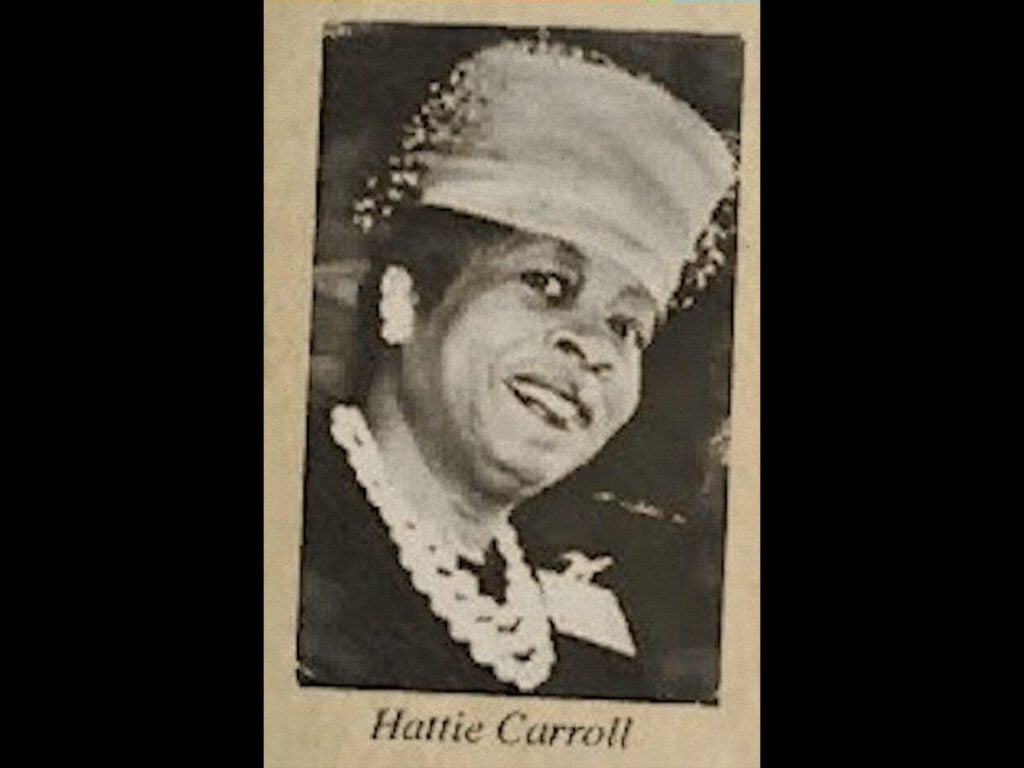
Racially abusing the Black serving staff of the hotel and also physically assaulting them with a toy cane he’d received earlier that night. He ordered a bourbon from Hattie Carroll, a 51-year-old barmaid, and when he didn’t immediately receive it, he berated her with a tirade of racial abuse and struck her on the shoulder with the cane.


Eight hours later, Carroll was dead. Zantzinger’s behaviour had caused a brain hemorrhage and he was arrested for her murder. However, Zantzinger was both rich and white. His lawyers managed to argue that since it wasn’t the blow from the cane but his behaviour that caused the haemorrhage, this was grounds to lower the charge from murder to manslaughter. Despite the fact that his behaviour directly led to her death.


Only known photograph of Hattie Carroll.


Zantzinger was sentenced to just six months in prison, with the three judges who sentenced him (not a jury) specifically sending him to a county jail rather than a state prison, where the majority Black population would have made him a target. Y’know, considering the racist murder that he’d committed… As if it couldn’t get any worse, Zantzinger’s wife (who he’d also assaulted the night he murdered Carroll) was quoted after the trial saying, “Nobody treats his n****** as well as Billy does around here.”


For those keeping track, this is just over 60 years ago, not the 160 years ago that it might feel like.


This sentence came through the same day that Martin Luther King delivered the ‘I Have a Dream’ speech at the March on Washington for Jobs and Freedom, a march that a 22-year-old Dylan walked as well, and on the journey home, he read about the case and the travesty of justice it represented and decided to write a song about it, finishing it within days and immediately adding it to his live repertoire.


The song followed Zantzinger for the rest of his life, which came to an end on January 3rd, 2009.

Bob Dylan - The Lonesome Death of Hattie Carroll (Official Audio)

Saturday, May 23, 2026

Music gave David Lynch a Hernia!? | DANGEROUS MINDS - Will Howard


 MUSIC

The ambient jazz track that gave David Lynch a hernia in 1993

The ambient jazz track that gave David Lynch a hernia in 1993

David Lynch didn’t just make some of the greatest movies of the late 20th century; he was also blessed with being a polymath.

Not content with merely being a writer and director of films, Lynch was also a talented artist and painter. He could act, too, check out his scene-stealing turn as John Ford in Steven Spielberg’s masterful The Fabelmans for proof. However, the side project he seemed to have the most affection for was music.


It should come as no surprise, considering music operated as an intensely important part of building that signature Lynchian style.


Due to his obsession with the art form, it makes sense that he’d eventually stop merely telling his collaborators the vague ideas of the music that was in his head and start making music of his own.


By 1991, Lynch had been working with Angelo Badalamenti for over five years, their first collaboration coming with the distressing masterpiece Blue Velvet, and the two were on such similar wavelengths that they decided to collaborate directly on a whole music project together.


The two essentially wanted to take the ambient, experimental jazz they’d made for Blue Velvet and make a record out of it. As a result, Thought Gang was born. While a whole album was recorded, the only tracks that surfaced from it were on the soundtrack to the deeply misunderstood movie spin-off of one of the greatest TV series ever made, Twin Peaks: Fire Walk With Me. One of which was the song ‘A Real Indication’, which inadvertently sent Lynch to hospital.


The song is a moody slice of blues-infused jazz that was going to be built around Lynch’s own poetry. However, Lynch himself wasn’t comfortable performing the song, and couldn’t find anyone else to do it. So, being a top man and a top collaborator, Badalamenti volunteered to do the honours. Something which the infamously straight-talking Lynch told their engineer Artie Pohlemus would be “embarassing”.


Badalamenti was a man of his word, though, and stepped into the booth himself to improvise a performance of Lynch’s lyrics. The result needs to be heard to be believed. Badalamenti, looking and sounding like an enforcer from The Sopranos, delivered a raging, menacing, soothing and seductive reading of Lynch’s work, completely off the dome and unprepared. Lynch, being the supportive collaborator that he was, laughed so hard that he literally gave himself a hernia out of sheer mirth, describing the incident in graphic detail in an interview with Rolling Stone later on.


He recalled, “I laughed so hard, It was like a light bulb burst in my stomach. I had to have an operation and go through all this stuff ’cause of Angelo.” 


At the very least, he loved what Badalamenti came up with so much that the song made it into Fire Walk With Me. However, the rest of the record wouldn’t surface until 2018, decades after the album was completed. It’s first single? A full-length, Lynch directed music video for ‘A Real Indication’.


Hopefully, the great man didn’t injure himself during that, too.


image


image


Saturday, May 09, 2026

KOLOB: The home planet of God, according to Mormons : THE BOOK OF MORMON | Will Howard : Dangerous Minds

After the look at Scientology the other day (can’t see anyone having the cojones of releasing a music based on the Book of Dianetics!) Comes this from Will at Dangerous Minds!!

Kolob the home planet of God, according to mormons 

Credit: Dangerous Minds / Bertel Thorvaldsen / Joseph Smith / Reuben Hedlock / Public Domain

Kolob: The home planet of God, according to Mormons

Like pretty much all jokes in the hit musical comedy The Book of Mormon, the song ‘I Believe’ on the Mormon belief system is very simple, yet extremely effective. 

It’s actually quite similar to the South Park gag about Scientology beliefs when you think about it. In both cases, the libertarian in your life’s favourite comedy writers sit back and let the bizarre beliefs of a religion do the hard work for them. Citing the most bizarre parts of both dogmas as a way of making both of them look cretinous.

Among the lines about ancient Jews building boats and sailing to America, the president of the church, Thomas Monson, speaking directly to God and how in 1978, God changed his mind about Black people, is one absolute gem that Elder Price tosses out like it’s absolutely nothing – he says that he believes God lives on a planet called Kolob, that Jesus has his own planet as well, and when someone who believes in him dies, they get their own planet as well.

Yup, this is all completely congruent with Mormon belief systems. Viewed from a certain perspective, Mormonism sounds just as much like a sci-fi acid trip as Scientology, principally because it’s completely obsessed with planets. Or, as they’re referred to in the scripture, “stars”.

The Book of Abraham refers to the star of Kolob being “the nearest to the throne of God”, and since we know today that stars aren’t actually, y’know, habitable, “stars” have been retconned to be the word this particular holy book uses for planets. So, where exactly does this idea come from?

The idea of Kolob is one put forward by Joseph Smith himself, the founder of Mormonism and the Latter Day Saints movement – according to Smith, he purchased a set of Ancient Egyptian papyrus scrolls in the mid-1800s, and he transcribed what he found and brought its teachings to the world, first via his newsletter Times and Seasons in 1842, then in The Book of Abraham, and it’s there that Smith lays down one of the key tidbits of information regarding the planet.


To quote The Book of Abraham, it says, “The measurement according to celestial time, which celestial time signifies one day to a cubit. One day in Kolob is equal to a thousand years according to the measurement of the Earth,” which checks out.


Especially when you take into account the accepted Christian dogma of the world being built in seven days. Or at the very least, six days, then rested on the seventh. Those were Kolob days – to us, they would have taken 6000 years, then 1000 more to move Earth from Kolob to its current position in our Solar System.


This would imply, however, that it can’t be anywhere close to us, despite a number of early Mormon converts declaring that our sun was Kolob. However, according to Smith himself, Kolob is visible from our world. Or at the very least, Methuselah and Abraham saw the planet by looking through Urim and Thummim, a set of seer stones embedded in a pair of spectacles that could also translate all languages. Handy to have around, I’m sure you’d agree.


It just goes to show that, say what you want about Trey Parker and Matt Stone (I will and I do), they are the masters of giving people enough rope to hang themselves with. They just repeated what Mormons actually believe, and now the entire church believes that their music is the work of the devil. Because truly, sometimes the only difference between religion and the rantings of a madman is how many people believe in it.


 I Believe from the Book of Mormon Musical on the 65th Tony Awards.

Friday, May 08, 2026

Sometimes I Have a Great Notion . . . . . Did Leadbelly Sing himself out of prison (twice!?) | WILL HOWARD | DANGEROUS MINDS

Did Lead Belly really sing himself out of prison in 1925 and 1930

Credit: Dangerous Minds / Library of Congress

Did Lead Belly really sing himself out of prison in twice?

As the ever-present myth of Robert Johnson selling his soul to the devil shows, there’s no form of mystique quite like the one bequeathed to classic blues singers. 


Perhaps it has something to do with those recordings, as well. There are few more haunting sounds than the bluesmen recorded onto acetate, telling stories of hard, hellbound lives over a shrieking, distorted yet somehow lonely-sounding acoustic guitar.

Ryan Coogler was onto something in Sinners, where he depicted blues music played at its best with something not only profound, but literally magical. Something that pierced the veil between worlds, letting light and darkness in, almost in equal measure.

The story most associated with Lead Belly is, on the one hand, far less fantastical than Johnson’s. After all, people ever since have been going down to crossroads all over the south asking for his still-mesmerising skill at the guitar, and the devil just can’t be fucked to turn up.

On the other hand, it’s also a story about a Black man in the 1920s South who, through sheer musical wizardry, was able to sing himself out of jail time and possibly worse.

This was long before he came to prominence as Lead Belly. The story goes, this was still when he was Huddie William Leadbetter, a travelling musician flitting from red light district to red light district. He occasionally did time, but nothing too serious. In 1915, he served time in a chain gang but escaped, reinventing himself as Walter Boyd. This new life lasted only three years, until 1918, when he shot a man dead in self-defence.

He was promptly arrested and, due to the murder and the prior escape, he was sentenced to 30 years in prison.

Did Lead Belly really sing himself out of prison in 1925 and 1930

How did Lead Belly supposedly get out of prison? 

After seven years inside, so the story goes, Lead Belly decided that he was fed up with this prison lark and decided to do something about his situation, so he did what he did best and turned to music. He wrote a song pleading for his release and had it sent to then-Texas governor Pat Neff on acetate, and on Neff’s last day in office, he heard the song and pardoned the folk singer in 1925 – an inspiring story, but one that takes another turn five years later. 


By 1930, the infamous temper of Lead Belly got the better of him again. Not for nothing was one of his most distinguishing features the enormous amount of scars on his head and face. The singer and guitarist was found guilty of assault with the intention to murder and sent to another prison, the notorious Louisiana state penitentiary known colloquially as ‘Angola’. However, by this time, Lead Belly was considerably more famous than he had been 12 years prior. 


In 1933, John Lomax and his father Alan had been travelling the South, making recordings of rural folk and blues singers who might not have had the chance to have their songs committed to wax otherwise. On their travels, they stopped off at Angola to visit Lead Belly and see if he could contribute to their project. The story goes that once more, the song that he recorded was so powerful that it convinced the governor of Louisiana to pardon Lead Belly again. 


However, this is a myth. One that probably spread due to people confusing it with the previous story. The truth is that Lead Belly was due for early release due to good behaviour, and said release coincided with the visit of the Lomaxes. However, they did help Lead Belly turn his life around, the singer asking for help with their project and getting a record deal as a direct result. That much is verifiably true in a way that neither story of Lead Belly singing to be released from prison is. 

However, what is the blues without a good myth?

Leadbelly - Midnight Special


Leadbelly - Gallows Pole


Leadbelly - Goodnight Irene
(The first song I ever learned properly and off a blues EP I bought)

Saturday, April 25, 2026

Dangerous Minds - ‘Performance' the Cult movie 1970 - Will Howard


‘Performance’: the 1970 cult movie that drove a wedge through The Rolling Stones

There are a few moments in the history of The Rolling Stones that I wouldn’t want to be a fly on the wall for, especially in the late 1960s and early 1970s, but the one I would most like to sit in on probably doesn’t have any of the actual band members in it. 

It occurred in 1968, when the execs who’d given the band and a production company a ton of money to make a Rolling Stones motion picture all got together in a Soho screening room to watch the finished product. I can only imagine the backslapping and self-satisfaction in that room prior to the projector starting up. A bunch of men in suits that cost more than your car, convinced they’ve got a surefire hit on their hands, and they’re all going to be cumming money until the 1980s at least. Because surely, this is exactly what they asked for, right?


This film is just A Hard Day’s Night but with The Rolling Stones, right? Sure, it’ll be a little bit different, the movie was made four years after the Fabs’ knockabout comedy larks, and the world was a very different place than it was then. It’ll essentially provide the same service, though, some larks and fun for the teeny boppers to watch their favourite pop stars get up to some shenanigans with. Perhaps with a little more sex and salaciousness, as The Stones were a little more dangerous, but beyond that, fun for all the family? Right?


Then the picture was screened. One of the execs had brought along their wife to see the film, and she vomited in shock. Their money had been spent not on A Hard Day’s Night but with Jagger, Richards and chums, but on a surreal, violent crime thriller that – well, it was a little more sexual than A Hard Day’s Night, as they expected, but they probably weren’t expecting it to feature bisexuality, gender fluidity and threesomes between the main cast members.


Because this wasn’t a knockabout romp. This was Performance, and if it was any consolation to those scandalised suits, it wasn’t really going down any better in the Stones’ camp either.


Why did ‘Performance’ nearly split up The Rolling Stones?

Now, to be clear, on the one hand, the finished article of Performance was exactly the kind of film The Stones wanted it to be. The trouble was everything else. The Rolling Stones weren’t a great place to be in 1968. Brian Jones was in the process of systematically Syd Barrett-ing himself into an early grave. The cops, the taxman and the English press had each made The Stones public enemy number one. Then Jagger took the lead role in this picture, and the role of his girlfriend was given to Anita Pallenberg.

This should have been inspired casting. Pallenberg was exactly the kind of cool that Jagger was, a style icon and high-profile model/actress of the era. The problem was that Anita Pallenberg had a high-profile boyfriend in real life. Who might that be, I hear you ask? Why, that would be Rolling Stones guitarist and lifelong Mick Jagger frenemy, Keith Richards. It was bad enough that Pallenberg and Jagger would be playing romantic partners. When Richards heard that directors by Donald Cammell and Nicolas Roeg were filming unsimulated sex scenes between his girlfriend and his singer, he took to spending entire shooting days sat in his car outside the shooting location.

To make matters worse, this made the chances of a full-on Rolling Stones album as the film’s soundtrack vanishingly thin. Jagger and Richards were barely talking during the production. As the band’s core creative partnership, this was a problem. Only one Jagger/Richards original made it onto the movie’s soundtrack, and, in true Stones fashion, it’s one of their best songs of the late 1960s. ‘Memo From Turner’ points to a tantalising what might have been if a full album had been made to soundtrack Performance.

The film was shelved in disgust in 1968, but by 1970, the world had darkened sufficiently for its release. It was still not a hit by any stretch, but it has since gone down as a cult classic and one of the best British crime gangster flicks ever. I’m sure if you explained that to Keith Richards at the time, he would have completely understood and perhaps even embraced being cucked by his own lead singer. Maybe.
Performance - Theatrical Trailer

Performance - Soundtrack - Randy Newman and ensemble - Gone Dead Train
 . . . .still a favourite track

I don’t know how many times I have watched this film and even sought out the houses featured in London used in it.