I Can See You - by Paddy Summerfield c. 1986

Wednesday, January 04, 2017

THE DOORS - BREAK ON THROUGH

anniversary . . . . . . 

&

DR FEELGOOD

Just because . . . . . . .well we need to


feel good that is . . . .                         [check out Wilco especially at the end , , , ]

Dr.Feelgood 【She Does It Right】
1975、THE GEORDIE SCENE(TYNE TEES)


Also on this day!

On this day in music history: January 4, 1967 - “The Doors”, the debut album by The Doors is released. Produced by Paul A. Rothchild, it is recorded at Sunset Sound Recorders in Hollywood, CA from August 24 - 31, 1966. The L.A. based rock band are signed to a contract by Elektra Records founder Jac Holzman after seeing them perform at the Whisky A Go Go in Hollywood, CA. The album is recorded on a four track multi-track tape machine in only six days of studio time. Consisting of mostly original material (and two covers from their live act), the album initially gets off to a slow start, when the first single “Break On Through (To The Other Side)” does not chart, but the bands’ fortunes change dramatically with the release of the second single “Light My Fire” (#1 Pop). In time it is regarded as one of the most important and influential rock albums of the era. Issued both in mono and stereo, the mono version of the album differs significantly from its stereo counterpart. The mono LP version of “Light My Fire” appears in its original recorded speed, while the more common stereo mix is slightly slower. The mono mix of the final track “The End” features Jim Morrison saying the words “f***, f***, f***” during his extended monologue, while the original stereo version have the expletives mixed out (though a later stereo remix restores them to the track). In April of 2008, the mono version of the album is remastered and reissued on vinyl as part of “The Doors -Vinyl Box” set for Record Store Day. Limited to 12,500 copies, it sells out of its pressing soon after its release. It is the first time this version of the album has been available since being deleted in 1968. In November of 2010, Rhino Records reissues the mono LP individually (limited to 3,000 copies) on Black Friday Record Store Day. “The Doors” spends two weeks at number two on the Billboard Top 200, and is certified 4x Platinum in the US by the RIAA , and is inducted into the Grammy Hall Of Fame in 2002.

Tuesday, January 03, 2017

CARRIE FISHER


I wasn't what you would call a Star Wars fan (calm down everyone, it's not a crime!) and I wasn't really aware of any allure Princess Leia had but 'Postcards From The Edge' blew me away and I took note, I liked Carrie Fisher, here was a woman with a wit and a brain that possessed a great sense of humour as evidenced by her last appearances in 'The Big Bang Theory' and 'Catastrophe' with Sharon Horgan and regular guest spots on QI. She seemed also to have struggled with her addictions and mental wellbeing and I could empathise with her somehow. Sympathise too as a therapist I took this as a wonderful sense of self deprecating self awareness. I take some comfort in that she seems to have had a helluva lot of fun especially towards the end of her quite extraordinary life. She will be missed I know


 . . . . . I'm tense and nervous, can't relax . . . . . . . 


Really nice treat for the first link of 2017 and somehow apt that it should be the masters of contemporary malaise documenting 21stC concerns, urban meltdowns, neurosis and contemporary angst, Talking Heads (before they were a four piece!)This their demo tape recorded at CBS New York . . . . . . .fab!


First class and great quality which lets face it many of the first bootlegs weren't . . . . . .sugar on my tongue . . . . . . 


Thank you for sending me . . . .  this . . . . . . .  


Sunday, January 01, 2017


Brian's reflection upon the year 2016/2017


In full for those without Facebook . . . . . . .or like me those contemplating leaving it

2016/2017
The consensus among most of my friends seems to be that 2016 was a terrible year, and the beginning of a long decline into something we don’t even want to imagine.
2016 was indeed a pretty rough year, but I wonder if it’s the end - not the beginning - of a long decline. Or at least the beginning of the end….for I think we’ve been in decline for about 40 years, enduring a slow process of de-civilisation, but not really quite noticing it until now. I’m reminded of that thing about the frog placed in a pan of slowly heating water…
This decline includes the transition from secure employment to precarious employment, the destruction of unions and the shrinkage of workers’ rights, zero hour contracts, the dismantling of local government, a health service falling apart, an underfunded education system ruled by meaningless exam results and league tables, the increasingly acceptable stigmatisation of immigrants, knee-jerk nationalism, and the concentration of prejudice enabled by social media and the internet.
This process of decivilisation grew out of an ideology which sneered at social generosity and championed a sort of righteous selfishness. (Thatcher: “Poverty is a personality defect”. Ayn Rand: “Altruism is evil”). The emphasis on unrestrained individualism has had two effects: the creation of a huge amount of wealth, and the funnelling of it into fewer and fewer hands. Right now the 62 richest people in the world are as wealthy as the bottom half of its population combined. The Thatcher/Reagan fantasy that all this wealth would ‘trickle down’ and enrich everybody else simply hasn’t transpired. In fact the reverse has happened: the real wages of most people have been in decline for at least two decades, while at the same time their prospects - and the prospects for their children - look dimmer and dimmer. No wonder people are angry, and turning away from business-as-usual government for solutions. When governments pay most attention to whoever has most money, the huge wealth inequalities we now see make a mockery of the idea of democracy. As George Monbiot said: “The pen may be mightier than the sword, but the purse is mightier than the pen”.
Last year people started waking up to this. A lot of them, in their anger, grabbed the nearest Trump-like object and hit the Establishment over the head with it. But those were just the most conspicuous, media-tasty awakenings. Meanwhile there’s been a quieter but equally powerful stirring: people are rethinking what democracy means, what society means and what we need to do to make them work again. People are thinking hard, and, most importantly, thinking out loud, together. I think we underwent a mass disillusionment in 2016, and finally realised it’s time to jump out of the saucepan.
This is the start of something big. It will involve engagement: not just tweets and likes and swipes, but thoughtful and creative social and political action too. It will involve realising that some things we’ve taken for granted - some semblance of truth in reporting, for example - can no longer be expected for free. If we want good reporting and good analysis, we’ll have to pay for it. That means MONEY: direct financial support for the publications and websites struggling to tell the non-corporate, non-establishment side of the story. In the same way if we want happy and creative children we need to take charge of education, not leave it to ideologues and bottom-liners. If we want social generosity, then we must pay our taxes and get rid of our tax havens. And if we want thoughtful politicians, we should stop supporting merely charismatic ones.
Inequality eats away at the heart of a society, breeding disdain, resentment, envy, suspicion, bullying, arrogance and callousness. If we want any decent kind of future we have to push away from that, and I think we’re starting to.
There’s so much to do, so many possibilities. 2017 should be a surprising year.

- Brian

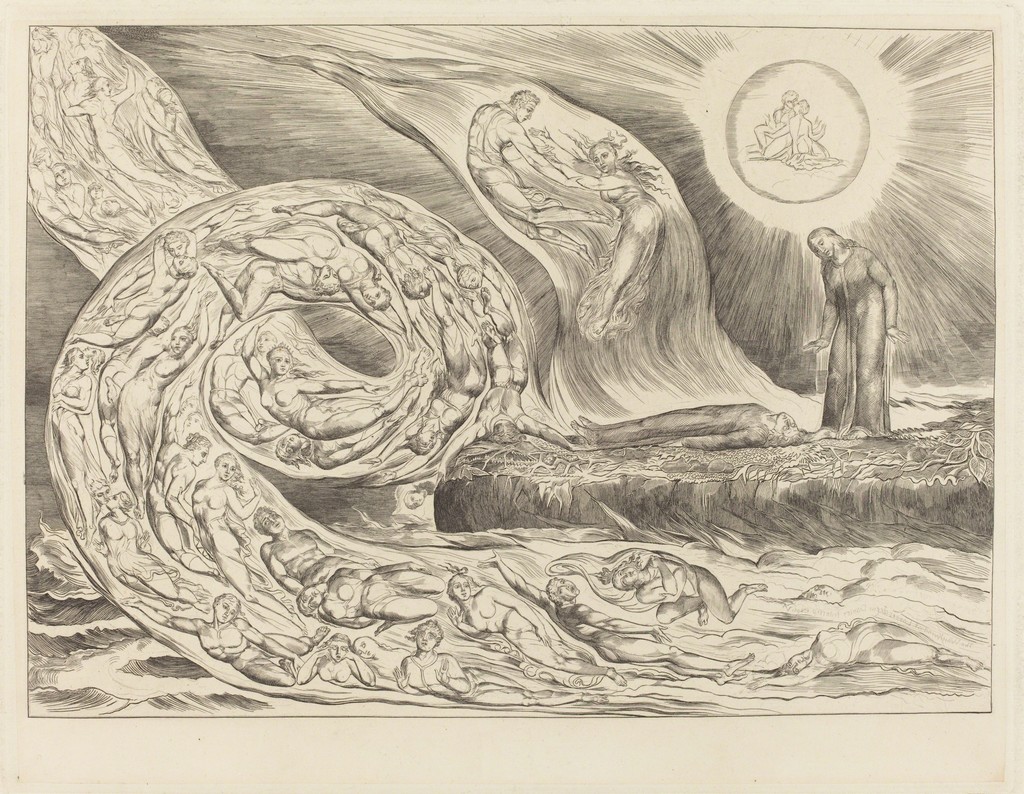
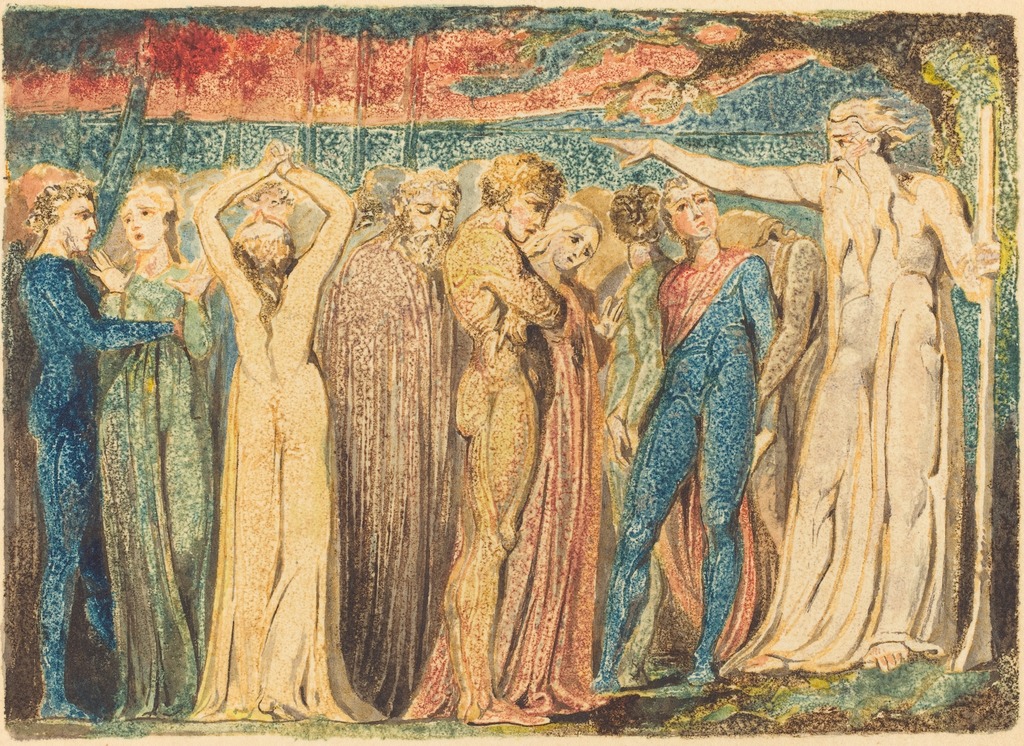
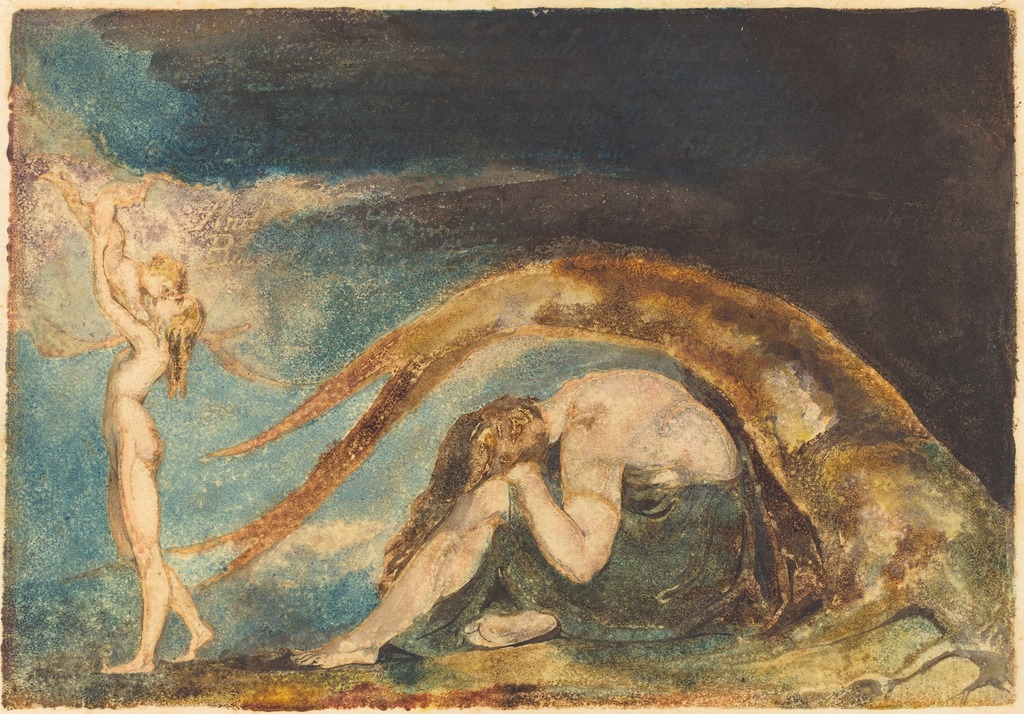
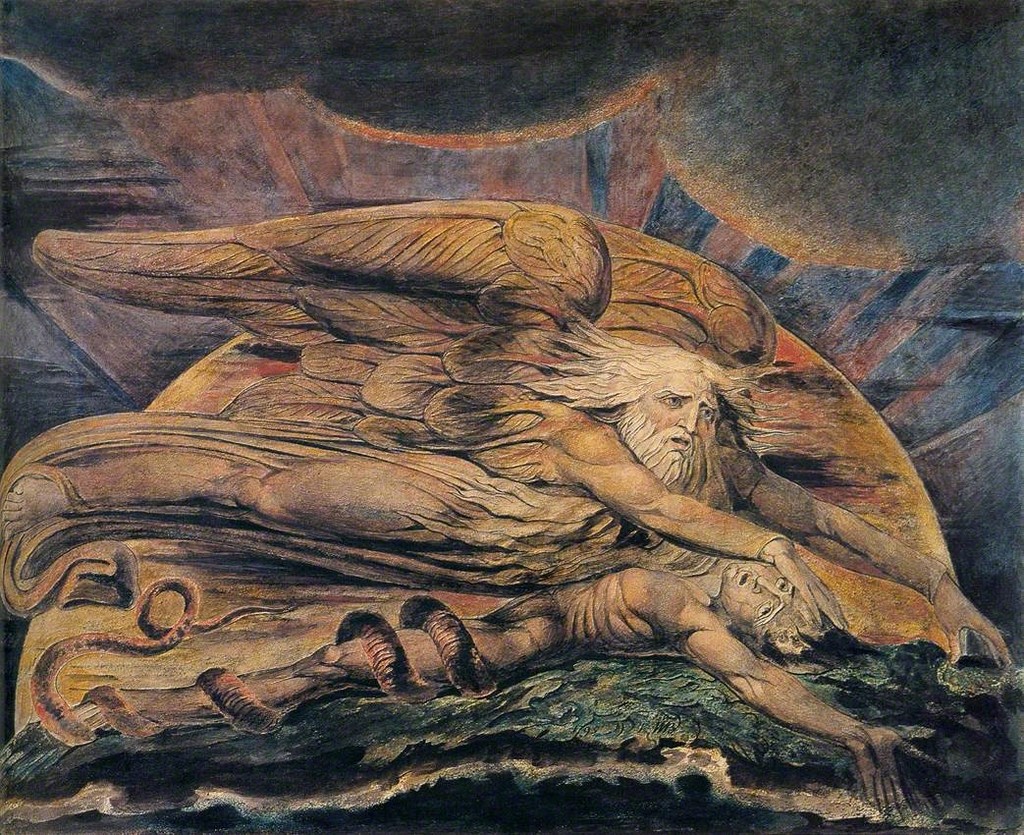
5 Things You Didn’t Know about William Blake

England’s Famous Romantic Artist

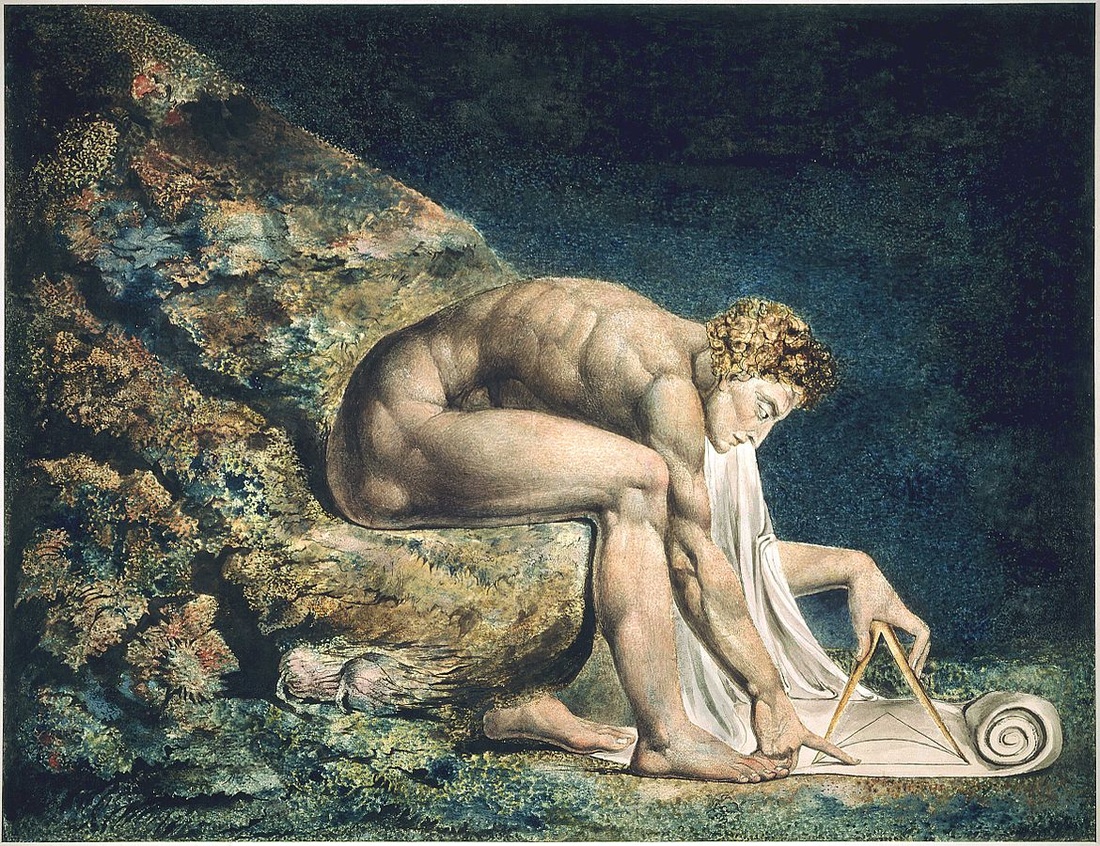
William Blake, Newton, 1795-1805. Collection of Tate Britain. Image via Wikimedia Commons.
Mythologized as a madman, the English Romantic artist and poet William Blake most likely suffered from mental illness. Though unstable, he was far from “insane,” as his contemporaries often described him. Yet it’s his eccentric character, along with his visionary poems and prints of an alternate reality, that has long fueled interest in his work across artistic spheres, from the Pre-Raphaelite Brotherhood to rock ’n ’roll and graphic novels. A nonconforming radical, Blake believed more than anything in the power of imagination. “The Imagination is not a State,” he once wrote: “it is The Human Existence itself.” Here are five things you may not know about William Blake.


He experienced his first vision at the age of four.


Blake was born at the outset of the Industrial Revolution in humble circumstances above his father’s hosier shop in London, living nearly his entire life in the capital. He was only four years old when he saw God’s head appear in a window—the first of many visions he would recount “in the ordinary unempathetic tone in which we speak of trivial matters,” according to his friend, journalist Henry Crabb Robinson. “Of the faculty of Vision….He thinks all men partake of it, but it is lost by not being cultivated.”
Such cultivation, in Blake’s eyes, was impossible under the constraints of formal education and organized religion. Like many working-class children of his time, Blake was home-schooled by his mother. He would later acknowledge that this upbringing allowed his creativity to flourish, writing in one of his poems, “Thank God I never was sent to school / To be flogged into following the style of a fool!”
Religiously, he was profoundly influenced by his father’s faith, Swedenborgianism, a cult sect of Christianity that rejected organization, priesthood, and severe dogmas and instead nurtured the mystical and the benevolent. Blake believed that the human and the divine were one and the same, and that exercising the imagination was itself a spiritual act.


He earned a living primarily as an engraver.


Though today Blake is known as one of the “Big Six” English Romantic poets—along with William Wordsworth, Samuel Taylor Coleridge, Lord Byron, Percy Bysshe Shelley, and John Keats—his principal vocation during his lifetime was that of an engraver. Interested in art from a young age, he attended Henry Pars’s Drawing School on the Strand, where he learned how to draw the human figure from plaster casts. At the age of 14, he began a seven-year apprenticeship to James Basire, a conservative, somewhat old-fashioned commercial printmaker known for his architectural prints. With Basire, Blake picked up the the ins and outs of etching and engraving, from polishing copperplates to sharpening tools and coating plates with acid, and eventually etching plates himself. Aware of his apprentice’s talent, Basire sent Blake to Westminster Abbey, where he sketched medieval monuments in preparation for engraving. It was there, in the chapel’s ornate interior, Blake discovered his love for the Gothic.
In his free time, Blake purchased and engraved copies of cheap prints by RaphaelMichelangeloGiulio Romano, and Albrecht Dürer, whose work he deeply admired. Blake also wanted to paint, yet his success was stifled by aesthetic tastes of the time. In 1779, he enrolled in the Royal Academy of the Arts, choosing watercolor as his medium and religious and historical scenes as his subjects, thus eschewing what were then-fashionable oil paintings of landscapes and portraits. Detesting the conservative teachings of the academy president, the portrait painter Sir Joshua Reynolds, Blake dropped out after just one year.


He invented an entirely new method of etching, which he used to create his “illuminated books.”


While making a living on commercial projects and commissions, Blake searched for a way to print and publish his own poems. Sometime around 1788, the answer came to him in a vision of his recently deceased brother, Robert, who revealed a new technique of “relief etching.”
Typically an intaglio process, etching involves incising a design into a copper plate covered with acid-resistant wax. When dipped in acid, the incised areas (unprotected by wax) are further eroded. When ink is applied to the entire plate and then wiped off, only the grooved portions are left containing ink. Pushed through a press, these designs create the final impression on paper.
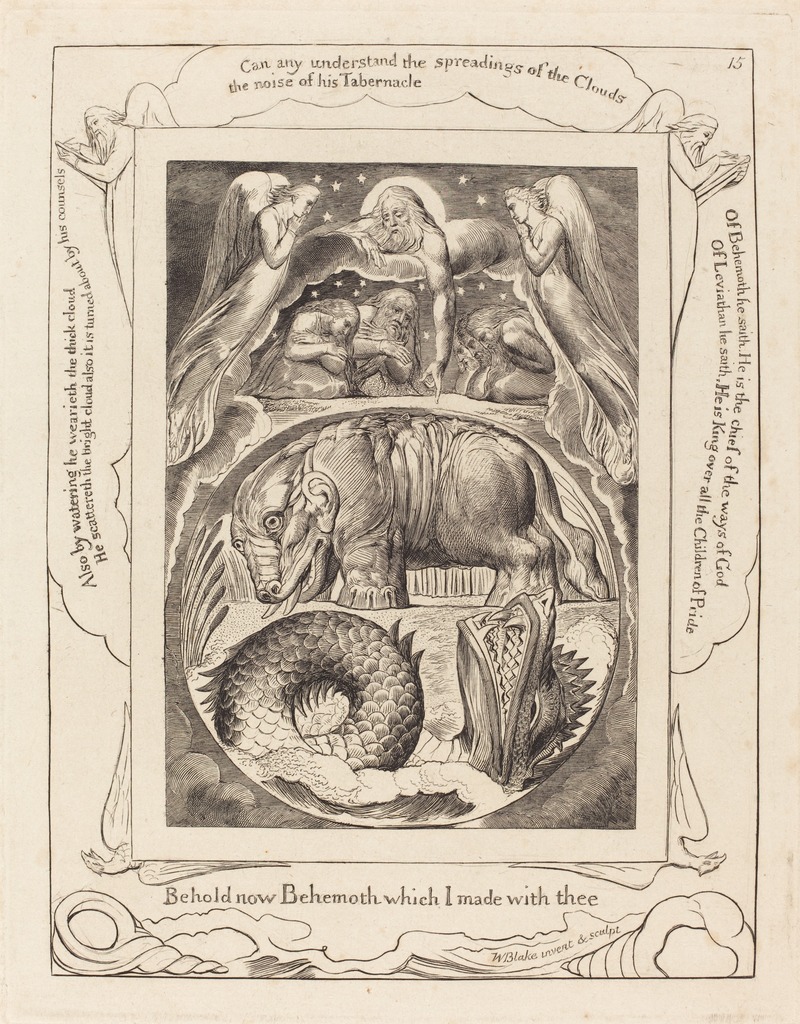
In his own method, Blake painted his designs on a copperplate with acid-resistant varnish; acid would then eat away at the untouched areas and leave only the design in relief. Ultimately, this technique allowed the artist to control all aspects of production, from writing the verses and designing the imagery to printing the plate, coloring in by hand if necessary, and bounding the pages in covers. The results were his “illuminated books.” Subjects ranged from prophecies (as in his 1790 “Continental Prophecies” of America and Europe) to religious and social satire (as in The Marriage of Heaven and Hell from 1790) with frequent comments on contemporary topics such as poverty, child labor, racial inequality, and the hypocrisy of the church. Blake even invented his own mythological cast of characters: There was Albion, the primeval man; Orc, the spirit of rebellion; and Urizen, the embodiment of reason and law who was dramatically depicted in one of Blake’s most celebrated prints, The Ancient of Days (1794).


He was little-known during his lifetime.


Considering Blake’s place in literature and art history today, it’s hard to believe he was unheralded in his own lifetime. Resolved to a life of simple pleasures—printmaking, poetry, and his loving wife and assistant, Catherine—Blake died poor, having achieved far less fame than his Romantic peers William Wordsworth and Samuel Taylor Coleridge. In fact, when men originally sought to erect a memorial in his honor, they were unable to find the exact location of his grave. (A memorial was eventually erected, in 1957, in Westminster Abbey.) Only with the 1863 publication of Alexander Gilchrist’s biography The Life of William Blake, more than three decades after Blake’s his death, was he saved from oblivion and granted his due recognition in art and literature.


He has inspired songwriters, poets, authors, graphic novelists, and artists—from Jackson Pollock to Philip Pullman.


Rescued from obscurity by Gilchrist’s biography, Blake’s dreamlike scenes and verses influenced a range of artistic movements from the Pre-Raphaelite Brotherhood, who shared his penchant for the Gothic, to Surrealism, whose followers admired Blake’s visionary transformations of the physical world. Even the Abstract Expressionist Jackson Pollock was said to have a fondness for the artist; he had one of Blake’s illustrations pinned to a wall in his Long Island studio.
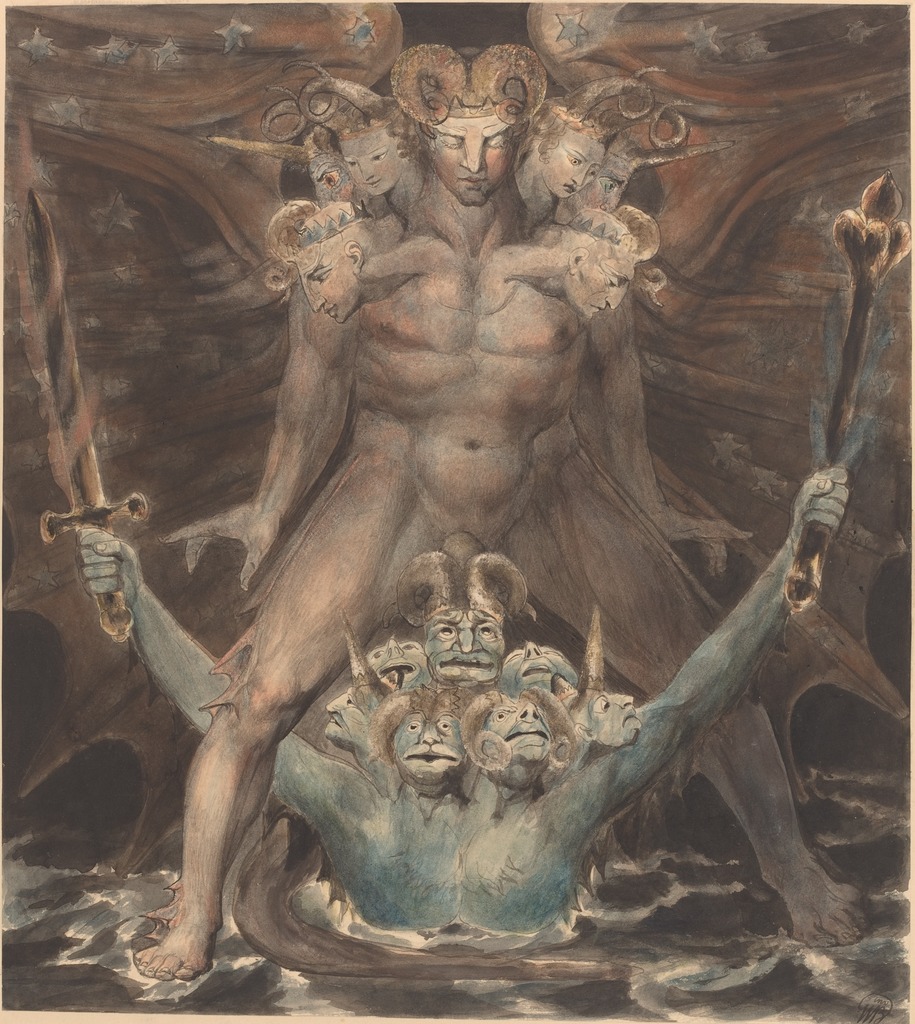
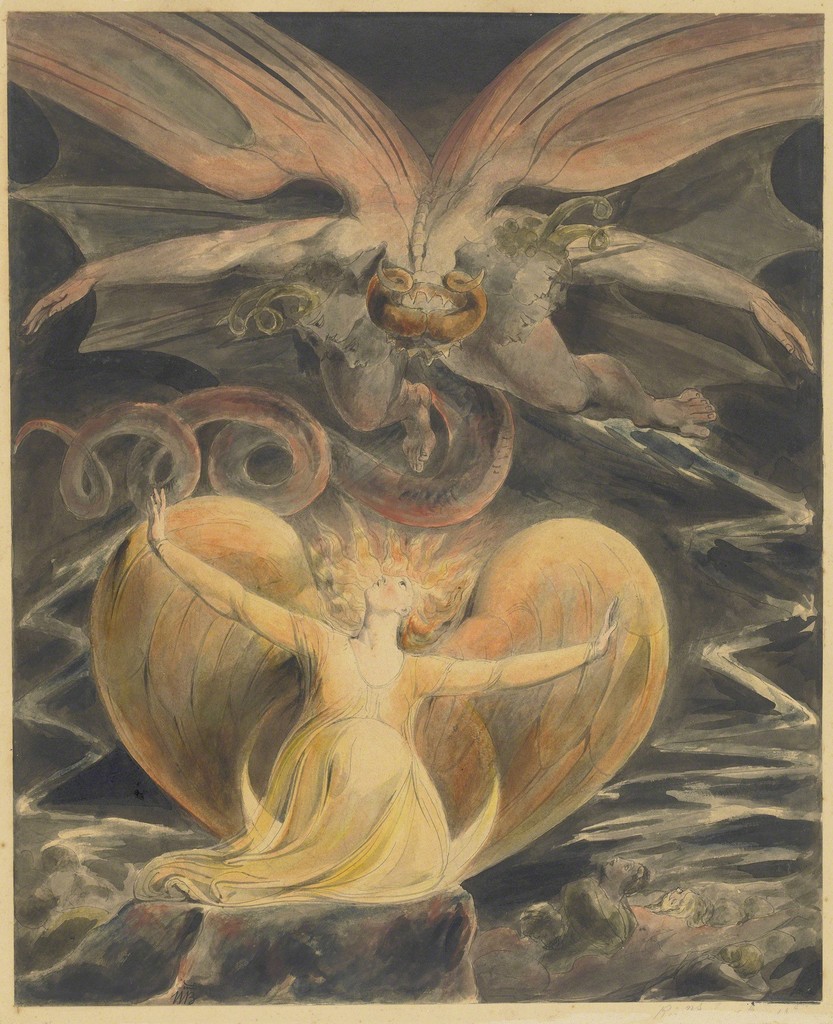
His influence has also been cited by novelists, poets, and songwriters, including James Joyce, Salman Rushdie, Allen Ginsberg, T.S. Eliot, Walt Whitman, Bob Dylan, John Lennon, and Patti Smith. Given the otherworldly nature of his work, Blake’s influence on the fantasy genre is particularly compelling. Philip Pullman cited Blake, along with Milton and Heinrich von Kleist, as an inspiration for the “His Dark Materials” trilogy. Likewise, in the crime genre, Blake’s Great Red Dragon and the Woman Clothed in Sun (1803–05) spurs the protagonist in Thomas Harris’s Red Dragon (1981) to murder two families in hopes of gaining the strength of the dragon in Blake’s painting.
Aside from incorporating Blake’s work in his graphic novels V for Vendetta (1982–85) and Watchmen (1986–87), Alan Moore featured Blake himself as a mystical character in From Hell (1991–98). Moore, another Englishman, said the artist “was living in a London which was not much more than a squalid horse toilet, on which he superimposed a magnificent four-fold city and populated it with angels, and philosophers of the past. Art at its best has the power to insist on a different reality.”
Blake indeed lived his own reality. Along with his radical beliefs, he was known to be excessively self-confident and stubborn, rejecting any opinions out of line with his own. It was likely this refusal to conform that buried him in obscurity during his lifetime—and, eventually, cemented him as a visionary hero and symbol of artistic individualism.

—Demie Kim

2017