Rachel Humphreys and the art of the muse

While this is nominally an article about Lou Reed, there’s one thing to clear up beforehand. Anyone who tries to tell you that transgender people weren’t around when they were growing up is either lying to you, ignorant or a third, even more tellingly, the kind of people we were trying to hide from in the first place.
Because it’s true, transgender people have been around for as long as people have been around. Going about our business despite the sheer number of people who think we’re a blight on humanity who need to be removed. It’s a living, I guess.
This was especially the case with Lou Reed. The Velvet Underground frontman was never the stadium-slaying pop star that he clearly wanted to be in the 1970s, but he was still more than a cult concern. He was touring the world, worshipped by hundreds of thousands and playing music inspired by his life in the New York City LGBTQ+ scene. One where he found people he loved both platonically and, in the case of Rachel Humphreys, romantically.
Humphreys was a tough kid raised on the streets of New Jersey in the way that Reed himself only ever pretended to be. A Texan girl of Mexican Native descent, Reed met her in the early 1970s and was immediately infatuated with her. Telling his biographer for Lou Reed: A Life, “I’d been up for days, as usual, and everything was at that superreal, glowing stage. I walked in there, and there was this amazing person, the incredible head, kind of vibrating out of it all. Rachel was wearing this amazing makeup and dress and I was obviously in a different world to anyone else in the place.”
Rachel was seemingly genderfluid at the time, using male and female pronouns and switching her coding and presentation by the day (no, gender fluidity isn’t new either, do keep up). However, by the time she and Reed began dating, Humphreys had settled into her identity as a transgender woman. She joined Reed’s touring crew as a hairdresser, and for a period of time, they were completely inseparable. At least for a period of time.
Eventually, Lou Reed gotta Lou Reed, and possessed an almost supernatural ability to bully anyone and everyone in his life.

How did Lou Reed ruin everything?
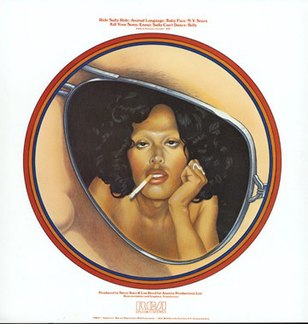
Reed was never private about his love for Humphreys. It would be difficult to be, as the vast majority of his music was inspired by her, but it wouldn’t be the first or last time that a cis musician hid his trans girlfriend from the world despite owing her his success. No, she turned up in his lyrics and even on the art of his albums. The album most directly influenced by his time with her, Sally Can’t Dance, has an incredible portrait of her on the back cover
The couple had a three year anniversary party in 1977, which many took as a tacit wedding party. However, like many couples, that was when everything started to fall apart. The heart of the issue was gender affirming surgery. According to friends of Humphreys, Reed would talk about wanting Humphreys to go through with the procedure (something which Humphreys herself was only too happy to oblige), however, whenever Humphreys actually got the chance to go through with it, Reed categorically refused to let her. As if he had any say in that conversation whatsoever.
The relationship was clearly on the rocks and in 1978, Reed and Humphreys were done. Seemingly, Reed moved on quickly but Humphreys never did, reportedly spending most of the 1980s homeless before dying in 1990, aged just 37. Not much is known of the circumstances of her death but she died in Saint Clare’s Hospital, an institution that specialised in helping those affected by the HIV/AIDS epidemic. One can work it out.
Humphreys wasn’t the only trans woman who inspired Lou Reed. This was the man who wrote ‘Candy Says’ after all, the trans community had always been a part of his music. While he depicted them with grace and love in his music, those were feelings he seemingly couldn’t muster for them in real life for longer than a few years. Such is the way for most women who inspire the music of so-called “great men”, whether cis, trans or otherwise.
René de la Bush
No comments:
Post a Comment