
The 10 clues David Lynch gave for decoding ‘Mulholland Drive’
It’s one of the great interview moments in movies – David Lynch is being interviewed by David Lean for Bafta, and he says, “Believe it or not, Eraserhead is my most spiritual film“… Lean is intrigued by this, as any fan of Lynch’s work would be, so he says, “Elaborate on that,” and Lynch smiles and replies, simply, “No.”
It’s Lynch in his purest form, and anyone who believes that Lynch’s movies are pretentious or weird for the sake of being weird either only knows him from his reputation or is acting in bad faith… Sure, his work is challenging and surreal, even in more mainstream-facing works like The Elephant Man and the early seasons of Twin Peaks, but the idea that he’s this charlatan who makes weird shit to look cool and edgy without anything under the surface is just childish.
Lynch’s work, even at its most obtuse (hello Inland Empire!), is full of heart. There is always a message at their core, and he’s always trying to say something profound with his work. Sometimes for ill, you understand. Despite having arguably the best opening 40 minutes of any of Lynch’s films, Lost Highway descends into little more than a remake of Blue Velvet that’s even more bitter and aggressive than his 1986 neo-noir thriller.
However, the very last person who was ever going to tell you the ins and outs of what inspired the work of David Lynch was David Lynch himself. The reasons for this are multitudinous. Lynch was a famously private person, for one. He also wanted people to read their own interpretations into his films and embrace the subjective nature of art criticism. He might have made it for his own reasons, but a work of art is only heightened by what others read into it after all.
Which makes it all the stranger that for the DVD release of his masterpiece Mulholland Drive, Lynch curated a list of ten clues that could help unlock the film for interested viewers.
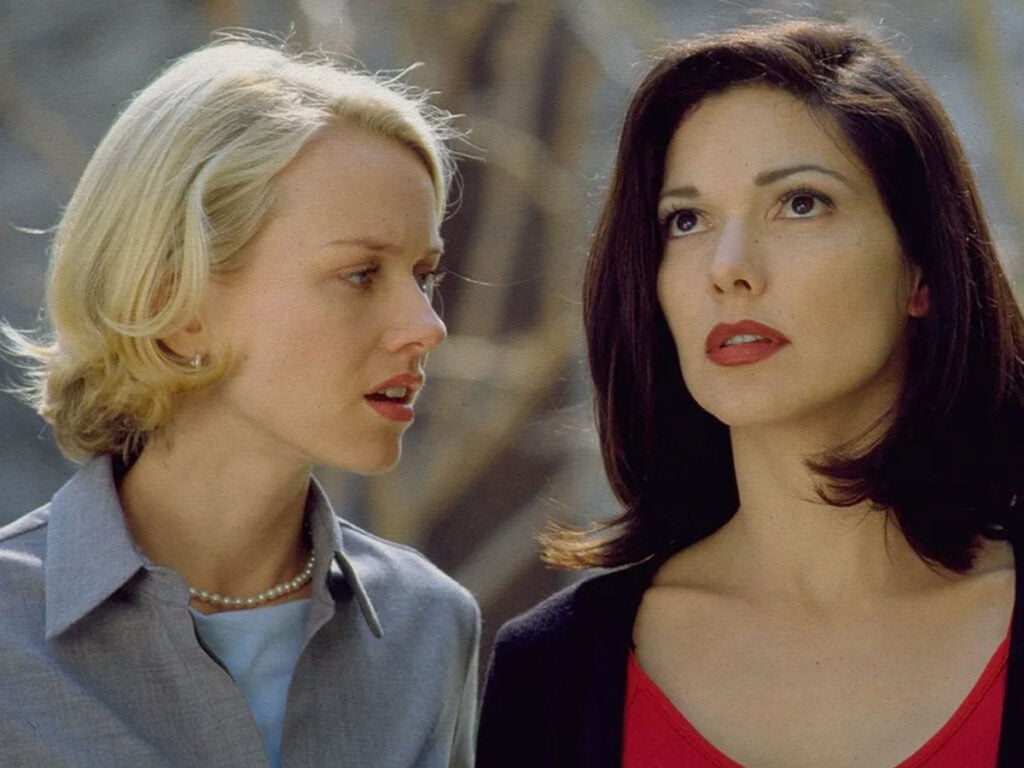
The 10 clues David Lynch gave for decoding Mulholland Drive:
- Pay particular attention in the beginning of the film: at least two clues are revealed before the credits.
- Notice appearances of the red lampshade.
- Can you hear the title of the film that Adam Kesher is auditioning actresses for? Is it mentioned again?
- An accident is a terrible event… notice the location of the accident.
- Who gives a key, and why?
- Notice the robe, the ashtray, the coffee cup.
- What is felt, realised, and gathered at the club Silencio?
- Did talent alone help Camilla?
- Note the occurrences surrounding the man behind Winkies.
- Where is Aunt Ruth?
On the one hand, it would be easy to disregard these as nothing more than PR fluff. While the theatre run of Mulholland Drive was fairly successful by Lynch’s standards, it was clear this was going to be a film that would thrive on DVD. Thus, having something like this for the DVD release would certainly drive sales. It seems to go so utterly against Lynch’s philosophy for decoding his movies that one could understand the feeling that, at best, this was some intern writing as Lynch, and, at worst, they were a troll job from Lynch. A set of jokes poking fun at the idea that there was a way of “working out” what the film was “really about”.
However, the 2005 edition of Lynch on Lynch, a collection of interviews with the great director, actually covers this episode of his career specifically. When asked whether he wrote them himself, surprisingly, Lynch noted, “Just for the heck of it, let me think about it.”
He elaborated on his process, saying, “They had to be genuine clues, but they also had to be pretty obscure, so if you had a certain take on the movie, the clues would be obvious, and if you had another take on it, they’d make you think, and maybe you’d see it again in a different way… They said it kind of worked, so I guess that’s why they made their way to England. I’m against that kind of thing, but they were pretty abstract kinds of clues.”
Which I think is the ultimate sign that this is the work of Lynch himself, notice how none of these clues are meant to guide the reader towards any specific interpretation of the piece… They’re really just emphasising important aspects of the picture that you might have missed on a first viewing and asking you to consider what they could mean in the grand scheme of things. They’re not “clues” in the sense that they tell the audience exactly what they’re watching; they’re encouraging an in-depth viewing of the film.
Nothing could be more classically Lynch in practise. What’s more, no film could be more deserving of an in-depth reading than Mulholland Drive, one of the greatest films of the 21st century.
No comments:
Post a Comment