More of JJ to say G’Night!
Showing posts with label JJ Cale. Show all posts
Showing posts with label JJ Cale. Show all posts
Monday, May 25, 2026
Thursday, May 15, 2025
JJ Cale on guitar playing - Russell Hall [Performing Songwriter - Issue 116]

How did your guitar playing become distinctive?
J.J. Cale:
I could never get the playing of whoever I was listening to exactly right. I would miss a few notes here and there or get a chord wrong. Through that, my playing ended up sounding a bit different from the person I was imitating. As the years went by, I deliberately kept letting that happen. That’s where a person’s style comes from. If you play exactly like someone else, you don’t come up with anything original. In a sense you could say my guitar playing is full of mistakes that came from trying to imitate others.Do you have a sense of why your music has had a greater influence on British artists than American artists?
I don’t. It might be that I’m more or less a country-blues type of guy, and the British seem to like American blues. Everyone from England—and from around the planet, really—tries to imitate American blues singers. That’s where rock ’n’ roll came from. I already knew about those artists the British musicians were listening to. I would hear their records and think, “Oh, they’re imitating this or that American blues artist.”What did British guitar players like Clapton bring to the blues that wasn’t there before?
They electrified it to a much greater extent. Most of those American players were acoustic players. Some had played electric guitars, but when Eric and those other guys came along, they added something different. It was louder, with more distorted guitar. Those old blues players came along before the solid-body existed in 1950. Some of the guitarists who played with Muddy Waters played solid-body guitars, but not with the intensity and volume the English guys did.When people talk about your influence, they often speak first of Mark Knopfler.
Yeah, people have told me that. I’ve never noticed. There might have been some influence on that first album—the one with “Sultans of Swing” [1978’s Dire Straits]. His vocals are pretty close to Bob Dylan, but Mark has his own style. We all borrow when we’re first starting out. I’m still playing [Clarence] “Gatemouth” Brown licks. That’s how we learn. But I never felt I influenced Mark any more than some others influenced him
—By Russell Hall
From Performing Songwriter Issue 116
Photo by Jane Richey
Tuesday, April 02, 2024
Remembering the great Leon Russell (April 2, 1942 – November 13, 2016) | Don’s Tunes - Facebook

what a brilliant photo 📸 Courtesy of the Estate of Leon Russell
Don's Tunes
"I did an album with Aretha Franklin at Columbia when she was sort of “settling in” as a recording artist. I remember she recorded “Am I Blue” and the string section tapped their music stands with their bows at the end of the session when we recorded that song. I’d never seen those guys react to anything, so that was pretty impressive.
I played a Johnny Mathis session or two, and that was great. Also played one with Sam Cooke and Bobby Womack, who wrote “Sweet Caroline” — I played on that record and Don Costa produced it. Don always used to call me, a lot of those writers, especially in New York, would call me when they had classical piano they wanted to play, but they didn’t want to write it. They’d call me and I would fake it. Those classical piano parts are too difficult to write.
Melodies are easy for me. I have this one friend — he’s a jazz player — and I was trying to get him to write some songs. He said, “Aww, I can’t write any songs.” I said, “the thing you don’t understand is you write 125 songs a night, but you don’t ever record them, you don’t ever listen to them, you don’t even know what you played.” He was playing jazz melodies. The trick is chronicling them and realizing what’s a good melody and what’s bullshit. That’s what I don’t like about jazz, generally — you’ve got to listen to all of the bullshit along with the melodies. I started writing with him and we probably wrote 70 great songs. The first song I wrote with him was incredible. He’s another guy who finds melodies so easy that he throws them away, doesn’t really pay attention to them. It’s astonishing. It’s like automatic writing for people who melodies come easy for.
I wrote a poem one time called “Mad Dogs and Englishmen.” Glyn Johns said, “We’re doing this record and they want to use ‘Mad Dogs and Englishmen’ as a song. Can you write a melody for it?” So I said “OK,” and I went in and wrote three melodies for it and told him to take the one he wanted. The one that’s on the record is the one he liked the best. Melodies for me require no thought whatsoever. Lyrics, on the other hand, they’re hard for me. Always been hard. It got so hard I started researching and reading books like, How to Write Songs."
Interview by By Michael Devers / Photo Courtesy of Leon Russell
Account of working with Leon from JJ Cale . . . .
J.J. Cale & Leon Russell Perform Same Old Blues In Session At The Paradise Studios - Los Angeles, 1979In a 21 song set, they are having the time of their lives, and we are left to watch in wonder. Joining Cale and Russell are his wife, Christine Lakeland, along with Marty Green, Nick Rather, Jimmy Karstein, Bill Boatman and Ambrose Campbell.Cale didn’t record his first album, Naturally, until he was thirty-two. “Eric helped me out a lot. Leon did, too. I guess the reason I made it was that people helped me out when they didn’t have to,” Cale said, not taking a lick of credit for his success. “Nobody would go for the record. We shopped it around to several labels until Leon and his friends at Shelter Records put it out. They were surprised it went anywhere.”Many of Cale’s records were recorded at his Crazy Mama studio in Nashville and drew heavily from Delta Blues and Appalachian mountain music for its inspiration. “The South has strong roots,” he said. “The musicians on most of my albums are from the South. I’m basically a frustrated banjo picker.”Copyright © – Classic Pictures Entertainment
Don's Tunes
Where and when I first came across our Leon! Great song and great delivery here from the Mad Dogs and Englishmen tour (penned from a pome by Russell) and Delta Lady a song about his love affair with breathtaking star, Rita Coolidge!
Monday, January 09, 2023
JJ Cale the early years - J.J. Cale: Naturally 1971 + Troubadour 1976| URBANASPIRINES
Lovely post about JJ Cale this morning from Kostas over at Urbanaspirines and whilst I don’t usually link to posts about currently still commercially available releases this one is important to me . . . . . . . .
JJ Cale Naturally (71) & Troubadour (76) - Urbanaspirines
I bought Naturally when it came out and loved Clyde, Call Me The Breeze, Magnolia and Crazy Mama especially and our discovering it had little (if anything!) to do with Clapton. I first heard it from my old pal John Northcote who was at Sunshine Records here in Oxford and went on to greater things running many of the super venues in London (Brixton Academy, Break For The Border etc). I was always fascinated as to what he had done to his Harmony guitar as I owned a few!
Cale died of a heart attack on July 26th, 2013, at Scripps Hospital in La Jolla CA


Crazy Mama
Clyde
Both still readily available from Amazon for around a fiver so go buy them there or wherever you get your music from these days and after reading Kostas’ review!
Thursday, November 03, 2022
J.J.Cale - Ella Guru's, Knoxville TENNESSEE 1990 - FLOPPY BOOT STOMP
"Beefheart references abounding - the source and the venue! Awesome!" swappers

JJ Cale - Live Knoxville Tennessee 1990 - Floppy Boot Stomp
J.J. Cale
Ella Guru's
Knoxville TN
1990-06-03 (Late Show)
Soundboard @320
01. Intro (Cuts In)
02. Ride Me High
03. Going Down
04. Runaround
05. Clyde---Spooner Oldham Intro
06. I'm Your Puppet---Christine Lakeland Intro
07. Treat Me Good
08. Call The Doctor
09. Got My Mojo Workin'
10. Emma Lou
11. Cajun Moon
12. You Don't Know What Love Is (Cuts Out)
13. People Lie---Tim Drummond Intro
14. Lickin' Stick
15. Money Talks
16. After Midnight
17. Crazy Mama (Fades Out)
18. Crazy Mama (Complete)
19. Roll On
20. Tijuana
21. Magnolia
22. Call Me The Breeze
23. Riverboat Song
24. Mama Don't
25. Humdinger
26. New Orleans
27. Sensitive Kind (Fades In)
28. Cocaine (Fades Out)
29. After Midnight (Fades In)
JJ Cale - Guitar, Vocals
Christina Lakeland - Guitar, Vocals
Spooner Oldham - Piano, Vocals
Tim Drummond - Bass, Vocals
Unknown - Drums
Curiously enough after we had the quotes from Cale yesterday FBS comes up with this!
Great one from Jeremiah over at HQ!
Wednesday, November 02, 2022
JJ CALE :: On cutting 'AFTER MIDNIGHT'

JJ Cale backstage in the dressing room of the Carre Theatre, Amsterdam prior to his performance there in 1973
(Photo by Gijsbert Hanekroot)
J.J Cale "The original ‘After Midnight’ I recorded was on Liberty Records on a 45-rpm, and it was fast. That was about 1967-68, maybe 69. I can’t remember exactly. But that was the original ‘After Midnight,’ and that is what Clapton heard. If you listen to Eric Clapton’s record, what he did was imitate that. No one heard that first version I made of it. I tried to give the thing away, until he cut it and made it popular. So, when I recorded the Naturally album Denny Cordell, who ran Shelter Records at the time, and I had already finished the album, he said, ‘John, why don’t you put ‘After Midnight’ on there because that is what people recognise you for?’ I said, ‘Well, I’ve already got that on Liberty Records, and Eric Clapton’s already cut it, so if I’m going to do it again I’m going to do it slow.I’ve had songs that just come out of the air, and it was over, and I wrote the words down, and I’d go, ‘Where did that come from?’ Because I was an engineer I wrote a lot in the studio. There is one thing I never did; I’m not a poet, so I never wrote the words out and then tried to put music to it. I’d always come up with the music first and then put the words to it, or write the music and the words on the guitar at the same time. Some of the songs were a labor of love, some of the songs I had no idea why I wrote them. And, some of the songs I worked on forever. And a lot of them I worked on forever and they never came out, thank God. You name it, I’ve written that way, in studios, in the living room, on busses. ‘After Midnight’ was an instrumental track. I cut about four tracks, and I left it alone there for about six months, and then I went back in and wrote the words to it. But I have never written the words first and then put music to it."
- by Derek HalseyOctober 2004
Q: Some guitar stars who are great stylists in their own right cite you as an influence and dip into your style – for instance, Mark Knopfler. Does it ever make you self-conscious if you find yourself doing something that others have borrowed from you – because it might be perceived the other way around?
J.J Cale: That’s okay to me. I’ll hear Eric Clapton do one of my tunes, and I’ll borrow some of the things that he put on my tune. That’s that trade-off. People will go, “Man, Eric Clapton is ripping you off.” No, you ain’t got a clue. We’re all just passing this around; it’s dinner for everybody. That’s the positive thing about musicians. You may go through a period where you’re really egotistical and that might worry you, but if you live long enough you see that none of us are really inventing anything. Music is music; there’s only so many notes and chords. I’ll hear something on TV, and either borrow it, or subconsciously it gets put in. One of my favourite Beatles songs was “We Can Work It Out.” If you listen to that and “After Midnight,” they’re totally different, but that was me kind of imitating the Beatles. That’s how that works.
On a personal note I don't recall hearing Clapton's version until I saw him do it live much later and the album version by JJ was my first experience of that great song. Just as I heard 'Same Old Blues' by Beefheart and that's what turned me on to JJ's work in the first place and John from Sunshine* records turned us on top JJ's forst album and we bought pretty much everything after that . . . . . . to me its like listening to Clapton covering I Shot The Sheriff' Dreadful! Stick to the blues Mr C! Can't sing reggae and can't play the wah-wah peddle either come to that listen to Jimi play the peddle and then listen to Eric, he just can't cut it . . . . . .
Saturday, March 26, 2022
AQUARIUM DRUNKARD - J.J.CALE & LEON RUSSELL : : '5' 1979
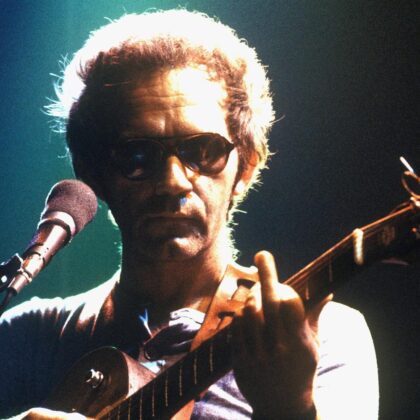
JJ Cale & Leon Russell :: Paradise Studios, Los Angeles 1979
Amazing set recorded live in Leon Russell's Paradise Studios in Los Angeles.
SET LIST:
1.T-Bone Shuffle
2.Nowhere To Run
3.Cocaine
4.Ten Easy Lessons
5.Sensitive Kind
6.Hands Off Her
7.Lou-Easy-Ann
8.Going Down
9.Corine Corina
10.Roll On
11.No Sweat
12.Crazy Mama
13.Fate Of A Fool
14.BoilinΓÇÖ Pot
15.After Midnight
16.T-Bone Shuffle
17.T-Bone Backwards
18.Same Ole Blues
19.Don't Cry Sister
20.Set Your Soul Free (Tell Me Who You Are)
21.24 Hours A Day
Monday, September 21, 2020

Aquarium Drunkard's newsletter is out just now . . . . . . . Highlights including a Lagniappe session including JJ Cale, Swamp Dogg (+ John Prine), Lou Reed interview from the Eighties and of course fuss 'n'n stuff about Bob Dylan's new Theme Time Radio Hour and the Pretty Good Stuff (no 9) . . . . no.9, no. 9 . . . no.9, . . . . no.9

The Lagniappe Sessions: Austin McCutchen
For his first ever Lagniappe Session, Liberty Hair Farm-based Austin McCutchen decided he’d look towards the sky. Recorded in quarantine and produced by Dan Horne, McCutchen’s takes on Jim Sullivan’s “UFO” (ft. Horne) and J.J. Cale’s “Cajun Moon” (featuring the Western Stars) offer us all a little respite from a weary world.

Transmissions: Swamp Dogg
Our guest on the latest episode of our weekly talk show Transmissions is Jerry Williams Jr., but if you know your musical cult heroes, you probably know him by the name Swamp Dogg. Since the early ’50s, he’s lived as a true record man—writing songs, producing artists, self-releasing music, and putting out major label flops that have gone on to achieve lost classic status. He’s always walked the line between R&B and country, making a joke of the music industry’s intentional segregating of white and black audiences. His latest is called Sorry You Couldn’t Make It, and it pairs him with producer Ryan Olson, Bon Iver, Jenny Lewis, and the late John Prine. Over the many years, Swamp Dogg has embraced auto-tune, twang, and ambient flourishes. He joins host Jason P. Woodbury to discuss it all.

Bob Dylan: Pretty Good Stuff (Episode 9)
The same week that saw the announcement of the imminent return of Dylan's Theme Time Radio Hour saw the release of the penultimate episode Pretty Good Stuff, Dylan historian James Adams’ hour-long, monthly, program diving deep into the depths of all things Dwarf Music. Listen to the show below, and to explore further, support our Patreon for the individual tracks and more.

Lou Reed: The Night Flight Interview
Want to hear Lou Reed break it down, circa 1984, sharing his thoughts on hip-hop, the Velvet Underground's legacy, Metal Machine Music, and the difference between writing a novel and song? Us too, and this Night Flight interview has got it covered. Via Spotify.
Subscribe to:
Posts (Atom)