I Can See You - by Paddy Summerfield c. 1986
Showing posts with label Plain & Fancy. Show all posts

Monday, August 10, 2026

Kris Kristofferson - Kristofferson (1970 USA 2001 remaster) | Plain & Fancy


Kris Kristofferson - Kristofferson (1970 USA 2001 remaster)

Now this is worth collecting. A stone classic with at least three or four classic Kristofferson mega hits that really went into the American Songbook if with a Country edge I grant you, but Sunday Morning, For the Good Times, Help me, Me n Bobbie I mean come on!

Kris Kristofferson was approaching his mid-thirties and had been kicking around Nashville for several years when he belatedly became an overnight success in 1969-1970. The impetus was "Me and Bobby McGee," which he co-wrote with Fred Foster, who ran Monument Records. Roger Miller cut the song, and his recording peaked in the country Top 20 in August 1969. By that time, Kristofferson had performed at the Newport Folk Festival at the behest of Johnny Cash, and Foster decided to sign him to Monument as a recording artist. Before this debut album was released in 1970, Ray Stevens had scored a pop and country chart entry with Kristofferson's "Sunday Mornin' Comin' Down."

On the evidence of his first collection of songs, Kristofferson was ahead of his country music peers in realizing that, despite Nashville's conservative political tilt, there was a natural affinity between the country archetype of a hard-drinking, romantically independent loner and the rock & roll archetype of a drug-taking, romantically free hippie. (Of course, lots of rock musicians, especially in Los Angeles, had already noticed this similarity, and formed bands like Poco and the Flying Burrito Brothers to exploit it.) 

He opened the album with what sounded like an answer to the criticisms of the Rolling Stones in the wake of Altamont. "Blame It on the Stones" contrasted various conservative stereotypes, starting with "Mr. Marvin Middle Class," with the supposedly evil rock group, its chorus a parody of "Bringing in the Sheaves." Needless to say, that was not a typical way to open a country album in 1970 (or any other time), but Kristofferson quickly followed with the somewhat more reverent "To Beat the Devil," which he dedicated in a spoken introduction to Johnny Cash and June Carter, and in which he established a persona he would maintain through much of the album, the character of a poor songwriter struggling against despair. 

"Me and Bobby McGee," a classic on-the-road song, was next, with Kristofferson, despite the country grammar, displaying his background as an English teacher in its chorus, "Freedom's just another word for nothin' left to lose/Nothin' ain't worth nothin', but it's free." Then came "The Best of All Possible Worlds," which used a reference to Voltaire to reflect wryly on the viewpoint of a drunken vagrant. (You could see what attracted Roger Miller to Kristofferson in a song like this, which clearly was influenced by Miller's "King of the Road," though Kristofferson's treatment of the subject was grittier.) Of course, the ultimate example of the subject was the album-closing "Sunday Mornin' Comin' Down," which was basically a first-person description of a hangover. The romantic side of the hard-living drifter character was glimpsed in the album's two tenderest statements, "Help Me Make It Through the Night" and "For the Good Times," both of which were pleas by the narrator to sleep with the object of his affection.

A sleeve note suggested that Kristofferson had been reluctant to record, but while he didn't have much range as a singer, he brought a conviction to his vocals and a complete understanding of the nuances of the lyrics. The songs were so personal that they seemed to demand a personal interpretation. Nashville, as it turned out, didn't have much use for countercultural songs like "Blame It on the Stones" and "The Law Is for Protection of the People" (which had some choice words for the police), but the country music community could recognize a good love song with an erotic edge that was on the cusp of the era's changing mores, and Ray Price quickly cut "For the Good Times," which topped the country charts. 

Then, Johnny Cash covered "Sunday Mornin' Comin' Down" for a number one country hit, leading to its winning the Country Music Association's Song of the Year award for 1970, and Sammi Smith gave a twist to "Help Me Make It Through the Night" by recording it as a woman's song for yet another country number one. The finishing touch to Kristofferson's sudden renown was Janis Joplin's cover of "Me and Bobby McGee," released shortly after her death, which topped the pop charts.

When it was released in 1970, Kristofferson did not reach the charts. By the following year, however, its creator was on his way to becoming a major star, and after his second album, The Silver Tongued Devil and I, broke into the pop charts in July 1971, Monument re-titled the first album Me and Bobby McGee and reissued it. This time around, it made the pop and country charts and went gold. (On February 6, 2001, Monument/Legacy reissued Kristofferson as part of its American Milestones series. Featuring 24-bit remastering, the CD added four previously unreleased tracks from the same sessions that produced the album, among them an early version of "Come Sundown," later recorded for a Top Ten country hit by Bobby Bare and re-cut by Kristofferson himself for his Shake Hands With the Devil album in 1979.)
by William Ruhlmann

Tracks
1. Blame It On The Stones (Kris Kristofferson, John Wilkin) - 2:46
2. To Beat The Devil - 4:43
3. Me And Bobby Mcgee (Kris Kristofferson, Fred Foster) - 4:23
4. Best Of All Possible Worlds - 3:01
5. Help Me Make It Through The Night - 2:24
6. The Law Is For Protection Of The People - 2:40
7. Casey's Last Ride - 3:37
8. Just The Other Side Of Nowhere - 3:39
9. Darby's Castle - 3:19
10.For The Good Times - 3:25
11.Duvalier's Dream - 2:58
12.Sunday Mornin' Comin' Down - 4:34
13.The Junkie And The Juicehead, Minus Me - 3:24
14.Shadows Of Her Mind - 3:13
15.The Lady's Not For Sale (Kris Kristofferson, Carol Pugh) - 3:27
16.Come Sundown - 2:36
All songs by Kris Kristofferson except as noted

Musicians
*Kris Kristofferson – Guitar, Vocals
*Jerry Kennedy - Guitar
Kris Kristofferson - Me And Bobby McGee (1979)
read the notes about this one on the YouTube channel about Dorsey Burnette


Sunday, August 09, 2026

Blind Faith - Blind Faith (1969 UK 2001 double disc remaster) | Plain & Fancy

 Blind Faith - Blind Faith (1969 UK 2001 double disc remaster)

Can’t Find My Way Home 1969

I have said before I went to the Blind Faith gig in Hyde Park and thoroughly enjoyed it and of course we all went out and bought the album. Despite being so short-lived I loved a lot of the work the boys did here. So this extended version is a welcome addition to any fan of Clapton Stevie Winwood or Grch and Baker come to that. The rest of the day was memorable for introuducing us to Richie Havens and Donovans sets was cool as I recall . . . . . 

Blind Faith were the band that introduced the world to the notion of a rock "supergroup," a combo featuring several musicians who had already achieved popularity and critical acclaim before joining forces to make music. Blind Faith also unwittingly established one of the most common features of supergroups -- most featured enough performers with strong resumes and egos to match that internal conflicts were all but inevitable, and as a consequence, they usually fell apart rather quickly. Despite a hit album and a financially successful international concert tour, Blind Faith managed to rise and fall in the space of less than a year, and ultimately proved to be a large but curious footnote in the careers of four giants of British rock: Eric Clapton, Steve Winwood, Ginger Baker, and Rick Grech.

Blind Faith were born of discord within two noted British acts of the late '60s. Cream were at the peak of their fame when the band broke up in 1969, in part because guitarist Eric Clapton was uncertain about the group's creative direction, but mainly because bassist Jack Bruce and drummer Ginger Baker found it all but impossible to see eye to eye. Meanwhile, vocalist and keyboard player Steve Winwood had founded Traffic after leaving the Spencer Davis Group to explore an adventurous brand of rootsy but instrumentally adept psychedelia informed by jazz and blues. After initial success, however, they had trouble negotiating egos as well as working out the balance of songwriting and instrumental work within the band, and in 1969, Traffic shut down.

Clapton and Winwood were friends and mutual admirers who had jammed together on several occasions, so when both found themselves at liberty following the breakup of their respective groups, they investigated the idea of forming a band together. One day, Ginger Baker stopped by while Clapton and Winwood were working out material, and he sat in on drums. Musically, Clapton and Winwood were happy with the way Baker's ambitious percussion melded with their new songs, which explored a more subtle blend of blues and R&B than Cream. While Clapton was wary of reuniting with Baker so soon after closing the book on Cream, Winwood's enthusiasm won out, and Baker joined the band. The group became a quartet with the addition of bassist Rick Grech, who had been playing with the celebrated U.K. band Family.

By May 1969, the quartet was recording an album with Jimmy Miller serving as producer. Given the massive commercial success of Cream and widespread curiosity about Clapton's next project, the new band -- dubbed Blind Faith by the tongue-in-cheek Clapton -- signed a lucrative record deal with Atlantic in the United States as well as Polydor in the U.K. Promoters were clamoring for a tour, and the band scheduled dates in Europe, the United States, and Canada. Blind Faith made their public debut with a show at London's Hyde Park on June 7, 1969. An estimated 100,000 people were on hand for the show, and while most in attendance seemed thrilled with the concert, Clapton in particular was not pleased with how loose and informal Blind Faith sounded on-stage. 

By the end of the month, Blind Faith had set out on a club tour of Europe, and the smaller shows allowed them better control of their sound and performances. When they hit America in July, however, they were booked into large arenas often saddled with dubious acoustics and poor sound systems. Fans eager to see the new band that was the talk of the rock press often battled with police and security as they rushed the stage, and the musicians were displeased with the chaotic atmosphere. It didn't help that Blind Faith had less than an hour's worth of new music to perform before they set out on tour; the band played North America for seven weeks, and by most reports they were rarely happy with their performances or the circumstances of the tour.

In August 1969, the Blind Faith album finally hit the streets, and while "Presence of the Lord" and "Can't Find My Way Home" quickly became FM rock staples and the album topped the charts in Britain and the United States, reaction to the project was less enthusiastic than many had expected. The band received negative press for the LP's cover, which featured a topless schoolgirl playing with a silver airplane model. (The sleeve was rejected in America in favor of a cover featuring a portrait of the band.) After Blind Faith returned home from the North American tour at the end of August, the members went their separate ways. Clapton joined Delaney & Bonnie & Friends on tour as a sideman, and next formed Derek & the Dominos, while Winwood re-formed Traffic, who became ore successful than ever. Baker formed his own group, Ginger Baker's Air Force, which would feature Grech in the lineup. Grech also played briefly with Traffic, and in 1976 became involved with another ill-fated supergroup, KGB, featuring Michael Bloomfield, Carmine Appice, and Barry Goldberg.

Grech died in 1990, and Baker passed in 2019. While Clapton and Winwood would occasionally perform together, there has been no effort to revive Blind Faith; presumably their brief run in 1969 was enough for all involved. 
by Mark Deming


Tracks
Disc 1
1. Had To Cry Today (Steve Winwood) - 8:48
2. Can't Find My Way Home (Steve Winwood) - 3:16
3. Well All Right (Buddy Holly, Jerry Allison, Joe Mauldin, Norman Petty) - 4:27
4. Presence Of The Lord (Eric Clapton) - 4:50
5. Sea Of Joy (Steve Winwood) - 5:22
6. Do What You Like (Ginger Baker) - 15:18
7. Sleeping In The Ground (Sam Myers) - 2:49
8. Can't Find My Way Home (Steve Winwood) - 5:4
9. Acoustic Jam (Eric Clapton, Ginger Baker, Rick Grech, Steve Winwood) - 15:50
10.Time Winds (Steve Winwood) - 3:15
11.Sleeping In The Ground (Sam Myers) - 4:44


Disc 2
1.Jam No.1: Very Long And Good Jam - 14:01
2.Jam No.2: Slow Jam #1 - 15:06
3.Jam No.3: Change Of Address Jam - 12:06
4.Jam No.4: Slow Jam #2 - 16:06
All compositions by Eric Clapton, Ginger Baker, Rick Grech, Steve Winwood

Blind Faith
*Steve Winwood - Organ, Keyboards, Piano, Guitar, Bass, Lead Vocals
*Eric Clapton - Guitar, Vocals
*Rick Grech - Bass Guitar, Violin, Vocals
*Ginger Baker - Drums, Percussion
Blind Faith in Hyde Park, 1969

Tuesday, August 04, 2026

Kevin Coyne - The Dandelion Years ’69 - ’72 2007 re-issue | Plain & Fancy

I had the strongest phase of loving Kevin Coyne after seeing him and a band incarnation around the time of Millionaires And Teddy Bears  play live somewhere lost in the mists of time to me now ( I thought a festival somewhere but it now escapes me!?) and I loved the eccentric madness to his style and songwriting . . . . . enjoy this. I did!

 Kevin Coyne - The Dandelion Years (1969-1972 2007 re-issue three disc boxset)


Kevin Coyne - Siren ‎Strange Locomotion 1971 Hot Potato 

I first became acquainted with the utterly unique phenomenon that is Kevin Coyne with his second solo album, Marjory Razorblade, which is generally recognized by critics and fans as his best overall work.

And what a work it is, nightmarishly combining blues, folk, Van Morrison-meets-Beefheart vocals and simultaneously humorous and disturbing lyrics and images across its sprawling 2 LPs worth of space. After digesting Marjory Razorblade, I had to hear more from Kevin Coyne.

Since his mid-70's albums are considerably harder to find and since his solo debut, Case History, has nearly as strong a reputation as its sequel, I decided to pick up this 3 album compilation.

The Siren material in this set doesn't hold up as well as Coyne's solo work. Their self-titled first album is the better of the two; it's a wide-ranging platter of British blues, ranging from hopping, dancy numbers ("Ze-Ze-Ze-Ze" and the raunchy "Gardener Man") to acoustic and electric slide-drenched ("Get Right Church" and "Wasting My Time") to piano-powered grinders like "Rock Me Baby" and "The War is Over").

The band whips out about every instrument and style in the blues idiom, but there's not a ton of idiosyncrasy to the playing (or a lot of the lyrics, for that matter), which both makes for a slightly bland experience and mirrors the direction British blues was going--running out of fresh ideas and retreading old ground.

There's some good energy on some tracks, and Coyne has a great blues voice--growling, howling, wailing and whispering.

There's no doubt that most of the personality found on Siren is thanks to him--tracks like "And I Wonder," "Asylum" and "I Wonder Where" all stand out as breaking the mold with more interesting, off-kilter lyrics and quiet intensity that presages later work.

Strange Locomotion doesn't succeed in building upon Siren's promise. For the most part, it's more of the same in style and quality. At its best, the bluesiest stuff ("Gigolo," "Sheke My Hand") approaches the quality of Led Zeppelin a la Hats off to (Roy) Harper or the less weird tracks on Safe as Milk.

Again (but less often than on the debut) the best moments are when Coyne's fascinatingly weird personality shines through, as on the subtly twisted "Some Dark Day" and the sparkling "Soon."

 Case History. It's much more bare bones than Siren's albums, featuring mostly acoustic guitar and Coyne's distinct songwriting voice.

All of the ideas that are later fleshed out with large band arrangements and varying styles and tempos on Marjory Razorblade are visited here with quiet intensity--"White Horse" is impenetrable and uneasy, "Uggy's Song" features Coyne's knack for jagged chord progressions and dissonance, "Need Somebody" is a perfect representation of his uncanny ability to project emotional isolation and loneliness, and "Evil Island Home" is an echoey creep-out.

Themes of church oppression and eerily authentic accounts of madness appear on "My Message to the People" and "Mad Boy," respectively.

Throughout, Coyne proves his style as uncompromising and unique, from his experimental and evocative vocal style to his recognizable acoustic guitar style to his utterly inimitable songs (which is more than can be said for the bulk of the Siren albums).

This is often unsettling work on several levels, but once you connect with these songs you'll understand why so many people praise this man's work.

This reissue is of top quality--it sounds great, each album has its own disc and sleeve with original artwork, and the liner notes are informative and illuminating (especially with regards to Coyne's work in the mental health sector).

I'd recommend starting with Marjory Razorblade, which has more bang for the buck, but this is a perfect next step, as it's currently the easiest way to get ahold of Case History, plus the occasionally gripping Siren albums 
by Elliot Knapp

Tracks
Disc 1 (as Siren)
1. Ze-Ze-Ze-Ze (Clague, Coyne, Cudworth) 3:04
2. Get Right Church (McDowell) 3:20
3. Rock Me Baby (Josea, King) 3:30
4. Wake Up My Children (Clague, Coyne, Cudworth) 3:37
5. Wasting My Time (Clague, Coyne, Cudworth) 2:49
6. Sixteen Women (Clague, Coyne, Cudworth) 2:46
7. First Time I Saw Your Face (Clague, Coyne, Cudworth) 2:52
8. Gardener Man (Clague, Coyne, Cudworth) 3:32
9. And I Wonder (Coyne, Cudworth) 2:45
10.The War Is Over (Clague, Coyne) 4:48
11.Asylum (Coyne, Cudworth) 3:44
12.Bertha Lee (Petway) 3:17
13.I Wonder There (Coyne, Cudworth) 5:09
14.Mandy Lee (Clague, Coyne) 2:01
15.Bottle Up and Go (Traditional) 3:12
16.The Stride (Clague, Coyne) 2:36

Disc 2 (as Siren)
1. Relaxing with Bonnie Lou (Coyne, Cudworth) 3:24
2. Some Dark Day (Coyne, Cudworth) 3:31
3. Hot Potato (Clague, Coyne, Cudworth) 4:07
4. Soon (Coyne, Cudworth) 3:46
5. Gigolo (Coyne, Cudworth) 4:25
6. I'm All Aching (Coyne, Cudworth) 3:03
7. Strange Locomotion (Clague, Coyne, Cudworth) 2:56
8. Shake My Hand (Coyne) 3:17
9. Lonesome Ride (Coyne, Cudworth) 2:20
10.Fetch Me My Woman (Clague, Coyne, Cudworth) 7:38
11.Fat Moaning Minnie (Coyne, Cudworth) 2:50
12.Squeeze Me (Clague, Coyne, Cudworth) 2:35

Disc 3
1. God Bless the Bride (Coyne, Cudworth) 3:55
2. White Horse (Clague, Coyne, Cudworth, Ferguson) 4:13
3. Uggy's Song (Coyne) 2:58
4. Need Somebody (Coyne) 4:15
5. Evil Island Home (Coyne) 5:00
6. Araby (Coyne) 3:38
7. My Message to the People (Coyne) 5:23
8. Mad Boy (Coyne) 4:45
9. Sand All Yellow (Clague, Coyne, Cudworth) 5:44
10.Cheat Me (Clague, Coyne, Cudworth) 3:13
11.Flowering Cherry (Clague, Coyne, Cudworth) 2:41
Musicians
*John Chichester - Guitar
*Dave Clague - Bass
*Kevin Coyne - Guitar, Vocals
*Nick Cudworth - Guitar, Piano
*Mick Gratton - Guitar
*Tat Meager - Drums
*Mick Sweeny - Guitar
Kevin Coyne - I’ll Go Too
Kevin Coyne (born 27 January 1944 in Derby, UK; died in his adopted home of Nuremberg, Germany, on 2 December 2004) was an English musician, singer, composer, film-maker, and a writer of lyrics, stories and poems. His uncompromising  attitude towards showbiz fame and fortune always left him in a position of "outsider", a position he relished. The freedom to express himself without the chains of commercial considerations (although he would not have been adverse to a Number One album) helped keep his creativity alive


I miss him! 

Thursday, July 09, 2026

Jesse Winchester - a double back : Nothing But A Breeze + A Touch On The Rainy Side (1977-78 Canada 2012 remastered) | Plain & Fancy

 Jesse Winchester - Nothing But A Breeze • A Touch On The Rainy Side (1977-78 Canada, excellent country folk rock, 2012 remaster)


Jesse Winchester, Nothing But a Breeze. Given Jesse Winchester’s long tenure on the fringes of stardom, I hesitate to predict that this warm, one-of-a-kind album will put him over the top. But it ought to. Producer Brian Ahern gives the country/rock set a fuller, more satisfying sound than any of its predecessors could boast. And Jesse’s material, which possesses the same timeless quality that the Band used to evoke, has never seemed more striking. Highlights include “You Remember Me,” a superbly sung, bittersweet ballad; “Twigs and Seeds,” a toker’s lament that’s bound to make you smile; and the punchy “Seems Like Only Yesterday.”
by Jeff Burger, May 25, 1977

To judge by the liner notes accompanying A Touch on the Rainy Side, this sixth and arguably best Jesse Winchester album would seem to mark new directions. For the first time, for example, the singer features production by Nashville studio veteran Norbert Putnam. And though Winchester had never previously made an album in the States, he recorded this one in Putnam’s hometown with the aid of country session musicians like David Briggs and Kenny Buttrey. In addition, the program incorporates such apparent surprises as a version of Dawn’s pop hit “Candida.”

For whatever reason, however, the set only rarely reflects the influence of Putnam, Nashville, or the American sojourn. As for “Candida,” the album’s sole non-original, you needn’t brace yourself for a journey into Dawn-like vapidity. Revitalized by Winchester’s phrasing and arrangement, the lyrics garner new dimensions, and the song winds up sounding like one of his own better compositions.

The rest of the LP—which predominantly features the emotive, melancholic ballads suggested by the title and his previous efforts—is just as good. Among my current favorites is the title cut, a tribute to Winchester’s wife that recalls Steve Goodman’s brand of romanticism. Other highlights include Holly,” where the artist employs lilting Latin touches and a singalong chorus to capture the joyous optimism of a new affair; “Wintry Feeling,” which may be the most touching musical “letter” since Leonard Cohen’s “Famous Blue Raincoat”; and “I’m Looking for a Miracle,” a good sample of Winchester’s sharp humor, which he describes as “slightly skeptical gospel.”
by Jeff Burger, October 7, 1978

Tracks
1. Nothing But A Breeze - 4:46
2. My Songbird - 3:45
3. Seems Like Only Yesterday (Stoney Edwards)  - 3:05
4. You Remember Me - 4:48
5. Twigs And Seeds - 2:59
6. Gliding The Lily - 3:58
7. Bowling Green (Phil Everly, Terry Slater) - 4:47
8. Pourquoi Ne M'Aimes-Tu Pas? - 3:20
9. It Takes A Young Girl (Dave Rouner, Ron Rose) - 3:20
10.Rhumba Man - 3:37


11.A Touch On The Rainy Side - 3:58
12.A Showman's Life - 3:52
13.Sassy - 3:18
14.Candida (Irwin Levine, Toni Wine) - 3:26
15.High Ball - 3:14
16.Little Glass Of Wine - 4:53
17.Holly - 3:51
18.Wintry Feeling - 5:12
19.Just Now It Feels So Right - 3:09
20.I'm Looking For A Miracle - 4:14
All songs written by Jesse Winchester except where noted 
Songs 1-10 from "Nothing But A Breeze" LP 1977
Songs 11-20 from "A Touch On The Rainy Side" LP 1978

Musicians
Nothing But A Breeze 1977
*Jesse Winchester - Piano, Guitar, Organ, Marimba, Vibes
*Marty Harris - Bass
*Dave Lewis - Drums, Percussion
*Bobby Cohen - Guitar, Mandolin
*Ron Dann - Pedal Steel, Dobro With
*Mickey Raphael - Harmonica 
*Ricky Skaggs - Fiddle, Viola 
*Tom Szczesniak - Accordion
*Jon Clarke - Recorder, Sax
*James Burton – Slide, Guitar Solo (Track 1)
*Glen D. Hardin - Strings 
*Nick Decaro - Strings 
*Emmylou Harris - Supporting Vocals
*Herb Pedersen - Supporting Vocals
*Anne Murray - Supporting Vocals
*Dianne Brooks - Supporting Vocals
*Nicolette Larson - Supporting Vocals

A Touch On The Rainy Side 1978
*David Briggs - Keyboards
*Shane Keister - Keyboards
*Steve Gibson - Guitar
*Bobby Thompson - Guitar
*John Goin - Guitar
*Jack Williams - Bass
*Larrie Londin - Drums
*Kenny Buttrey - Drums
*Farrell Morris - Percussion -
*Jamie Nichol - Congas
*Roger Williams - Soprano,  Tenor Sax
*Dennis Solee - Tenor,  Baritone Sax  
*Lloyd Barry - Trumpet
*Terry Williams - Trombone 
*The Shelly Kurland Strings - Strings
*Edward Fusty, Calvin Fusty, Borchard Teel, Sheri Kramer, Liza Silver, Diane Tidwell - Background Voices
*Peter Byrd, Vertrelle Cameron, Joy Cannon, Janet Harley, Cynthia Johnson, Jerome Mcleudon, Carole Strong, Sherman Tribble, Legoria Vernon, Kevin Williams - Chorus

Jesse Winchester - A Touch on The Rainy Side 1978

Jesse Winchester - Nothing But A Breeze


Jesse Winchester Defying Gravity [ Live 2016 ]
a favourite Jesse number . . . . 

Friday, July 03, 2026

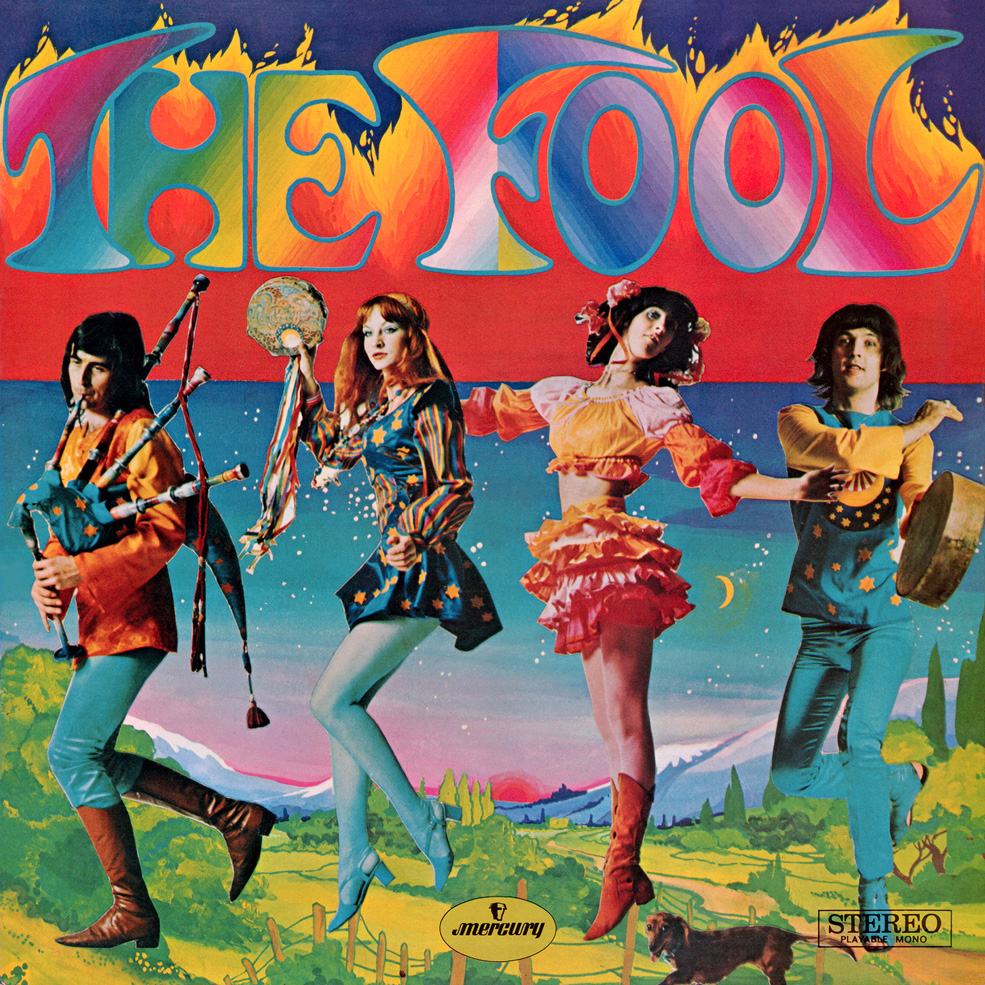
The Fool - The Fool (1969 Holland, 2005 bonus tracks remaster)

 SIMON & MARIJKE


The Fool  (1969 Holland,  2005 bonus tracks remaster)

The Fool were a Dutch quartet transplanted to London in the middle ’60s, whose original impact on the rock world was visual rather than musical.  They were two women, Marijke Kooer and Josje Leeger – who designed clothes for people like Patti Boyd Harrison (George Harrison’s first wife) – and with Marijke’s husband, Seemon (Simon) and their friend, Barry Finch they became collectively known as “the Fool,” exemplifying the hippie ethic of the mid-’60s.   

They had a shop off London’s Montague Square, where John Lennon was an early visitor.  Brian Hogg’s CD liner notes quote Seemon from the Granada TV documentary, It Was Twenty Years Ago Today: “He walked into our place, and saw our stuff – furniture and posters as well as clothes – and he said ‘This is where I want to live.’”  That established the Fool.  They did concert posters for Brian Epstein’s Saville Theatre, decorated Lennon’s piano and his Rolls Royce and painted the exterior of the Apple building.  They flourished at the height of “flower power” and their distinctive images helped define the era.   

As artists they did several album covers, starting with the Hollies’ 1966 Evolution and the Move’s debut album, and perhaps culminating in 5000 Spirits On The Layers Of The Onion by the Incredible String Band – all in an instantly identifiable style.  In 1968 they recorded their only album, for Mercury Records. 

I remember that while my friends were getting excited about the Incredible String Band, I – never very fond of folk music – kept telling them, “Yeah, sure, but have you heard the Fool?”   When I played the album for them I made a lot of converts for it. 

The Fool is an album with some of the same English folk elements – including bagpipes! – but it is not a folk music album.  So what is it?  Good question.   In an odd way it reminds me of George Harrison’s very under-appreciated Wonderwall Music:  both are early precursors of “World music.”  But The Fool is much more. 

The album opens with spacey psychedelic effects that lead us directly into “Fly,” which has a naοve folksy quality but in turn leads (in a direct segue) to a rippling piano, banjos, and a deep organ accompaniment to the second track, “Voice On The Wind.”  Hogg states that Graham Nash, whom they’d met when he was in the Hollies, “acted as producer and he doubtlessly helped sculpt the textured opening two tracks … which served as an atmospheric introduction to the album.  The use of bagpipes and other exotic instruments signaled a wish to create something both adventurous and folksy.”  (I might add that I rarely enjoy the sound of bagpipes – as they are traditionally played – but they work well for me on this album.  Seemon is pictured playing bagpipes on the album’s cover.) 

 “‘Cry For Me,’ with its plaintive banjo, proved the Fool’s grasp of melody, a feature enhanced by their confident vocals and atmospheric seashore sound effects.  ‘No One Will Ever Know’ blends pop with a jugband feel feel before a now familiar [bagpipe] skirl grabs the casual listener. 

“A trumpet, whistles and almost gospel-styled singing inhabit ‘Reincarnation.’  ‘Hello Little Sister’ plays with the riff from ‘Walk Don’t Run’ and more faintly choral voices before ‘Keep On Pushin’ hits a bluesy vein.  The piece is underpinned by a Hammond organ, prompting scholars to suggest the presence of R&B veteran Graham Bond who was often photographed with the Fool around this time.  The eastern-styled [tenor] saxophone break would seem to confirm it.  ‘Inside Your Mind’ is another track hewn from Episcopalia, while ‘Lay It Down’ [which concluded the original album] is full blown intoxicated psychedelia.”  

When I first got this album I was struck by the nature of its melodies.  They seemed to derive in part from old English church hymns – blended with blues, boogie and rock.  “Episcopalia” is another way to describe it.  Oddly Calvinistic, I thought then.  But original: nothing else, before or since, sounds very much like it.  And that “eastern-styled  saxophone break” turns into a quote from Rahsaan Roland Kirk playing with Charles Mingus (as recorded in 1962) – a nice touch. 

This album dates to the days before “progressive rock” existed, but prefigures it in its adventurousness and wide-ranging musicality.  I always wondered why there was no second album to follow up on this one, but Hogg says, “Unfortunately for the Fool, flower-power was wilting in 1968 [when the album was released] and their efforts herein went largely unrecognized, despite cover art typical of their work.   Their designs were now deemed passι – the Apple building was repainted at the behest of residents, and the collective split up at the end of the decade.”  Frankly, I was never impressed by their style of artwork – the cover of the Move’s first album never did anything for me – and I miss that aspect of the Fool much less than I do their music. 

In the early ’70s Seemon and Marijke came to America and made an album for A&M Records, Son Of America (SP 4309). Graham Nash again was the producer (and contributed vocals), and Seemon plays bagpipes in a few spots, but the music is rather pedestrian and ordinary, perhaps the result of using American musicians (including Booker T. on organ), or perhaps the desire for greater commercial success – which eluded it.  This album was not a continuation of the Fool.  Then the couple returned to Amsterdam and split up.  Hogg says that Barry and Josje also returned to Amsterdam, “and, last heard, were still together.” 
by Dr. Progresso and Brian Hogg

Tracks
1. Fly - 2:43
2. Voice On The Wind - 5:08 
3. Rainbow Man - 2:21 
4. Cry For Me - 3:52 
5. No One Will Ever Know - 2:53
6. Reincarnation - 4:07 
7. Hello Little Sister - 2:00 
8. Keep On Pushing - 6:00 
9. Inside Your Mind - 2:43
10.Lay It Down - 4:51 
11.We Are One - 2:38
12.Shining Light - 2:40
All compositions by Barry Finch, Josje Leeger, Marijke Koger, Simon Posthuma
Bonus Tracks 11,12

The Fool
*Simon Posthuma
*Marijke Koger
*Barry Finch
*Josje Leeger

Now I have said before I have a number of Simon and Marijke’s posters and my favourite being A is For Apple around the time of Apple launch and it is worth something and certainly collectable . . . I love it!🍎


my archetype? Drawing by yours truly!
A. Swapp ©️ 09/2012


Friday, June 26, 2026

Jo Ann Kelly - Jo-Ann Kelly (1969 uk) | Plain & Fancy

 Jo Ann Kelly - Jo-Ann Kelly (1969 uk)

The rock era saw a few white female singers, like Janis Joplin, show they could sing the blues. But one who could outshine them all -- Jo Ann Kelly -- seemed to slip through the cracks, mostly because she favored the acoustic, Delta style rather than rocking out with a heavy band behind her. But with a huge voice, and a strong guitar style influenced by Memphis Minnie and Charley Patton, she was the queen. 

Born January 5, 1944, Kelly and her older brother Dave were both taken by the blues, and born at the right time to take advantage of a young British blues scene in the early '60s. By 1964 she was playing in clubs, including the Star in Croydon, and had made her first limited-edition record with future Groundhogs guitarist Tony McPhee. She expanded to play folk and blues clubs all over Britain, generally solo, but occasionally with other artists, bringing together artists like Bessie Smith and Sister Rosetta Tharpe into her own music. 

After the first National Blues Federation Convention in 1968 her career seemed ready to take flight. She began playing the more lucrative college circuit, followed by her well-received debut album in 1969. At the second National Blues Convention, she jammed with Canned Heat, who invited her to join them on a permanent basis. She declined, not wanting to be a part of a band -- and made the same decision when Johnny Winter offered to help her. 

Throughout the '70s, Kelly continued to work and record solo, while also gigging for fun in bands run by friends, outfits like Tramp and Chilli Willi -- essentially pub rock, as the scene was called, and in 1979 she helped found the Blues Band, along with brother Dave, and original Fleetwood Mac bassist Bob Brunning. The band backed her on an ambitious show she staged during the early '80s, Ladies and the Blues, in which she paid tribute to her female heros. In 1988, Kelly began to suffer pain. 

A brain tumor was diagnosed and removed, and she seemed to have recovered, even touring again in 1990 with her brother before collapsing and dying on October 21. Posthumously, she's become a revered blues figure, one who helped clear the path for artists like Bonnie Raitt and Rory Block. But more than a figurehead, her recorded material -- and unreleased sides have appeared often since her death -- show that Kelly truly was a remarkable blueswoman. 

by Chris Nickson

Tracks
1. Louisiana Blues (McKinley Morganfield) - 3:32
2. Fingerprints Blues (Joe McCoy) - 3:27
3. Driftin' and Driftin' (Oscar Brown, Jr.  Warren "Pete" Moore) - 2:40
4. Look Here Partner (Jo Ann Kelly) - 2:36
5. Moon Going Down (Charley Patton) - 4:04
6. Yellow Bee Blues (Joe McCoy) - 3:48
7. Whiskey Head Woman (Tommy McClennan) - 1:52
8. Sit Down on My Knee (Jo Ann Kelly) - 2:43
9. Man I'm Lovin' (Hooker, Josea) - 2:44
10.Jinx Blues (Son House) - 2:31
11.Come on in My Kitchen (Robert Johnson) - 2:49

*Jo Ann Kelly - Guitar, Vocals
Jo Ann Kelly rare film


Jo Ann Kelly - Louisiana Blues (plus links to full album on YouTube)