I Can See You - by Paddy Summerfield c. 1986
Showing posts with label Richard Hamilton. Show all posts

Tuesday, September 02, 2025

ROXY MUSIC - GRAHAM SIMPSON band co-founder

 As we were mentioning Roxy Music through Phil Manzanera’s 'Diamond Head' and the line up after Brian Eno’s leaving, I noticed a reference to bass player Graham Simpson who it is said started Roxy Music with Bryan Ferry before Eno, Phil and Andy and I looked him up as I hadn’t heard of him.  This is sad but worth a read . . . . 

Andy (I guess), Brian and Graham on SG bass

Brian Ferry’s webpage has a profile which is well worth a read and worth knowing . . . . .a fellow art student at Newcastle under the tutelage of Richard Hamilton [and fellow student Rita Donagh who went on to be Richard’s partner and wonderful artist in her own right], Graham seems to have been an entirely supportive and encouraging voice to Ferry when he was somewhat less self assured. It seems only fair to share this link

Graham Simpson Roxy Music co-founder

Friday, May 02, 2025

Paul and Richard Hamilton working on 'The White Album' Cover


Richard Hamilton and Paul McCartney designing the cover of the Beatles’ White Album, 1968. 

Photograph by Rita Donagh.


Now I have said I did my final thesis at Art College on Richard Hamilton and went to interview him (I should really have published the interview before he died perhaps I will now) and Rita his partner was a delight and they became sort of friends and came to my show of my work with fellow artist the ever kind and supportive Graham Dean at one of the first Oxford Art Weeks open studio festivals. Rita had a show at MOMA Oxford and I adored her work as much as found Richard’s so fascinating. 

The Beatles White Album project here . . . .


Richard Hamilton - White Album poster


again thanks to Alice at O My Soul - - - - - - for the reminder

Saturday, February 08, 2025

ART FROM THE FUTURE - Duchamp Ready Mades : The Urinal R.Mutt 1917

DUCHAMP Ready Made - Art From The Future 

from the Tate Modern:

image
Oh hello, cross-holes. Fancy seeing you here. 
SF-MOMA’s edition has the triangle holes, but it also has a line of holes at the top that are completely different from either other version. 
image
Here’s one from Moderna Museet. Line and a circular set of holes!
image
Duchamp definitely intentionally made these different on purpose. It’s a “readymade” but it’s not, really, each of these is a specific custom creation. 
It’s not even clear if he made it! He wrote a letter to his sister claiming that a female friend sent it to him, and he just enrolled it in the art exhibit under his own name. There’s also a possibility that that female friend was himself, since he later had a female pseudonym of Rrose Sélav. 

This whole piece of art is a fractal troll, and it’s a beautiful one. 

The only possible correction I can make is Duchamp’s alter ego’s name was Rrose Sélavy.  C'est la vie. Anglicé, “That’s life.”


Thursday, January 14, 2021

 MARCEL DUCHAMP

'THE LARGE GLASS'


I have mentioned before I think that I was a part of study group at Leicester Polytech Fine Art Dept under historian Fred Orton  and composer Gavin Bryars. We interviewed Richard Hamilton about his days teaching at Newcastle and the reconstruction of the Large Glass and I was lucky enough to call Richard a friend later as he and his lovely partner and fine artist in her own right, Rita Donagh, were so welcoming to me and always spoke when they visited MOMA years later when I worked there and when I interviewed him for my final thesis in their wonderful house in Highgate back in the early seventies. 

This is from grupaok who are Julian Myers and Joanna Szupinska   

grupaok:

Marcel Duchamp, The Bride Stripped Bare By Her Bachelors, Even (The Large Glass), 1915–1923, on view in the International Exhibition of Modern Art arranged by the Société Anonyme, installation detail, Brooklyn Museum, 1926.

Remarkably, this was the only time that Duchamp’s masterwork was exhibited publicly before its glass panes shattered. Painstakingly reassembled by Duchamp in the 1930s, the work survives in a broken state.

grupa o.k.’s essay on the 1926 exhibition, titled “Bachelor Modernism,” will  be published in The Avant-Garde Museum, edited by Agnieszka Pindera and Jarosław Suchan and published by Muzeum Sztuki, Łódź. A preview of our essay is available HERE for download and discussion.

Along with other essays on the Société, the book also examines the Soviet Museums of Artistic Culture, El Lissitzky’s Abstract Cabinet, and (our namesake) grupa a.r.’s Neoplastic Room, and includes source texts by Lissitzky, Rodchenko, Malevich, Katherine Dreier, Władysław Strzemiński, and more.


Through The Large Glass - Richard Hamilton - Tate papers


Saturday, June 29, 2019

ON THIS DAY IN MUSIC


1967 - Mick Jagger & Keith Richards busted
Rolling Stone Keith Richards was found guilty of allowing his house to be used for the illegal smoking of cannabis. He was sentenced to one year in jail and a £500 ($850) fine, (prison number 5855). Mick Jagger was also fined £100 ($170) and given three months in jail on drug charges. Jagger and Richards were both released and granted bail of £7,000 the following day.

© The estate of Richard Hamilton

This work (above) is based on a photograph, taken from a newspaper, showing Mick Jagger handcuffed to the art dealer Robert Fraser following their appearance in court on drugs charges. Both were convicted. The title plays on the term ‘Swinging London’ and the judge’s insistence on imposing a swingeing penalty. For many, this occasion typified the moral backlash against the liberalisation of the 1960s. Richard Hamilton who I have mentioned elsewhere here, incorporated images from film posters, magazines and art history in his art and was interested in architecture and design, as well as much broader political subjects

© The estate of Richard Hamilton

1968 - Small Faces
The Small Faces started a six week run at No.1 on the UK album chart with Ogden's Nut Gone Flake. A concept album with a round cover designed to look like a tobacco tin.In my top ten albums of all time without a doubt I bought this when it came out and still love it. The Journey aspect narrated by the TV personality and another hero in Professor Stanley Unwin. "Stay cool won't you?!"


Afterglow

Colour Me Pop - Song of a Baker

1979 - Lowell George
American singer-songwriter, multi-instrumentalist and producer, Lowell George died of a heart attack. The Little Feat front man was found dead at the Key Bridge Marriott Hotel in Arlington, Virginia. George joined Zappa's Mothers of Invention as rhythm guitarist in 1968, played guitar on John Cale's 1973 album Paris 1919, Harry Nilsson's Son of Schmilsson album and Jackson Browne's The Pretender.
1985 - David Bowie & Mick Jagger
David Bowie and Mick Jagger recorded a version of the Martha Reeves and the Vandellas 1964 hit 'Dancing In The Street' for the forthcoming Live Aid fundraising event. The single went on to become a No.1 UK hit. The original plan was to perform a track together live, with Bowie performing at Wembley Stadium and Jagger at John F. Kennedy Stadium, until it was realised that the satellite link-up would cause a half-second delay that would make this impossible unless either Bowie or Jagger mimed their contribution, something neither artist was willing to do.

1994 - Oasis
Oasis made their debut on BBC TV's Top Of The Pops performing their new single 'Shakermaker'.

2000 - Eminem
Eminem's mother went to court claiming defamation of character in a $10 million (£5.8 million) civil suit, after taking exception to the line "My mother smokes more dope than I do" from her son's single 'My Name Is'.


2007 - Lily Allen
Lily Allen was questioned by police over an alleged assault on a photographer outside a nightclub in London. She was freed on police bail after she was quizzed about an alleged assault on a male photographer in his 40s near the Wardour Club in London's Soho in March.


BIRTHDAYS

1953 - Colin Hay
Colin Hay, Scottish Australian musician with Men At Work, (1983 UK and US No.1 single 'Down Under').


1945 - Little Eva
Little Eva, US singer. She was babysitting for Carole King and Gerry Goffin who asked her to record a song they had written. It gave her the 1962 US No.1 & UK No.2 single 'The Loco-Motion'. She died on April 10th 2003.


1943 - Roger Spear
Roger Spear, multi-instrumentalist with the Bonzo Dog Doo Dah Band. He wrote some of their wittiest songs such as ‘Shirt’, ‘Tubas in the Moonlight’ and ‘Trouser Press’. The Bonzos came to the public attention through a 1968 ITV comedy show, Do Not Adjust Your Set.
Roger at the back on trumpet and general lunacy . . . . 

all lone by yourself in the moonlight . . . . . 

Saturday, December 29, 2018

WHITE ALBUM


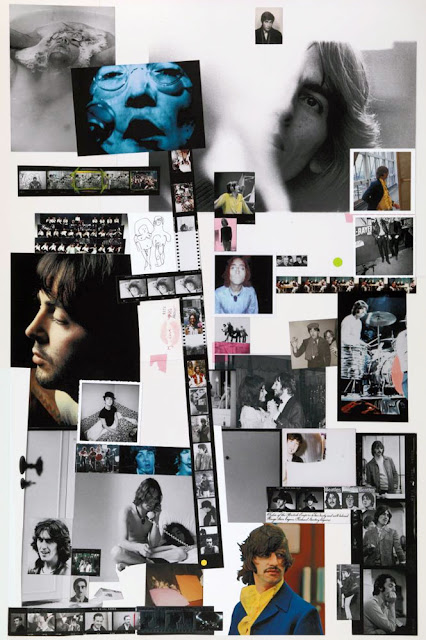
On this day in music history: December 28, 1968 - “The Beatles (aka "The White Album”)“, the ninth album by The Beatles hits #1 on the Billboard Top 200 for 9 weeks (non-consecutive). Produced by George Martin, it is recorded at Abbey Road Studios and Trident Studios in London from May - October 1968. Following the psychedelic influenced "Sgt. Pepper’s Lonely Hearts Club Band” and “Magical Mystery Tour”, The Beatles begin the musical transition back to their rock & roll roots. The majority of the songs are written during the bands’ trip to India to study Transcendental Meditation with the Maharishi Mahesh Yogi. Sessions are often tense as squabbling between the four begin to drive them apart, with Ringo Starr actually quitting the band temporarily and main recording engineer Geoff Emerick also walking out on the project. Though the album is self-titled, implying it is a full group effort, the opposite is actually true with the band members acting almost like side musicians for the other three, depending on whose song is being recorded. The thirty track double LP set comes to be regarded as one of The Beatles greatest and most musically diverse works. The album is also their last to be issued with separate mono and stereo mixes. The mono version is not issued in the US until 2009 when it is included in “The Beatles In Mono” CD box set. *The set also comes packaged with a poster featuring a photo collage on one side and song lyrics printed on the other side, as well as four individual portraits of the band members. In September of 2014, the mono version of the album is released in the US on vinyl for the first time, making it the first time “The White Album” has been available in that configuration since being briefly reissued in the UK in 1982. The album is also remixed in its entirety by Giles Martin, as part of a fiftieth anniversary reissue in November of 2018. The remixed version is available as a three CD edition, including “The Esher Demos”, along with a Super Deluxe six CD + Blu-ray disc, including numerous outtakes and previously unreleased material. The Blu-ray contains the 2018 remix stereo, DTS-HD and Dolby True HD 5.1 surround sound, along with the original mono mix. The set is also reissued on vinyl as a double LP and as a four LP deluxe box including “The Esher Demos”. “The Beatles” is certified 19x Platinum in the US by the RIAA. [thanks to Jeff Harris' blog Behind the Grooves]

* this cursory description does not do the history of the album's design justice at all. A joint effort between Paul McCartney and thanks to his interest and connections in the art world, his knowledgeable sense of the contemporary artwork (affected by Paul's friendship with Robert Fraser) that led him to ask father of Pop Art Richard Hamilton to design the album which he duly does. They had already turned down three designs. Paul comes up with a case containing a multitude of snaps of the band and Hamilton sets to work. The poster collage is considered by Hamilton aficionados an artwork by the master himself and has hidden and not so hidden references and clues that only diehard fans would get and the cover with it's plain white statement and serial number taking a humorous swipe at limited editions and mass production. Hamilton knowing that it would sell anyway without any imagery on it whatsoever Paul has to persuade the others. The four portrait photos are commissioned by Hamilton from John Kelley portraits taken in 1968. The albums design and art direction are officially credited to Richard Hamilton, Gordon House and Jeremy Banks, with photography by John Kelly.


Paul at Richard's Highgate home and studio working on the collage 


Artsy article on Hamilton White Album design

Sunday, November 11, 2018

RICHARD HAMILTON - THE WHITE ALBUM


Richard Hamilton and Paul McCartney designing the cover of the Beatles’ White Album, 1968. Photograph by Rita Donagh.

Wednesday, November 07, 2018

MARCEL DUCHAMP

I may have mentioned that I studied Duchamp at college in a study group organised by Leicester Poly ' Fine Art department tutors, composer Gavin Bryars and historian Fred Orton. Those studies introduced me to a life long interest in Dada and Surrealism, alongside Marcel Duchamp, Man Ray, Francis Picabia and fellow artists of the period especially and a connection to fellow aficionado of Duchamp and reconstructor of the 'Large Glass' Richard Hamilton, the noted father of British Pop Art on whom I did my final thesis and interviewed him at length and got to meet him and his lovely partner fellow artist Rita Donagh many times and this connection with Leicester probably got me my job at MOMA Oxford for over ten years in the late seventies and eighties

Nude Descending a Staircase, No. 2 ( Nu descendant un escalier n° 2) is a 1912 painting by Marcel Duchamp and is considered one of his seminal and most important early works. More broadly the work is widely regarded as a Modernist classic and has become one of the most famous of its time. Before its first presentation at the 1912 Salon des Indépendants in Paris it was rejected by the Cubists as being too Futurist.
The hanging committee objected to the work, on the grounds that it had “too much of a literary title”, and that “one doesn’t paint a nude descending a staircase, that’s ridiculous… a nude should be respected." Duchamp’s brothers, Jacques Villon and Raymond Duchamp-Villon, sent by the hanging committee, asked him to voluntarily withdraw the painting, or paint over the title and rename it something else.


“But I went immediately to the show and took my painting home in a taxi. It was really a turning point in my life, I can assure you. I saw that I would not be very much interested in groups after that.” – Marcel Duchamp

Wednesday, October 24, 2018

RICHARD HAMILTON

GROWTH & FORM

Yes more art! Visitors paying attention (who ARE you talking to? - ED) will be aware I did my thesis for my art degree and for composer Gavin Bryars and historian Fred Orton then at Leicester on Richard Hamilton. One of the earliest projects around exhibition design Richard was involved in was called 'Growth and Form' and is somewhat over shadowed by the later 'This is Tomorrow' which grew to legendary proportions
Hunting around t'interweb thingamabob I found this:


Growth and Form, Exhibition Catalogue, 1951. Exhibition produced by Richard Hamilton at the Institute of Contemporary Arts (ICA), London, 1951
/ «Growth and Form […] consisted of a large-scale installation – reconstructed in 2014 at Tate Modern, London, and the Museo Nacional Centro de Arte Reina Sofía, Madrid – that was inspired by the book of Scottish mathematician and biologist D’Arcy Wentworth Thompson, On Growth and Form (1917). Hamilton brought together a range of scientific and organic materials, using the most innovative and imaginative technologies of the moment. One of the effects of this exhibition was, as Hamilton wrote, the influence it may have upon design trends’. […] This exhibition, inspired by the sensitivity and strategies of Surrealism and Dada, Joyce’s literary techniques and Duchamp, helped Hamilton develop his own exhibition language. His visual references were also determined by the discovery of György Kepes, László Moholy-Nagy and Sigfried Giedion. These readings favoured revitalising the social function of art and bringing together artistic and scientific experimentation, at a time when technology was developing a new visual order. Hamilton saw a clear need for an exhibition practice based on the principles of visualisation and the ability to incorporate contemporary technology. To all these ideas we should add his technical training in design. [continue…] – Growth and Form, MACBA Collection, Barcelona / 


Tuesday, June 05, 2018

I recall very well the impact of hearing this song had and had been somewhat aware that something was going on 'across the pond' as they say with my fellow students and my abiding interest in Pop Art's British master Richard Hamilton had done an intriguing work that had made me dig further . . . .the news covered the murder of several unarmed students by the National Guard in America somewhat scantly so it was left to art to get the message across to my generation here in the UK. I have commented before I think and yet will continue to do so as and when it strikes me. The first time I became aware that a country was shooting it's children! What has changed? 


On this day in music history: June 4, 1970 - “Ohio” by Crosby, Stills Nash & Young is released. Written by Neil Young, it is the third single credited to the rock quartet. Young is inspired to write the song after seeing photos in the May 15, 1970 issue of Life Magazine of the incident at Kent State University in Ohio. On May 4, 1970, students protesting over the United States’ involvement in the Vietnam War and plans announced by then President Richard Nixon to launch an offensive in Cambodia, escalate into a confrontation with the Ohio National Guard who are dispatched to break up the demonstration. When students refuse to stand down and begin throwing rocks and tear gas cannisters back, the guardsmen fire sixty seven live rounds into the crowd to make them disperse. Tragically four students (Jeffrey Miller, Allison Krause, Sandra Scheuer and William Knox Schroeder) are gunned down in the melee, with nine others being wounded. Of the four people killed, only Miller and Krause were actually participating in the demonstration. Scheuer and Schroeder were innocent bystanders walking to their next classes. Quickly finishing the song, the band record “Ohio” in the number three studio at the Record Plant in Los Angeles on May 21, 1970 live in just a few takes, with bassist Calvin Samuels and drummer John Barbata. The single’s B-side “Find The Cost Of Freedom” written by Stephen Stills is also recorded the same day. “Ohio” is quickly mastered and rush released by Atlantic Records only two weeks after it is recorded. Some US radio stations ban the record, feeling that it is too controversial and outspoken in its criticism of the Nixon administration. However, it does not stop the song from becoming a hit, peaking at #14 on the Billboard Hot 100 on August 8, 1970. Since it is issued as a stand alone single, “Ohio” will not appear on an album until the bands greatest hits album “So Far” in 1974. Though another version is featured on their live album “4-Way Street” in 1971. Over the years, “Ohio” is covered by numerous artists including The Isley Brothers, Paul Weller, The Dandy Warhols, and Ohio natives Devo. Band member (of Devo) Jerry Casale was a student at Kent State at the time of the incident, and knew two of the victims. Crosby, Stills Nash & Young’s version of “Ohio” is inducted into the Grammy Hall Of Fame in 2009.

thanks to the most excellent Jeff Harris' blog 'Behind The Grooves   


Richard Hamilton - Kent State (print) 1970

Richard Hamilton - Kent State (print) 1970

Richard Hamilton at home
It must be said Richard's piece was also about media not only the slaughter of innocents but that fact that we in Britain saw it on TV. I was minded of this when the twin towers fell in New York in 9/11 as we watched the horror unfold live on TV in our living rooms and Richard's piece was also about communication and how we learn what is going on live and on tele . . . . . . . as illustrated in the portrait above